Ethereum Congestion Creates Two-Tier Transaction System
Ethereum Congestion Creates Two-Tier Transaction System
🚦 Ethereum's Two-Speed Problem


Network congestion is creating a stark divide in Ethereum transaction processing.
Under sustained network load, eligible transactions continue to receive predictable inclusion times, while non-eligible transactions are experiencing delays exceeding 10 seconds.
This two-tier system highlights the growing importance of transaction eligibility criteria during periods of high network activity.
Key implications:
- Eligible transactions maintain consistent processing times
- Non-eligible transactions face significantly longer wait times (10+ seconds)
- Network congestion reveals infrastructure priorities
The pattern suggests Ethereum's infrastructure is prioritizing certain transaction types to maintain network stability during peak usage periods.

Under sustained congestion, eligible transactions get predictable inclusion while non-eligible transactions climb past 10s.

Privacy Boost Adds Pre-Confirmations to OP Stack Chains
**Privacy Boost** has introduced pre-confirmation support for OP Stack chains, marking a significant improvement in transaction speed. **Key Features:** - Private transfers now complete in under one second - Settlement processes continue running in the background - First privacy solution specifically designed for OP Stack chains **What This Means:** Users can now execute private transactions with near-instant confirmation while maintaining the security of background settlement. This addresses a common pain point where privacy features typically slow down transaction speeds. The update builds on Privacy Boost's existing capabilities, which include private balances, private sends/receives, and full auditability—features specifically requested by institutional users.
OP Labs Shifts to Direct Support Model, Phases Out Third-Party Providers
OP Labs is transitioning away from third-party rollup-as-a-service providers for production support on the OP Stack. Teams seeking production support will now work directly with OP Labs through **OP Enterprise**, establishing a single, clear relationship with the team that develops the stack. Key points: - Legacy support through third-party providers is being phased out - Direct support now available exclusively through OP Enterprise - Existing OP Enterprise chains continue without disruption - Change aims to streamline support relationships For more details: [OP Labs blog post](https://www.optimism.io/blog/a-more-direct-model-for-production-support-on-the-op-stack) Learn about OP Enterprise: [optimism.io/op-enterprise](https://www.optimism.io/op-enterprise)
Ether.fi Launches on OP Mainnet
**Ether.fi has officially gone live on OP Mainnet**, bringing its liquid staking protocol to Optimism's Layer 2 network. **Key highlights:** - Users can now access ether.fi's staking services with faster transactions and lower fees on Optimism - The integration expands ether.fi's reach beyond Ethereum mainnet - Leverages Optimism's scalability for improved user experience This deployment marks another step in ether.fi's multi-chain expansion strategy, offering stakers more options for where they manage their ETH positions. [Read the full case study](https://www.optimism.io/case-studies/etherfi)
Ether.fi Migration Drives OP Mainnet to Record Transaction Volumes
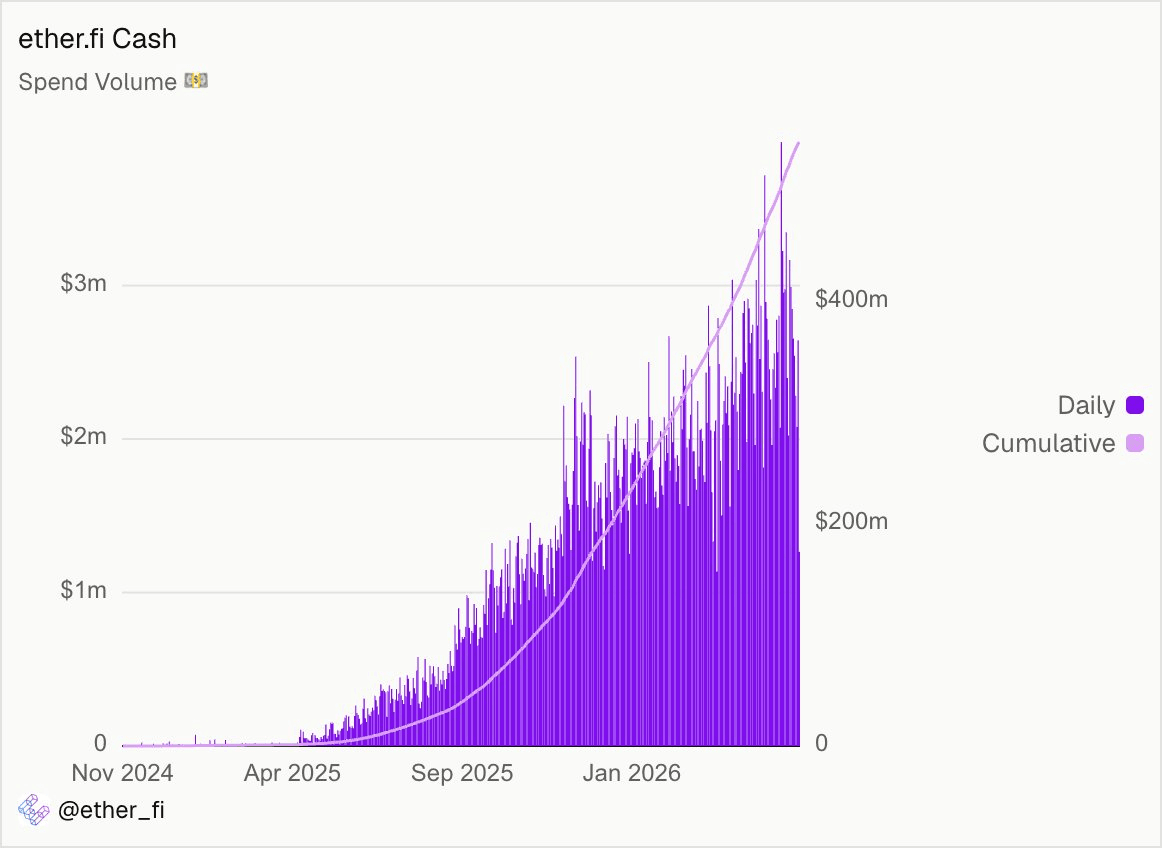
**Ether.fi's migration to OP Mainnet continues to break records**, with daily spending reaching new highs since moving $220M in total value locked (TVL), 70,000 active cards, and 300,000 accounts to the network. **Key metrics:** - Transaction costs: fractions of a cent per transaction - Crypto card volume grew 10x in 90 days - March: $12.7M → May: $128M - OP Mainnet now ranks #2 globally for crypto card volume, surpassing Solana, BSC, and Arbitrum **The economics are working at scale.** Low transaction fees enable sustainable unit economics, making OP Mainnet an attractive platform for high-volume payment applications. The network has climbed into the top 15 chains by TVL, with 84% growth in 30 days driven largely by this migration. The success demonstrates how Layer 2 solutions can support real-world payment use cases with meaningful transaction volumes.
OP Mainnet Launches Reserved Blockspace with Stake-Based Ordering
**Reserved blockspace is now live on OP Mainnet**, introducing a stake-based ordering experiment that changes how transactions are processed on the network. **Key points:** - The new system allows users to reserve blockspace based on their stake - This represents a shift from traditional first-come-first-served transaction ordering - The experiment aims to improve transaction predictability and reduce MEV (Maximal Extractable Value) For technical details and implementation specifics, visit the [official blog post](https://www.optimism.io/blog/reserved-blockspace).