Background

Hypersign

Hypersign is a decentralised identity and access management infrastructure for the enterprise. It leverages technologies such as public key infrastructure (PKI) and blockchain to provide passwordless authentication as well as authorization and verification services that integrate within minutes and are compatible with legacy IAM systems at an affordable price point.

The Hypersign protocol distributes the responsibility of issuance, holding, and verification among stakeholders.

The user gives personal data to the issuer, which verifies and issues a cryptographically signed document (verifiable credential) to the user.

The verifiable credential contains user data along with the digital signature of the issuer. Complete introduction is available in the wiki section: https://docs.hypersign.id/gen/intro

Integrationstwitter

KYC Systems Face Pressure to Evolve as Privacy Regulations Tighten

Fri 6th Feb 2026
**The verification landscape is shifting.** Traditional KYC systems are struggling to keep pace with the reality of modern businessโ€”online, on-chain, and globally distributed from day one. **The core tension:** Communities now move capital before formal structures exist, yet most verification systems remain rigid and data-heavy, designed for an older internet era. **What's changing:** - Privacy regulations are tightening worldwide - Verification methods must adapt to new compliance requirements - The gap between how businesses operate and how they verify users is widening The challenge ahead: building verification infrastructure that matches the speed and borderless nature of digital-native organizations while meeting evolving regulatory standards.

The End of Forced Consent: Building Internet on Verifiable Trust

Fri 6th Feb 2026
The WhatsApp incident serves as a critical wake-up call for the internet's future direction. **The Shift Away from Centralization** - Current data messaging relies heavily on a handful of giant providers - This creates single points of failure and forces users into consent models - The next generation of internet infrastructure must move beyond this paradigm **Building on Verifiable Trust** The future internet will be built on: - Trustless, decentralized protocols - Verifiable trust mechanisms instead of forced consent - Distributed systems with no single point of failure **Why This Matters Now** The world moves fast, and the time to act is now. Reducing dependence on centralized providers isn't just about privacyโ€”it's about creating a more resilient, trustworthy internet infrastructure that puts control back in users' hands. The transition from forced consent models to verifiable trust represents a fundamental reimagining of how we build and interact with digital services.

Global Platforms Face Scrutiny Over Geography-Based Privacy Standards

Fri 6th Feb 2026
**Privacy rights shouldn't depend on location.** A growing debate questions why global platforms like WhatsApp offer stronger privacy protections to EU users while providing weaker safeguards elsewhere. **The core issue:** If platforms can protect users by design in Europe, why should users in India or other regions accept inferior privacy standards? - Privacy protections are currently **tiered by geography** - EU users benefit from robust data protection regulations - Users in other jurisdictions receive **weaker safeguards** **The fundamental question:** Should privacy be a universal right, or should it vary based on passports and jurisdictions? This debate highlights the need for **consistent global privacy standards** rather than geography-dependent protections.

US vs EU: WhatsApp's Split Privacy Standards Under CCPA and GDPR

Fri 6th Feb 2026
**Different Rules, Different Privacy** WhatsApp operates under vastly different data-sharing standards depending on your location: - **๐Ÿ‡ช๐Ÿ‡บ EU (GDPR)**: Strict limits on how WhatsApp shares user data with Meta for advertising. Users receive genuine choice with legally enforced privacy protections. - **๐Ÿ‡บ๐Ÿ‡ธ US (CCPA)**: Far more permissive data sharing. While users can opt out of some uses, default sharing remains active. Privacy protections are significantly weaker. **Same app, completely different privacy standards** based on geography.

EU GDPR Enforces Real Privacy Choice for WhatsApp Users Against Meta Data Sharing

Fri 6th Feb 2026
**EU privacy law creates meaningful protection for WhatsApp users** Under GDPR regulations, WhatsApp faces strict limitations on sharing user data with Meta for advertising purposes. The key difference from other jurisdictions: - Users receive genuine choice rather than forced consent - Privacy protections are legally enforceable, not optional - Meta cannot implement take-it-or-leave-it data sharing policies This enforcement comes as Meta faces broader EU scrutiny. An ongoing antitrust investigation examines whether Meta's policy allowing AI providers access to WhatsApp data violates competition rules. The GDPR framework demonstrates how regulatory oversight can protect user privacy in messaging platforms, setting a standard that contrasts with less restrictive approaches in other regions.

India Challenges WhatsApp's Geography-Based Privacy Double Standard

Fri 6th Feb 2026
**India is questioning why WhatsApp offers stronger privacy protections to EU users while providing weaker safeguards elsewhere.** The core issue centers on differential treatment: - Under **GDPR**, EU users receive strict limits on how WhatsApp shares data with Meta for advertising - EU users get genuine choice rather than forced consent - Privacy protections are legally enforced in Europe India argues that **privacy rights shouldn't depend on geography or passports**. The country is pushing back against a tiered system where: - Strong privacy rights exist in the EU - Weaker protections apply elsewhere This raises a fundamental question about global tech platforms: *Should companies be allowed to operate with different privacy standards based on location?* The debate highlights growing tension around **privacy as a universal right** versus region-specific compliance. India's stance suggests emerging markets are no longer willing to accept second-tier data protection simply because local regulations may be less stringent than GDPR.

๐Ÿ”„ Groundhog Day KYB

Mon 15th Dec 2025
**Reusable KYB verification** aims to eliminate repetitive partner onboarding processes that slow Web3 businesses. The solution addresses a major friction point: **every new integration** - whether with partners, liquidity providers, or validators - currently triggers separate verification cycles. Key benefits: - **Faster onboarding** without repeated documentation - **Reduced compliance costs** through verification reuse - **Privacy-focused** approach to business verification - **Regulation-ready** framework for institutional needs Powered by Concordium blockchain, this approach could **accelerate product launches** and reduce delays in exchange listings. The current system forces Web3 companies to lose significant time and velocity with each new business relationship, creating unnecessary barriers to growth.

Hypersign Shifts to App Layer Focus in 2026 with Partner Ecosystem

Mon 15th Dec 2025
**Hypersign announces major strategic shift for 2026**, moving from technical infrastructure to **application layer solutions**. The company plans to focus on solving **real business problems** rather than technical complexity. This transition builds on **two years of infrastructure development**. **Key partnerships driving the change:** - Concordium for blockchain infrastructure - CheqD for decentralized identity - QuillAudits for security auditing The collaboration with **QuillAudits introduces enhanced audit workflows** featuring: - On-chain KYC verification - Verified founder credentials - Privacy-first compliance tools This represents a **trust upgrade for the web3 ecosystem**, moving beyond technical jargon to practical business applications.

๐Ÿ” Identity Revolution

Mon 15th Dec 2025
**Reusable identity is transforming Web3** from optional feature to essential standard. Key business benefits emerging: - **Lower compliance overhead** across platforms - **Faster go-to-market** strategies across ecosystems - **Consistent MiCA/AMLD7/RWA-ready workflows** - **Reduced data risk** with stronger privacy protection For Web3 companies, this means: - Faster cross-chain partnerships - Quicker token and project listings - Rapid onboarding for VCs, LPs, and market makers - Fewer compliance bottlenecks - Better fraud protection without extra paperwork The shift represents a fundamental change in how digital identity works in decentralized systems, moving beyond individual use cases to become infrastructure-level technology that enables smoother operations across the entire Web3 ecosystem.

Web3 Companies Gain Speed with Streamlined Cross-Chain Verification Solutions

Mon 15th Dec 2025
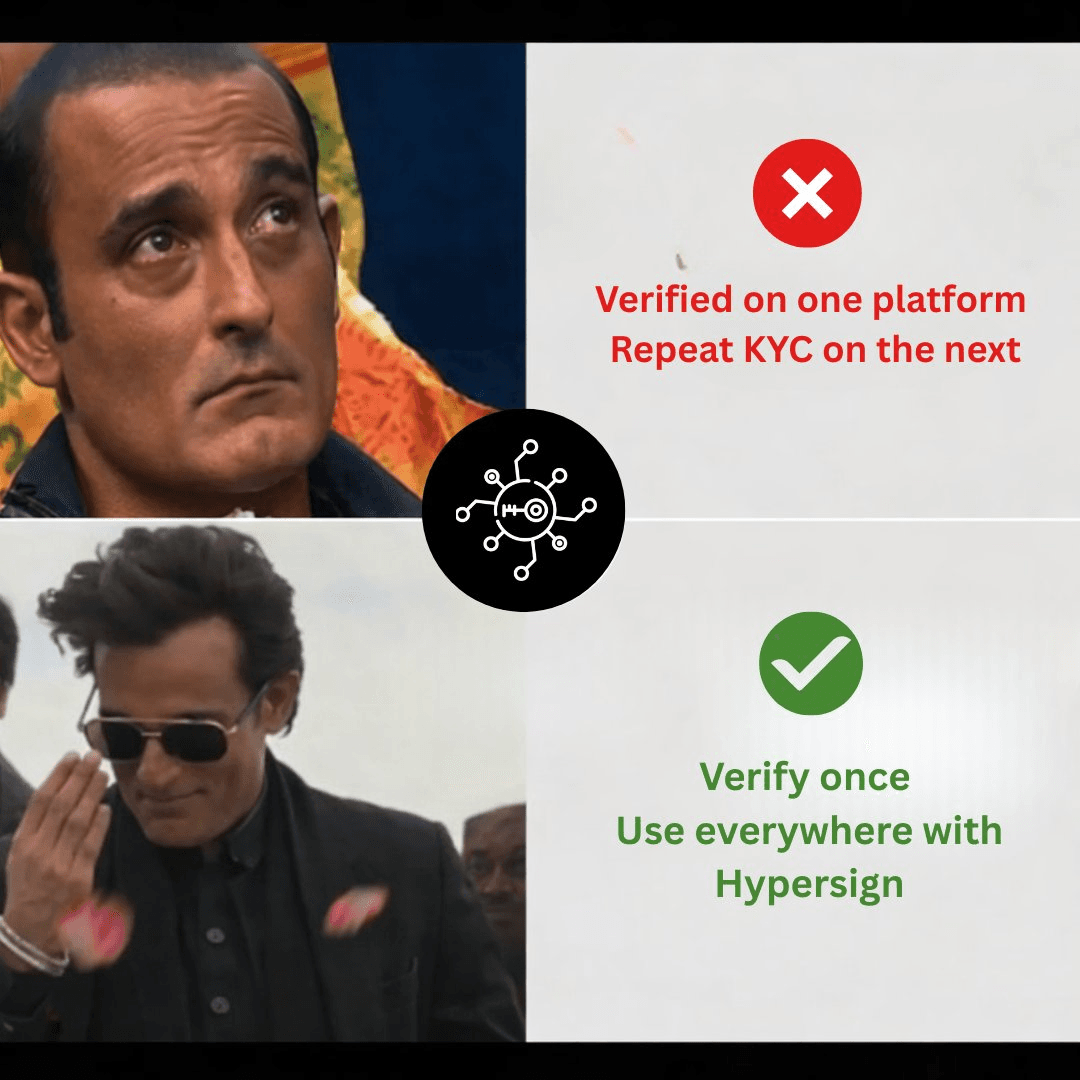
**Web3 verification bottlenecks are finally getting solved.** Companies previously faced massive delays due to repeated KYC/KYB processes across different chains and platforms. Every new partnership, token listing, or institutional onboarding triggered fresh verification cycles. **The impact of improved solutions includes:** - Faster cross-chain partnerships - Quicker token and project listings - Rapid onboarding for VCs, LPs, and market makers - Fewer compliance bottlenecks - Better fraud protection without extra paperwork **The core problem was identity fragmentation** - verified projects were treated as new entities on every platform, forcing repeated document submissions and compliance checks. With regulations like MiCA, AMLD7, and FATF raising standards, **consistent verification becomes critical** for Web3 growth. Legacy KYC tools couldn't share verified data across ecosystems. *Reusable credentials and automated checks* are emerging as the solution, allowing user-owned data to move seamlessly between platforms while maintaining security and compliance standards.
dudes