Web3 Companies Gain Speed with Streamlined Cross-Chain Verification Solutions
Web3 Companies Gain Speed with Streamlined Cross-Chain Verification Solutions
🚀 Web3 Speed Unlocked

Web3 verification bottlenecks are finally getting solved.
Companies previously faced massive delays due to repeated KYC/KYB processes across different chains and platforms. Every new partnership, token listing, or institutional onboarding triggered fresh verification cycles.
The impact of improved solutions includes:
- Faster cross-chain partnerships
- Quicker token and project listings
- Rapid onboarding for VCs, LPs, and market makers
- Fewer compliance bottlenecks
- Better fraud protection without extra paperwork
The core problem was identity fragmentation - verified projects were treated as new entities on every platform, forcing repeated document submissions and compliance checks.
With regulations like MiCA, AMLD7, and FATF raising standards, consistent verification becomes critical for Web3 growth. Legacy KYC tools couldn't share verified data across ecosystems.
Reusable credentials and automated checks are emerging as the solution, allowing user-owned data to move seamlessly between platforms while maintaining security and compliance standards.

For Web3 companies, the impact is huge: • Faster cross-chain partnerships • Quicker token and project listings • Rapid onboarding for VCs, LPs, and market makers • Fewer compliance bottlenecks • Better fraud protection with no extra paperwork
This creates real friction for Web3 growth. As MiCA, AMLD7, and FATF raise the bar, consistent verification becomes critical. Yet legacy KYC tools cannot share verified data across ecosystems, causing repeated checks and slow integrations
Web3 companies lose massive time and velocity because of repeated KYC/KYB. Every new partner integration, liquidity provider, validator, or institutional onboarding triggers another verification cycle. This slows product launches, delays listings, & increases compliance costs.
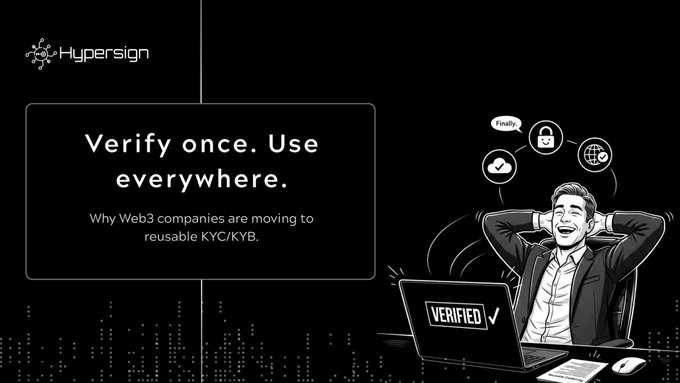
Startups in Web3 do not lose trust because they innovate. They lose it when verification is outdated, repetitive, and privacy-intrusive. Reusable credentials. Automated checks. User-owned data. This is how Web3 teams build trust at scale. #KYB #KYC #Compliance #Web3
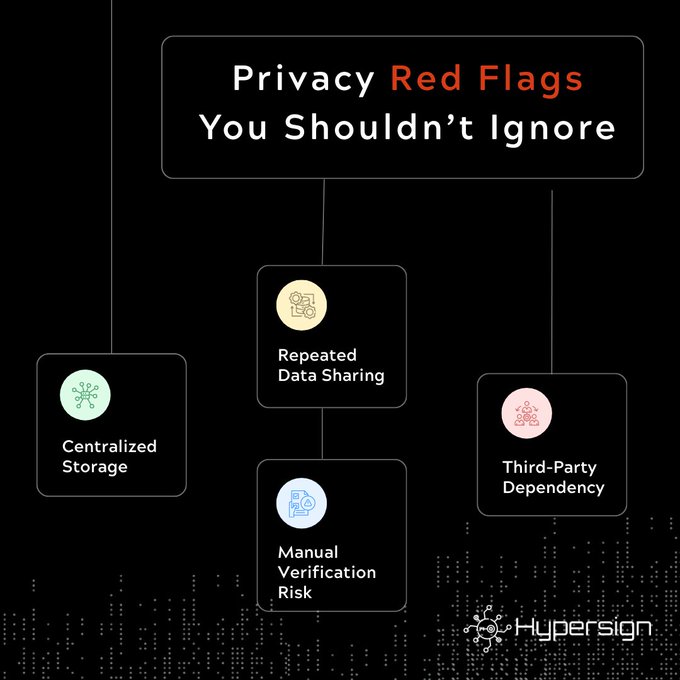
The core issue is identity fragmentation across chains and platforms. Even if a project is fully verified on one protocol, it is treated as “new” everywhere else. Documents get resubmitted. Checks get repeated. Compliance teams waste hours validating the same information again.
🔐 Rethinking KYC
**The Problem with Current KYC** Most KYC solutions prioritize compliance over user experience, leading to: - Unnecessary friction in onboarding - High user drop-off rates - Poor integration with decentralized systems **A Different Approach** Hypersign proposes rethinking KYC with principles that respect DeFi's foundations: - **Wallet-native**: Built for crypto users from the ground up - **Reusable**: Verify once, use across multiple protocols - **Opt-in**: Users maintain control over their data - **Interoperable**: Works seamlessly across different platforms The core argument: compliance doesn't have to break user experience. By designing KYC systems onchain-first and making them composable, verification can integrate into existing workflows without the traditional friction. This approach distributes responsibility among issuers, holders, and verifiers, allowing users to control their credentials while maintaining compliance requirements.
AI-Generated Faces and Stolen Selfies: The New Wave of Identity Fraud
**Identity fraud is evolving rapidly** as attackers deploy AI-generated faces, stolen selfies, and synthetic identities to bypass verification systems. **Key threats include:** - Deepfake technology creating convincing fake identities - Stolen biometric data from compromised devices - AI-powered attacks targeting facial recognition systems - Synthetic identity creation combining real and fake information **The impact on crypto security** is significant, as these techniques enable unauthorized access to accounts and wallets. Traditional verification methods are struggling to keep pace with these sophisticated attacks. Users should implement multi-factor authentication, monitor account activity regularly, and be cautious about sharing biometric data. Organizations need to upgrade their identity verification systems to detect AI-generated content and synthetic identities. Learn more about protecting against face-based attacks: [Binance Security Guide](https://www.binance.com/en/blog/security/dont-let-ai-steal-your-face-or-your-crypto-a-closeup-on-the-face-attack-threat-3651869644273052300?hl=en&ref=AZTKZ9XS&utm_source=BinanceTwitter&utm_medium=GlobalSocial&utm_campaign=GlobalSocial)
🔐 Hypersign Tackles Repetitive KYC with Reusable Identity Solution

**Hypersign** is addressing a common friction point in Web3: repetitive KYC processes across different platforms. **The Problem** Users currently need to complete separate identity verification for each new dApp or service they use, creating redundant processes and privacy concerns. **The Solution** Hypersign offers a **verify-once, use-everywhere** approach: - Complete KYC verification one time - Receive a cryptographically signed credential - Reuse that credential across chains and dApps - Maintain privacy through decentralized architecture The system uses public key infrastructure and blockchain to create verifiable credentials that work across partner networks. Users control their data while issuers provide verification, and the credentials remain compatible with existing identity management systems. The platform aims to be both **privacy-first** and **regulation-ready**, positioning itself as infrastructure-layer solution for Web3 businesses. [Learn more](https://linktr.ee/hypersign)
🔄 Groundhog Day KYB
**Reusable KYB verification** aims to eliminate repetitive partner onboarding processes that slow Web3 businesses. The solution addresses a major friction point: **every new integration** - whether with partners, liquidity providers, or validators - currently triggers separate verification cycles. Key benefits: - **Faster onboarding** without repeated documentation - **Reduced compliance costs** through verification reuse - **Privacy-focused** approach to business verification - **Regulation-ready** framework for institutional needs Powered by Concordium blockchain, this approach could **accelerate product launches** and reduce delays in exchange listings. The current system forces Web3 companies to lose significant time and velocity with each new business relationship, creating unnecessary barriers to growth.
Hypersign Shifts to App Layer Focus in 2026 with Partner Ecosystem
**Hypersign announces major strategic shift for 2026**, moving from technical infrastructure to **application layer solutions**. The company plans to focus on solving **real business problems** rather than technical complexity. This transition builds on **two years of infrastructure development**. **Key partnerships driving the change:** - Concordium for blockchain infrastructure - CheqD for decentralized identity - QuillAudits for security auditing The collaboration with **QuillAudits introduces enhanced audit workflows** featuring: - On-chain KYC verification - Verified founder credentials - Privacy-first compliance tools This represents a **trust upgrade for the web3 ecosystem**, moving beyond technical jargon to practical business applications.