🔍 Why Verifiable Onchain Yield Sources Matter When Markets Break
🔍 Why Verifiable Onchain Yield Sources Matter When Markets Break
🔍 Trust verified not assumed


Offchain trust assumptions are the overlooked risk in yield protocols. Most users don't verify yield sources until something breaks.
mStable's approach: Uses sUSDe specifically because its yield source is verifiable onchain. This design choice becomes critical during market stress.
The core issue: When protocols work smoothly, few check the underlying mechanisms. Only during failures do users discover which protocols were built with verification in mind.
Key takeaway: Onchain verification of yield sources provides transparency that matters most when markets are volatile.

Offchain trust assumptions are the part of yield most people skip over When things work, nobody checks. When they break, you find out which protocols designed for it mStable uses sUSDe because the yield source is verifiable onchain. That matters after a week like this

We've published a blog post on the recent Resolv USR incident. It covers what happened, why offchain trust assumptions matter, and the design principles Ethena adopted from inception to prevent similar outcomes. Read it below.

Stablecoin Yields Hit 17% With No Strings Attached
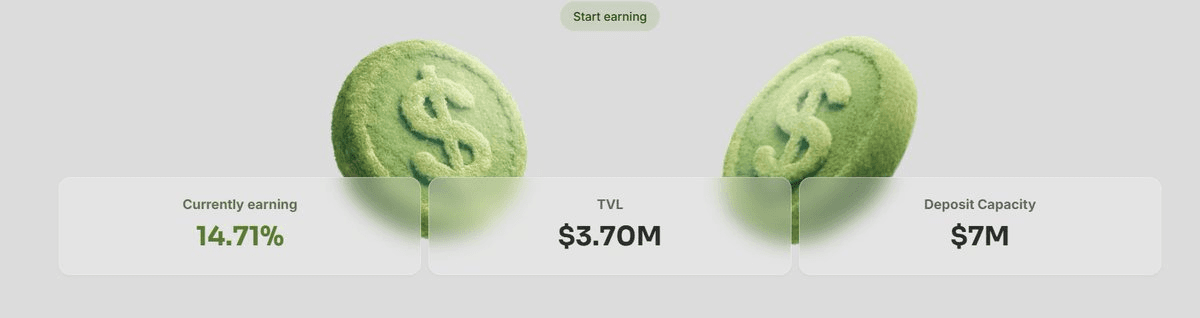
**Current rates:** Stablecoins are now offering 17%+ annual returns without requiring lockup periods, points systems, or token incentives. **How it works:** The yields come from mStable's asset pools, which generate returns through: - Lending basket assets on third-party protocols - Collecting fees from swap transactions - Maintaining 1:1 backing with underlying stablecoins **Key features:** - Zero price slippage on swaps between basket assets (e.g., DAI to USDC) - No lockup requirements - Direct on-chain minting and redemption via smart contracts **Context:** This represents a significant increase from the 100%+ APY rates seen in October 2024, though those earlier rates likely included temporary incentives. The current 17%+ rate appears to be sustainable yield from protocol operations rather than promotional offers.
🏦 Regulation Pushes Stablecoin Yield from Centralized Issuers to DeFi
**New regulations are blocking centralized stablecoin issuers from offering passive yield** - a shift that's redirecting capital toward decentralized finance protocols. **What's changing:** - Centralized stablecoin providers can no longer offer yield on deposits - This creates a natural funnel toward DeFi protocols with sustainable yield models - The regulation acts as a filter, separating real yield from token incentives and subsidies **Why it matters:** Yield-bearing stablecoins are evolving from static digital dollars into productive financial infrastructure. They now serve as: - Passive income generators - Capital optimization tools for treasuries - Composable collateral across protocols **The DeFi advantage:** Protocols offering lending-backed yields can now compete directly with traditional finance while providing 24/7 liquidity, full transparency, and open access - without relying on temporary token incentives. This regulatory shift may accelerate mainstream adoption by pushing users toward sustainable, transparent yield models built on lending infrastructure rather than centralized promises.
Banks Launch Tokenized Deposits with Live Onchain Yield to Counter Stablecoins

**Banks are now tokenizing deposits and offering yield directly onchain**, marking a significant shift in traditional finance's approach to competing with stablecoins. **Key developments:** - Traditional banks have moved beyond debate to action, with yield-generating tokenized deposits already operational - The yield mechanism runs continuously onchain (24/7), matching the always-on nature of crypto markets - This represents banks' direct response to the growing stablecoin market **Why it matters:** While regulators and institutions have been discussing who should be allowed to offer yield on stablecoins, banks have quietly launched their own onchain solutions. This bridges traditional banking with blockchain infrastructure, potentially offering customers the security of bank deposits combined with crypto-native yield generation. The move signals that major financial institutions are no longer viewing blockchain as a distant future technology, but as an immediate competitive necessity in the face of stablecoin adoption.
mStable Launches mPT-sUSDe: Multi-Protocol Yield Strategy Combining Ethena, Pendle, and Aave
**mStable has launched mPT-sUSDe**, a new yield product that combines multiple DeFi protocols to create leveraged fixed APY returns. **The strategy works in three layers:** - Foundation: Uses Ethena's **sUSDe** (staked USDe) as the base yield-bearing asset - Fixed APY: Leverages **Pendle's principal tokens** to convert variable yields into fixed returns - Amplification: Utilizes **Aave's money markets** to add leverage and multiply the fixed APY **How it works:** - USDe is backed by crypto assets and hedged with derivatives - sUSDe provides the staked version with native yield - Pendle splits sUSDe into yield tokens (YT) and principal tokens (PT) - PT tokens start at a discount and mature to $1, creating fixed APY - Aave's deep Ethereum liquidity enables mStable to manage leverage efficiently The product is **now live** and available for deposits at mstable.com, targeting users seeking predictable, amplified yields through this multi-protocol approach.