Super OETH: The Least Volatile Liquid Staking Token
Super OETH: The Least Volatile Liquid Staking Token
🛡️ Steady as she goes


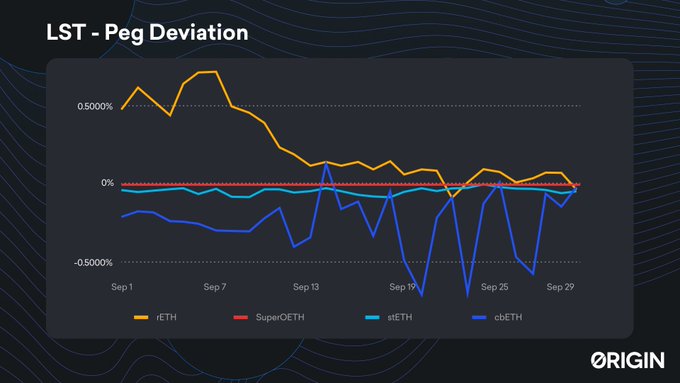
Super OETH has emerged as the most stable Liquid Staking Token (LST) in the market, maintaining a tight peg to ETH.
- A chart comparing peg stability across various tokens highlights Super OETH's performance.
- The token's price deviation from ETH is represented by a notably flat red line.
This stability offers users a reliable option for participating in Ethereum staking while minimizing volatility risks.
Key Takeaway: Super OETH's consistent peg to ETH sets it apart in the LST landscape, potentially attracting investors seeking stability in the volatile crypto market.

Super OETH: The least volatile LST, staying tightly pegged to ETH 🛡️ See that little flat red line? That's Super OETH's deviation from the price of ETH. 🔴 Check out the chart below comparing each token's peg stability:
Origin's sUSDe ARM Vault Captures Arbitrage Spread from Ethena Unstaking Delays
**Origin Protocol's sUSDe ARM vault exploits a market inefficiency in Ethena's staking system.** When users want to unstake sUSDe, they face a time delay through Ethena's official queue. Impatient sellers accept discounts on DEXs for immediate liquidity. **How the ARM works:** - Buys discounted sUSDe on secondary markets - Redeems at full value through Ethena's unstaking queue - Captures the spread as yield (5.1% 30-day APY) - Lends USDe on Aave V3 during stable periods for additional returns The vault has processed over $3 billion in volume across stETH and eETH. This marks the first application of ARM's primary-to-secondary market arbitrage model to stablecoins. [Deposit now](https://app.originprotocol.com/#/arm/1:ARM-sUSDe-USDe)
Harvest Finance Launches One-Click Autocompounder for frxUSD/OUSD Curve Pool
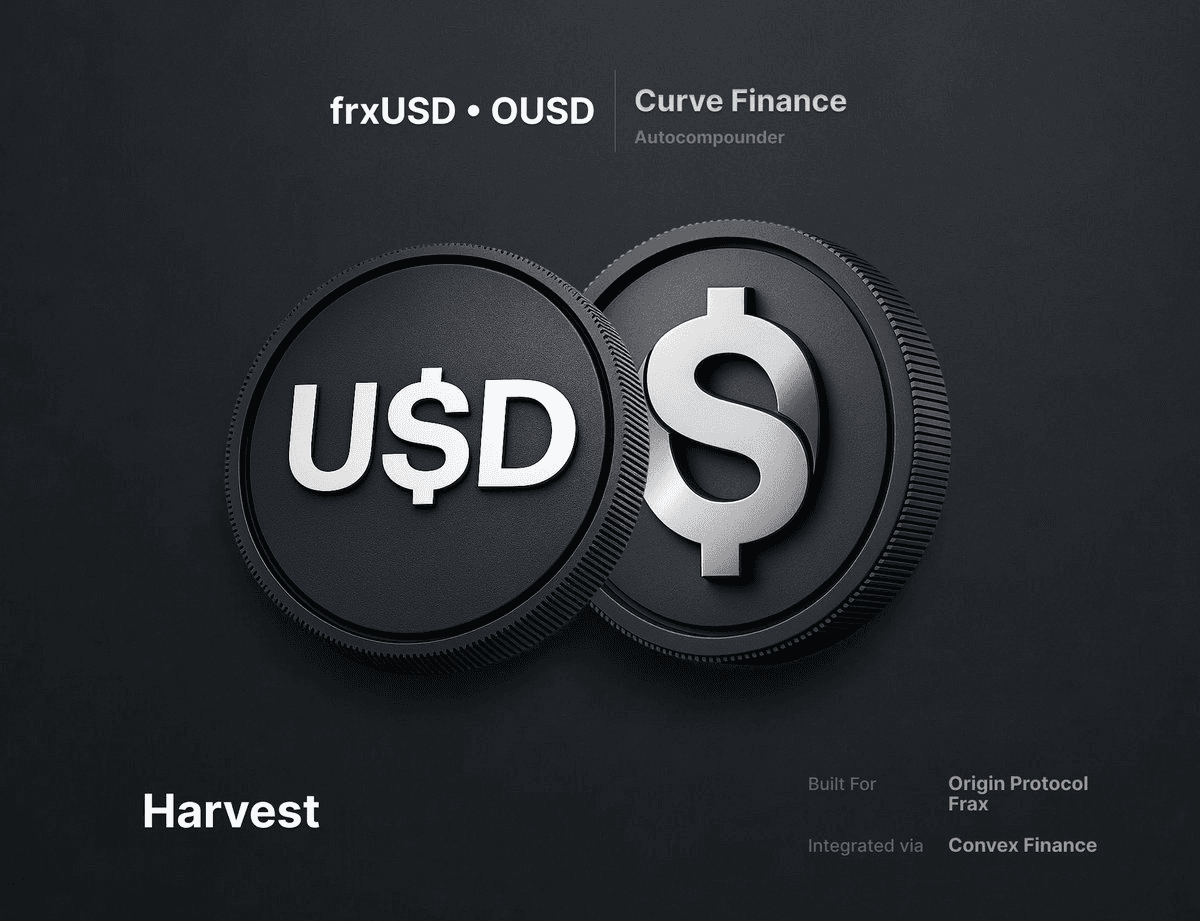
Harvest Finance has introduced a simplified farming solution for the frxUSD/OUSD Curve pool, enabling users to swap directly from assets like USDC and ETH into the pool in a single transaction. **Key Features:** - One-transaction farming from multiple asset types - Automated compounding functionality - Current yield: 7.48% APY **What This Means:** The new autocompounder removes technical barriers for liquidity providers by consolidating multiple steps into one action. Users can now participate in Curve pool farming without manually managing swaps or reinvesting rewards. The frxUSD/OUSD pool pairs two stablecoins, offering a relatively stable farming opportunity compared to volatile asset pairs.
Origin Protocol's eETH ARM Routes Idle Capital to Morpho for Continuous Yield Generation
Origin Protocol's eETH Automated Redemption Manager (ARM) integrates Morpho lending to maintain yield generation during periods without arbitrage opportunities. **Key Performance Metrics:** - 5.7% APY achieved over the past 30 days - Outperforms standard eETH staking (~3% APY) - Built on 2-year proven technology from stETH ARM ($2B+ volume processed) **How It Works:** - Primary strategy: Arbitrages eETH price differences between AMMs and Ether.fi withdrawal queue - When eETH trades below peg, ARM buys discounted eETH and redeems 1:1 for profit - During low arbitrage periods, capital automatically routes to Morpho for lending yields - Provides continuous buy pressure to stabilize eETH peg **Security & Track Record:** - Audited by OpenZeppelin and yAudit - stETH ARM has operated successfully for 2 years - Trusted by Lido Grants, Summer.fi, and Yield - Achieved 30%+ daily APY during peak volatility periods The dual-strategy approach ensures capital remains productive regardless of market conditions. [Explore eETH ARM](http://app.originprotocol.com/#/arm/1:ARM-WETH-eETH)
**Pendle Launches First stETH Volatility Trading Market via ARM Integration**
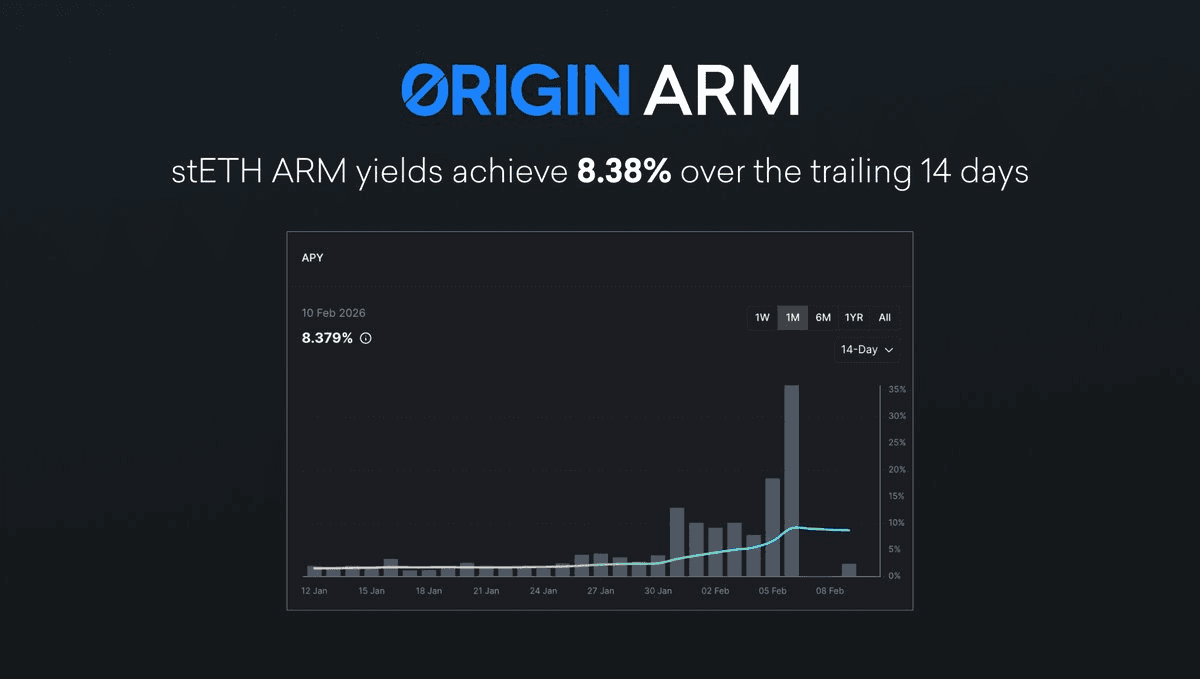
**Pendle introduces liquid yield trading for stETH volatility** through ARM (Automated Risk Management) integration. **How ARM generates yield:** - Buys stETH at discount during volatility - Redeems back to ETH at 1:1 ratio via Lido - Captures spread as profit for depositors **Pendle splits ARM yield into tradeable tokens:** - **PT (Principal Tokens):** Steady ETH exposure + fixed yield - **YT (Yield Tokens):** Leveraged upside to ARM yields This creates the **first direct way to trade stETH volatility** on Pendle. Higher stETH price swings = more arbitrage opportunities = increased yields for ARM depositors. Traders can now: - Speculate on stETH volatility through YT - Lock in fixed yields from ARM via PT - Provide liquidity to earn trading fees The ARM vault combines Lido stETH arbitrage with lending yield on idle ETH via Morpho, creating a unique yield source tied to protocol-driven arbitrage. [Trade the market](https://app.pendle.finance/trade/markets/0x53f940db819400f226466f5ad330c177a4be6b3c/swap?view=pt&chain=ethereum)
💰 Reverse Lending
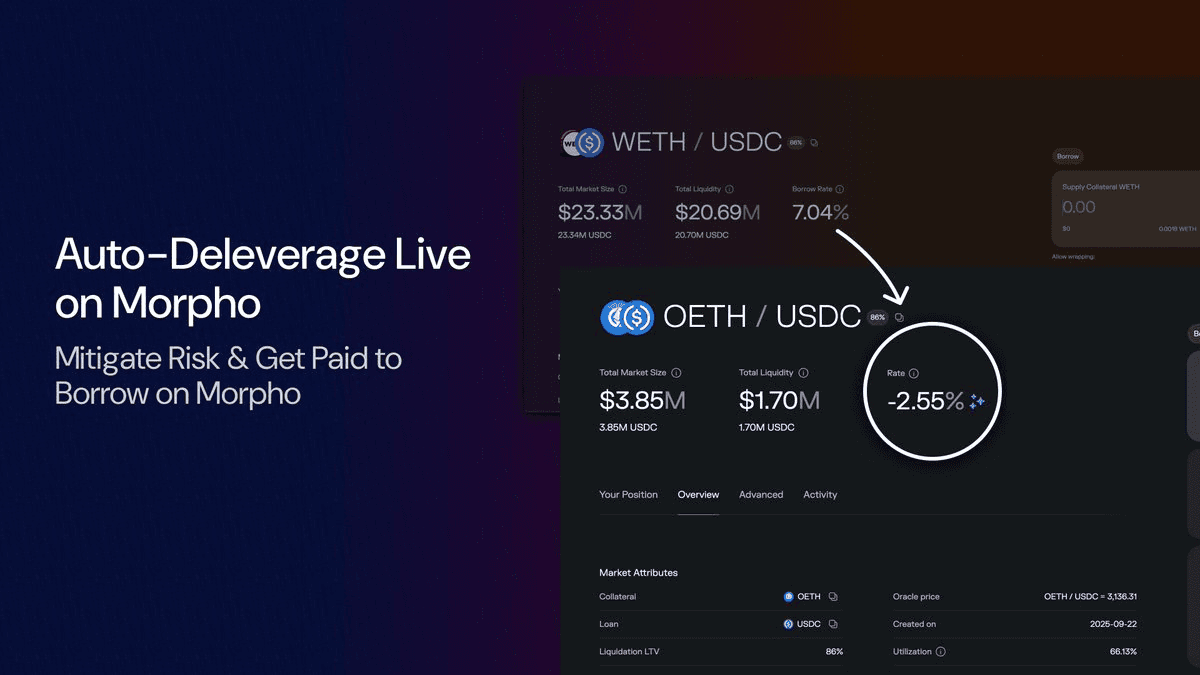
**Morpho's Borrow Booster markets** are offering negative interest rates on USDC loans across Base and Ethereum networks. **Key Features:** - Borrowers earn ~9.7% APY while taking USDC loans - Available on both Base (Super OETH market) and Ethereum (OETH market) - Auto-deleverage feature provides automatic risk management - Higher LTV loops generate more rewards **How It Works:** The markets use yield generated by OETH and Super OETH tokens to subsidize borrowing costs, effectively paying users to borrow rather than charging them. **Risk Management:** Auto-deleverage handles risk trims automatically, allowing users to maintain higher loan-to-value ratios while reducing liquidation pressure. Both markets are accessible through [Morpho's platform](https://app.morpho.org) with competitive LTV ratios - 86% on Ethereum and 77% on Base.