Private Credit Markets Poised for Blockchain Integration
Private Credit Markets Poised for Blockchain Integration
🏦 Private Credit's Secret Move

The private credit market, currently valued at $1.5 trillion, shows significant potential for blockchain adoption. This transition represents a major shift in how institutional finance operates.
Key points:
- Private credit market size: $1.5T
- Expected timeline: Gradual integration starting 2025
- Impact: Fundamental change in credit market infrastructure
While many focus on billions in potential blockchain adoption, the private credit sector alone could bring trillions in assets onchain. This represents one of the largest potential institutional shifts to blockchain infrastructure.
Market participants should prepare for this transition by:
- Understanding blockchain infrastructure
- Evaluating compliance requirements
- Developing technical capabilities

Everyone: “Billions of dollars will move onchain” Us: “Let’s think even bigger” Private credit is a $1.5T market It’s only a matter of time Trillions
Goldfinch Fund Managers Cross $1 Trillion AUM Milestone
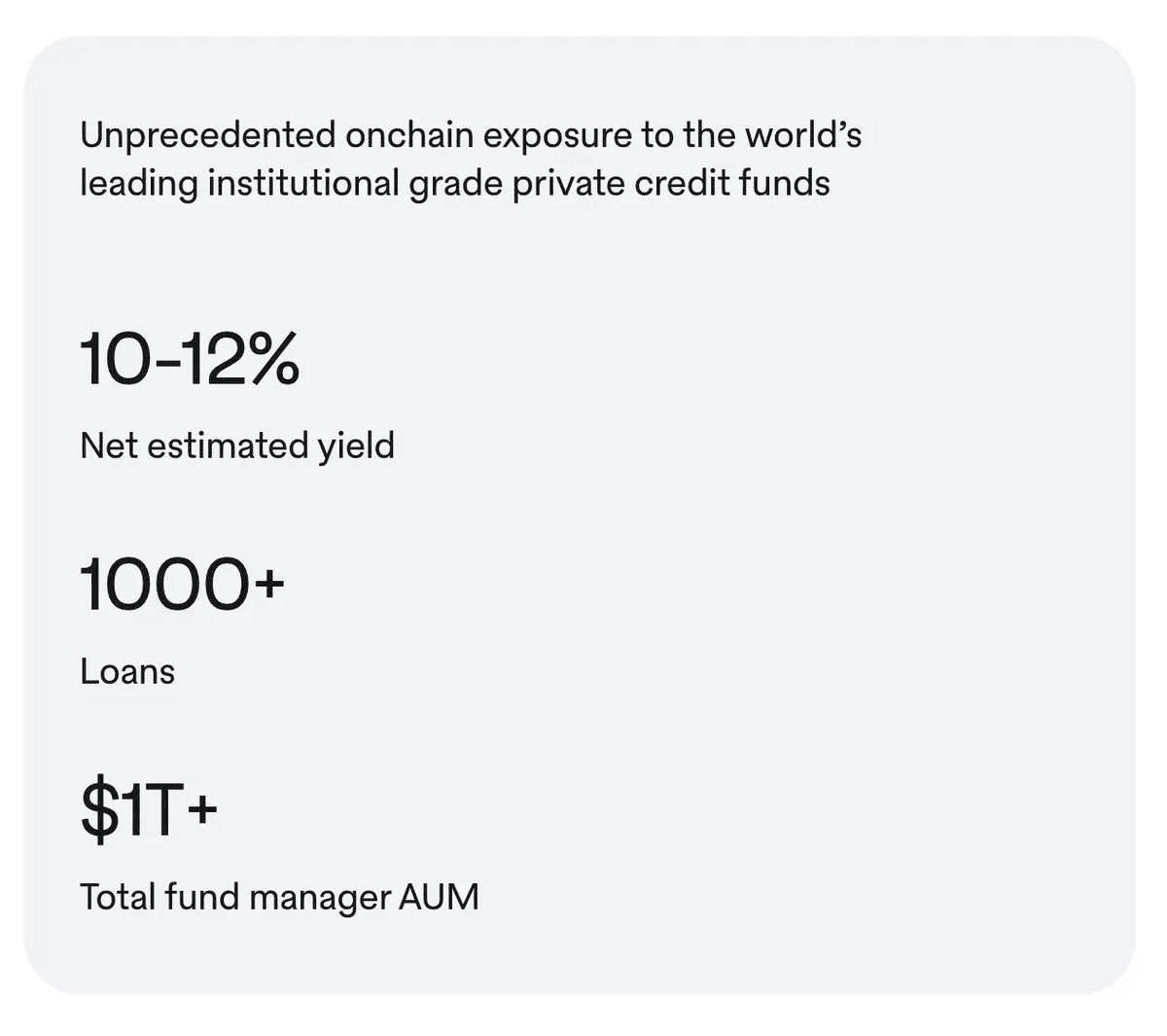
Goldfinch's fund managers have reached a significant milestone with over **$1 trillion in assets under management (AUM)**. This achievement represents substantial growth in the platform's managed funds ecosystem. The milestone demonstrates the scale that decentralized finance platforms can achieve. - Users can access multiple funds through a single platform - The $1 trillion figure encompasses all funds listed on Goldfinch - Platform offers simplified exposure to diverse fund options This development highlights the maturation of DeFi infrastructure and institutional adoption of decentralized fund management solutions.
💰 Private Credit Moves Onchain
**Private credit is outpacing traditional private markets** - growing 3x faster than private equity with $1.6T in assets. Unlike volatile venture investments, private credit offers: - Predictable returns - Secured lending positions - Consistent yield generation **The shift to blockchain is accelerating** as institutional investors seek more stable alternatives to equity markets. This represents a fundamental change in how large-scale lending operates, bringing traditional finance infrastructure onchain for greater transparency and efficiency.
Goldfinch Prime Launches Institutional-Grade Private Credit Access
Goldfinch Prime introduces a new DeFi product offering exposure to elite private credit managers including Apollo, Ares, and Blackrock HPS. The platform democratizes access to institutional-grade private credit investments by: - Removing traditional barriers like high capital minimums - Eliminating lengthy lockup periods - Providing broad diversification across top-tier managers This development represents a significant step in making institutional-quality investments accessible through DeFi infrastructure. Learn more: [CoinDesk coverage](https://www.coindesk.com/sponsored-content/goldfinch-prime-a-new-leader-in-the-emerging-rwa-opportunity)
Monroe Capital Launches Income Plus Fund on Goldfinch Prime
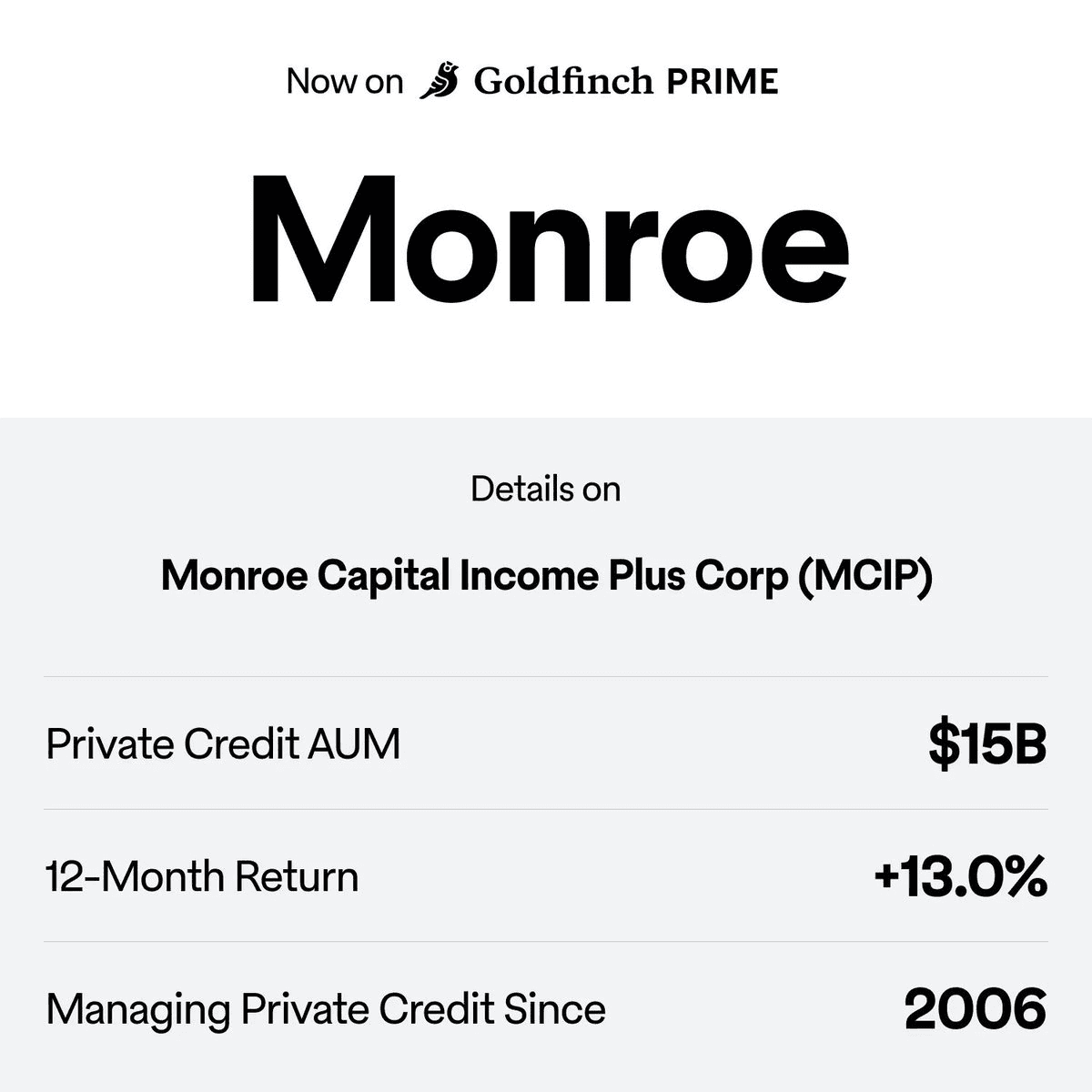
Monroe Capital has introduced a new onchain private credit fund targeting smaller U.S. and Canadian businesses. The Income Plus Fund joins TPG's Twin Brook Capital on the Goldfinch Prime platform. Key features: - Conservative, risk-aware lending approach - Focus on lower middle market companies - Available through Goldfinch Prime platform The fund aims to provide resilient returns through selective lending to established businesses in North America. This launch expands Goldfinch's growing portfolio of institutional-grade private credit offerings.
Private Credit Goes Public: Institutional Capital Flows Onchain
Institutional investors are increasingly moving private credit operations to blockchain networks, creating new opportunities for retail participants. - Traditional private credit markets are being transformed through decentralized protocols - Retail investors can now track and participate in institutional lending activities - All transactions and terms are publicly visible on blockchain - Complete transparency and permissionless access mark key improvements over traditional systems The shift represents a significant democratization of private credit markets that were previously exclusive to institutional players.