Polygon Scales to 3,800+ TPS with 140M Gas Limit Upgrade
Polygon Scales to 3,800+ TPS with 140M Gas Limit Upgrade
🚀 Polygon hits 3,800 TPS


Polygon has increased its gas limit to 140M, pushing maximum throughput beyond 3,800 transactions per second (TPS). This marks the latest in a series of rapid capacity upgrades designed to support onchain payments at scale.
Key Points:
- Gas limit raised from 90M to 140M
- Maximum TPS now exceeds 3,800
- Follows February upgrade that brought capacity to 90M gas and 2,100+ TPS
- Network capacity increased by ~38% in recent weeks
The upgrades position Polygon as a payment-grade network capable of handling high-volume transaction demands in real time.
Another upgrade for the chain. Now up to 140M gas, bringing max TPS to 3,800+ We've increased capacity again to enable even more onchain payments at scale.


Shipping mode. Now up to 120M gas, bringing max TPS to 2,800+ More capacity means more room for enterprise-grade payments, compliance flows, and settlement at scale. We're upgrading the network to bring trillions onchain.

Agglayer Connects First Non-EVM Chain, Enabling Private Chains to Access Unified Liquidity
Agglayer has achieved two significant milestones by becoming officially chain-agnostic and connecting its first non-EVM chain through Miden. **Key developments:** - Miden Testnet now maintains privacy by default while accessing unified liquidity across the ecosystem - An end-to-end verified bridge between Miden and Sepolia has been completed with Gateway - Private chains can now connect to broader liquidity without sacrificing their privacy features This integration demonstrates that privacy-focused chains no longer need to operate in isolation from the rest of the ecosystem. [Full technical report](https://gateway-fm.github.io/miden-agglayer/smoke-test-report.html)
Privacy Unlocks Institutional Stablecoin Adoption, Says Payments Head
A payments executive discussed the critical role of privacy in enabling institutional adoption of stablecoins during an interview with Fintech TV. **Key Topics Covered:** - The Open Money Stack framework - Payment infrastructure developments - Privacy as the key barrier to institutional stablecoin use The conversation builds on ongoing industry discussions about stablecoins addressing real-world challenges, including: - Currency volatility hedging - Reducing remittance costs - Enabling cross-border payments As institutions explore stablecoin integration, privacy features emerge as the essential component for widespread adoption in traditional finance.
Polygon Chain Hits 3,800+ TPS After First Block Time Reduction Since Genesis
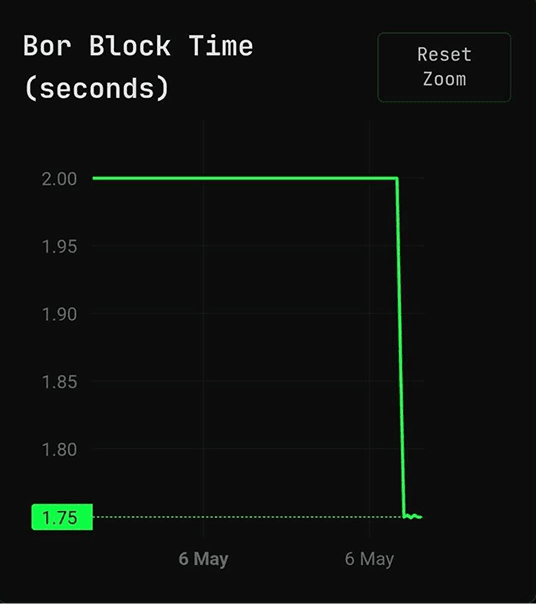
Polygon shipped two infrastructure upgrades this week that fundamentally changed the chain's performance: **Block time dropped to 1.75 seconds** - the first reduction since the network launched. This 250ms decrease delivers 14% more payment throughput. **Gas limit increased to 140M**, pushing maximum capacity to 3,800+ TPS with sub-5-second finality. The upgrades arrived alongside ecosystem expansion: - ZKPanther deployed mainnet for private DeFi transactions - 0Fiat added USDT payments across 45+ countries - Messari published Q1 data showing continued payment growth - Hadron and Ignyte launched a 25K USDC commerce infrastructure challenge Polygon now processes over 3,200 TPS in production. The chain's stablecoin supply reached $4.3B in April, up 13.33% month-over-month, as payment infrastructure continues scaling.
Hamilton Lane Tokenizes Trillion-Dollar Funds on Polygon

**Hamilton Lane**, a major asset manager with over $1 trillion under management, has tokenized two of its funds on Polygon through Securitize. - This marks a significant institutional adoption of blockchain technology for traditional finance - The funds are part of over $60M in tokenized assets issued by Securitize on Polygon - Hamilton Lane's feeder funds are available exclusively on the Polygon chain This move demonstrates growing confidence from traditional financial institutions in blockchain infrastructure for asset management and tokenization.
Stablecoins Could Unlock $48 Billion in Unredeemed Loyalty Rewards
**$48 billion in loyalty rewards go unused annually.** @0xAishwary explores how stablecoins could bridge this gap and improve customer retention. **The opportunity:** - Nearly $1 trillion in loyalty points sits idle on corporate balance sheets - These unused rewards represent significant value locked away from consumers - Traditional loyalty programs struggle with redemption rates **The stablecoin solution:** - Converting loyalty points to stablecoins could make rewards more liquid and usable - Tokenized loyalty points could function like cash across multiple platforms - Infrastructure like BLOCKv is building enterprise-ready systems for this transition **Potential impact:** - Increased customer engagement through easier redemption - Better retention as rewards become more valuable to users - Loyalty points could evolve into a major currency category This represents a practical application where blockchain technology addresses a real-world problem in consumer loyalty programs.