Stablecoins Could Unlock $48 Billion in Unredeemed Loyalty Rewards
Stablecoins Could Unlock $48 Billion in Unredeemed Loyalty Rewards
💰 The $48B Problem

$48 billion in loyalty rewards go unused annually. @0xAishwary explores how stablecoins could bridge this gap and improve customer retention.
The opportunity:
- Nearly $1 trillion in loyalty points sits idle on corporate balance sheets
- These unused rewards represent significant value locked away from consumers
- Traditional loyalty programs struggle with redemption rates
The stablecoin solution:
- Converting loyalty points to stablecoins could make rewards more liquid and usable
- Tokenized loyalty points could function like cash across multiple platforms
- Infrastructure like BLOCKv is building enterprise-ready systems for this transition
Potential impact:
- Increased customer engagement through easier redemption
- Better retention as rewards become more valuable to users
- Loyalty points could evolve into a major currency category
This represents a practical application where blockchain technology addresses a real-world problem in consumer loyalty programs.

Every year, $48 billion in loyalty rewards go unredeemed. @0xAishwary explains how stablecoins can close that gap and boost customer retention.
Agglayer Connects First Non-EVM Chain, Enabling Private Chains to Access Unified Liquidity
Agglayer has achieved two significant milestones by becoming officially chain-agnostic and connecting its first non-EVM chain through Miden. **Key developments:** - Miden Testnet now maintains privacy by default while accessing unified liquidity across the ecosystem - An end-to-end verified bridge between Miden and Sepolia has been completed with Gateway - Private chains can now connect to broader liquidity without sacrificing their privacy features This integration demonstrates that privacy-focused chains no longer need to operate in isolation from the rest of the ecosystem. [Full technical report](https://gateway-fm.github.io/miden-agglayer/smoke-test-report.html)
Privacy Unlocks Institutional Stablecoin Adoption, Says Payments Head
A payments executive discussed the critical role of privacy in enabling institutional adoption of stablecoins during an interview with Fintech TV. **Key Topics Covered:** - The Open Money Stack framework - Payment infrastructure developments - Privacy as the key barrier to institutional stablecoin use The conversation builds on ongoing industry discussions about stablecoins addressing real-world challenges, including: - Currency volatility hedging - Reducing remittance costs - Enabling cross-border payments As institutions explore stablecoin integration, privacy features emerge as the essential component for widespread adoption in traditional finance.
Polygon Chain Hits 3,800+ TPS After First Block Time Reduction Since Genesis
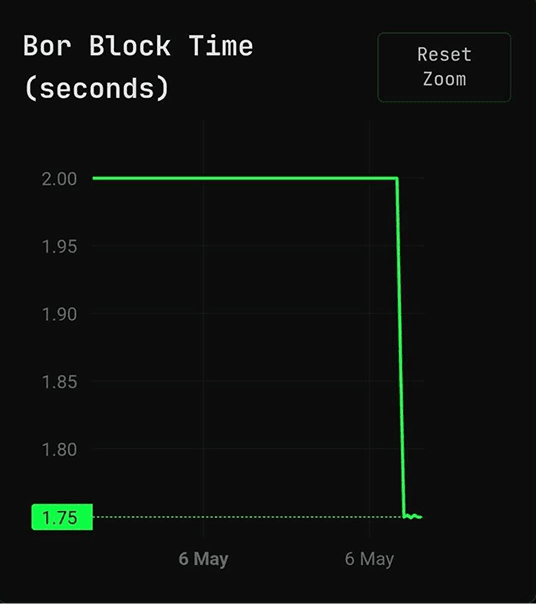
Polygon shipped two infrastructure upgrades this week that fundamentally changed the chain's performance: **Block time dropped to 1.75 seconds** - the first reduction since the network launched. This 250ms decrease delivers 14% more payment throughput. **Gas limit increased to 140M**, pushing maximum capacity to 3,800+ TPS with sub-5-second finality. The upgrades arrived alongside ecosystem expansion: - ZKPanther deployed mainnet for private DeFi transactions - 0Fiat added USDT payments across 45+ countries - Messari published Q1 data showing continued payment growth - Hadron and Ignyte launched a 25K USDC commerce infrastructure challenge Polygon now processes over 3,200 TPS in production. The chain's stablecoin supply reached $4.3B in April, up 13.33% month-over-month, as payment infrastructure continues scaling.
Hamilton Lane Tokenizes Trillion-Dollar Funds on Polygon

**Hamilton Lane**, a major asset manager with over $1 trillion under management, has tokenized two of its funds on Polygon through Securitize. - This marks a significant institutional adoption of blockchain technology for traditional finance - The funds are part of over $60M in tokenized assets issued by Securitize on Polygon - Hamilton Lane's feeder funds are available exclusively on the Polygon chain This move demonstrates growing confidence from traditional financial institutions in blockchain infrastructure for asset management and tokenization.