🔢 OmniVaults vs AMM Pools: The Capital Efficiency Math
🔢 OmniVaults vs AMM Pools: The Capital Efficiency Math
💰 10x capital efficiency


Dexalot breaks down the numbers comparing traditional AMM pools to their OmniVault solution:
AMM pools require:
- $200k for decent liquidity depth
- Liquidity fragmented across 5 chains ($40k each)
- Different prices on each chain
- Slippage on larger trades
- Impermanent loss and MEV exposure
- Managing multiple pools
OmniVaults deliver:
- $20k for equivalent depth (10x more efficient)
- Single deposit covers all chains
- Unified pricing
- Zero slippage with limit orders
- Earnings from fees, PnL, and rewards
- Automated management
The platform uses a hub-and-spoke model with 90% of liquidity on Dexalot L1's order book, with smaller allocations on Avalanche, Arbitrum, Base, and BNB Chain for atomic swaps.

AMM pool vs OmniVault. Let's compare. AMM: - Need $200k to get decent depth - Liquidity split across 5 chains = $40k each - Different prices on each chain - Suffer slippage on size - LPs get rekt by IL and MEV - Managing 5 pools = nightmare OmniVault: - Need $20k for same depth

OmniVaults solve liquidity fragmentation. One deposit. Seven chains. One order book. No bridging between chains. No managing multiple pools. No guessing which chain has the best price. Projects get deep liquidity everywhere. Users get better prices. Everyone wins.

KITE/USDC OmniVault is live with @GoKiteAI AI agents need real liquidity infrastructure. Not just another AMM pool sitting on one chain collecting dust. OmniVaults deploy capital on one or multiple chains from a single source. Zero bridging. Zero fragmentation. Orders hit the

OmniVaults are live! Deposit once. Earn yield across chains. No manual rebalancing. No fragmented liquidity. Right now: ETH/USDC: ~31% APR BTC/USDC: ~42% APR AVAX/USDC: ~52% APR Real yields. Real order book liquidity.


Why AMMs waste 90% of your liquidity 🧵 1/ AMMs spread your capital across the entire price curve. Most of it just sits there doing nothing. Example: You deposit $100k into an ETH/USDC pool. Maybe $10k is actually being used for trades. The rest? Dead weight. 2/ CLOBs are
We just solved DeFi's biggest problem. OmniVaults are live. One deposit. Infinite liquidity across every chain. No bridging. No fragmentation. No babysitting multiple pools. Projects get professional market making without hiring a single MM. Users earn yield while the vault

When someone swaps on Base through 1inch, they're pulling prices from the Dexalot L1 order book. Instantly. No waiting for bridges. No fragmented pricing. One source of truth. The vault automatically rebalances between hub and spokes to keep inventory optimal.
AMMs lose you money when price moves because they force 50/50 rebalancing. Price goes up? Pool auto-sells your winners. Price drops? Pool auto-buys more losers. OmniVaults places and adjusts orders at specific prices as the market moves in a second. No forced rebalancing.
OmniVaults abstract away the hard parts: • Cross-chain rebalancing ✓ • Gas management across networks ✓ • Algorithmic order placement ✓ • Liquidity distribution ✓ Projects deposit once. Users earn yield. The vault handles everything else. Capital efficiency without the

3/ OmniVaults bring that CLOB efficiency to every liquidity provider. Deposit liquidity into an OmniVault on the Dexalot L1 & let it work: algorithmically places limit orders, rebalances across chains, and manages gas. 10x capital efficiency vs AMMs.
🚨 New OmniVault Live: AVAX/USDT Deposit once. Access unified liquidity across chains through Dexalot's single order book. Start earning today: app.dexalot.com/vault

Dexalot Launches Liquid Staking for ALOT Tokens via Suzaku Network

Dexalot has introduced liquid staking for $ALOT token holders through a partnership with Suzaku Network. The service allows users to stake tokens on Avalanche's C-Chain while maintaining liquidity. **Key features:** - Earn approximately 10% APY on staked tokens - No lockup periods required - Rewards distributed through DIP epochs - Tokens remain liquid and tradeable while staked - Secures the Dexalot L1 network The staking mechanism is accessible through [app.dexalot.com/stake](http://app.dexalot.com/stake). Unlike traditional staking models that lock tokens, this liquid staking approach allows holders to maintain capital efficiency while earning yield. The integration with Suzaku Network's protocol enables stakers to participate in network security without sacrificing token accessibility.
Dexalot Launches OmniVaults for Cross-Chain Liquidity Management
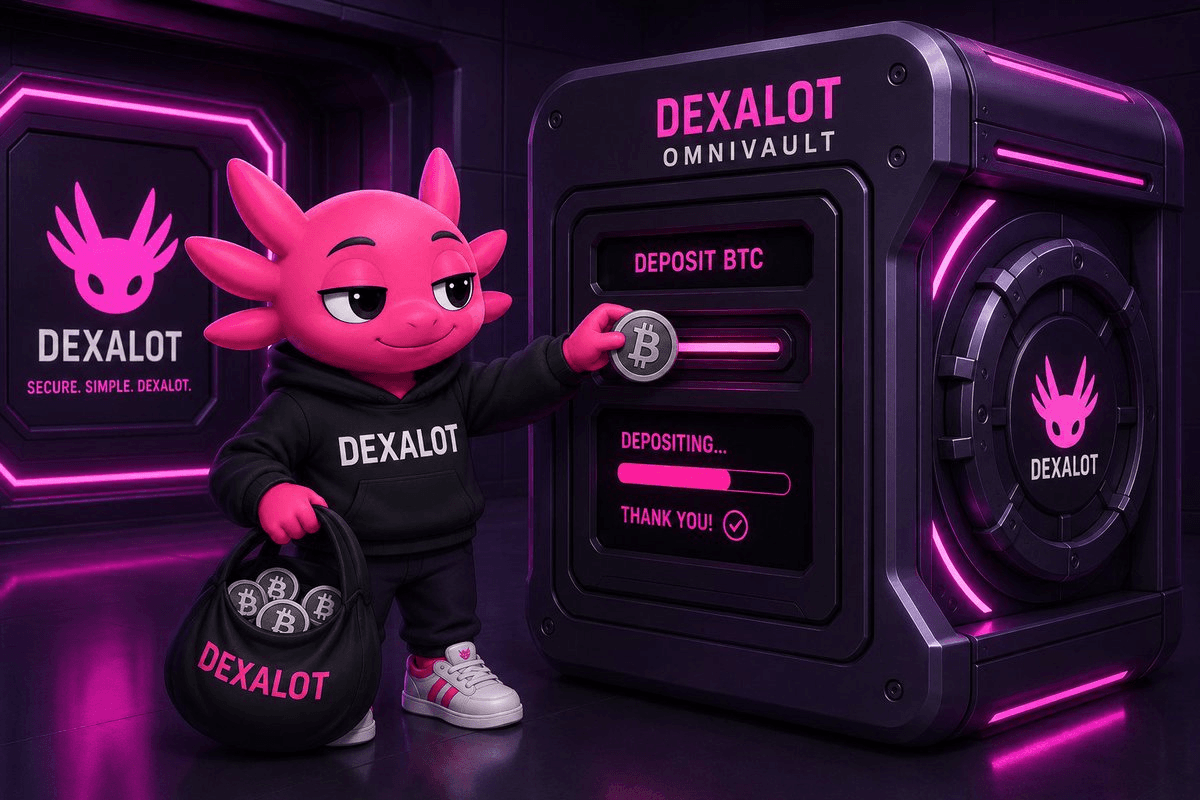
Dexalot has launched **OmniVaults**, a new liquidity solution designed to address fragmentation in DeFi. **Key features:** - Single deposit provides liquidity across multiple chains - Eliminates need for bridging between networks - Automated market making without hiring external firms - Users earn yield while vaults manage liquidity distribution The platform aims to simplify liquidity provision by removing the need to manage separate pools on different chains. Projects can access professional market making services, while users can deposit once and have their assets work across the ecosystem. OmniVaults represents Dexalot's approach to solving cross-chain liquidity challenges that have historically required users to maintain multiple positions and pay gas fees across various networks. Learn more at [app.dexalot.com/vaults](http://app.dexalot.com/vaults)
OmniVaults Introduces Alternative to Traditional AMM Rebalancing
**OmniVaults** has launched a new liquidity provision system that differs from traditional automated market makers (AMMs). **Key differences:** - Traditional AMMs maintain 50/50 asset ratios through automatic rebalancing - When prices rise, AMMs sell appreciating assets - When prices fall, AMMs buy depreciating assets - OmniVaults places orders at specific price points instead - The system adjusts positions as markets move without forced rebalancing **Technical approach:** - Orders are placed and adjusted at targeted prices - Range and strategy parameters are systematically controlled - The platform aims to reduce impermanent loss through dynamic liquidity adjustment OmniVaults positions itself as an evolution of AMM technology, which has been in use for nearly a decade. The system attempts to address value erosion that can occur with automatic asset swapping in traditional pools.
ALOT Liquid Staking Goes Live with Suzaku Network Partnership
**ALOT token holders can now participate in liquid staking**, ending the era of idle tokens sitting in wallets. **Key developments:** - Liquid staking for $ALOT is officially live as of May 21, 2026 - Partnership with Suzaku Network enables this functionality - Holders can now earn rewards while maintaining liquidity **What this means:** Liquid staking allows users to stake their ALOT tokens and receive rewards without locking them up completely. Unlike traditional staking where tokens become illiquid, this approach lets holders maintain flexibility while earning yields. The integration with Suzaku Network provides the infrastructure needed to make this possible, marking a significant upgrade for the ALOT ecosystem. **Bottom line:** ALOT holders now have more options for putting their tokens to work without sacrificing access to their assets.