GENIUS Act Brings Stablecoins Into Regulated Financial System
GENIUS Act Brings Stablecoins Into Regulated Financial System
🏛️ Stablecoins get regulated


Stablecoin regulation reached a turning point in 2025 with the passage of the GENIUS Act in the US. The framework established clear rules that brought regulated stablecoins like USDC into the mainstream financial system.
Key developments:
- Institutions moved from pilot programs to real-world deployment
- USDC now used across payments, treasury operations, and capital markets
- Global availability gives institutions confidence to adopt at scale
The regulatory clarity enabled innovation rather than restricting it. Financial institutions can now integrate stablecoins into their operations with legal certainty.
Circle's latest report documents this shift, showing how digital dollars evolved from an experiment into core financial infrastructure operating globally.

Stablecoin regulation has reached a global inflection point. In 2025, frameworks like the GENIUS Act in the US brought regulated stablecoins inside the financial system, with clear rules designed to spur growth. USDC is available globally, giving institutions the confidence to

Stablecoins are growing globally, especially in places where people want access to digital dollars. When money settles directly over the internet, without intermediaries or delay, expectations change. Why settle for less when you can settle in @USDC?
🤖 Why AI Agents Need Internet-Native Money
As AI agents begin conducting online transactions, they'll require financial infrastructure designed for the internet. Circle's Jeremy Fox-Geen explains why trusted payment rails matter in an autonomous economy. **Key context:** - Circle is building interoperability infrastructure for faster settlement and crosschain execution - New forwarding service now automates USDC transfers across 15+ blockchains including Solana, Ethereum, and Base - Circle's CTO Li Fan notes the contrast: international calls became free, but cross-border payments remain slow and expensive The shift mirrors how the internet scaled through standardized protocols for information. Now the same transformation is happening for value transfer, with platforms like Hyperliquid already using Circle's tools for seamless crosschain funding. Read more: [Circle's interoperability roadmap](http://www.circle.com/blog/building-the-interop-stack-for-the-internet-financial-system)
Circle Explores Digital Dollar Infrastructure in Jakarta

Circle held discussions in Jakarta focusing on three key areas: - **Financial access** improvements for Indonesian markets - **Local market structure** and regulatory frameworks - **Digital dollar integration** for efficient cross-border payments The conversations highlighted Indonesia's dual opportunity as both a domestic market and global financial hub. Circle emphasized how stablecoins could enable more accessible money movement in a region where traditional banking infrastructure faces challenges. This follows Circle's broader Asia tour, including recent events in Seoul.
Circle Reinforces Compliance Stance: Freezing Assets When Law Requires
Circle has issued a statement emphasizing its role as a regulated entity that complies with legal requirements, including sanctions and court orders. **Key Points:** - The company freezes digital assets when legally mandated - User rights and privacy protections remain in place during enforcement actions - Circle positions trust in digital assets as dependent on security, accountability, and rule of law The announcement comes as the stablecoin issuer continues to operate within regulatory frameworks, balancing compliance obligations with user protections. [Read full statement](http://www.circle.com/blog/when-open-systems-are-tested-accountability-rule-of-law-and-the-work-ahead)
Circle Adds Solana Support to Crosschain Forwarding Service
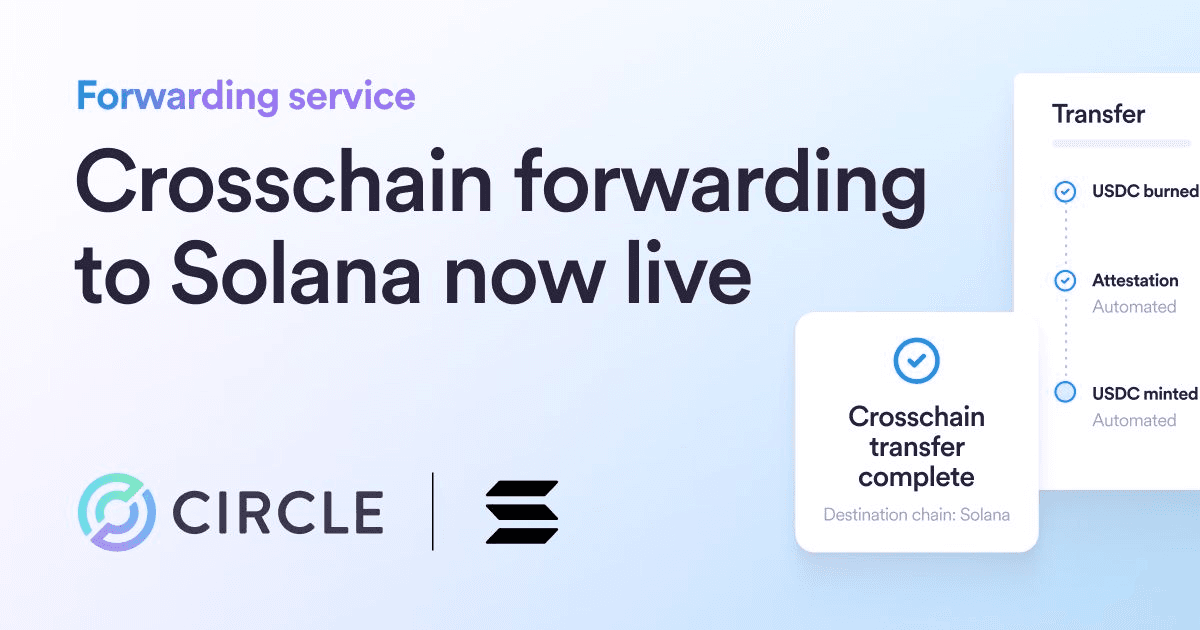
Circle has expanded its crosschain forwarding service to include Solana, enabling automated destination-chain execution for USDC transfers via CCTP and Bridge Kit. **Key Features:** - Automates the final step of crosschain transfers - Reduces end-to-end transfer time - Lowers operational costs and third-party dependencies - Improves developer and user experience **Supported Networks:** The service now works with routes to Arbitrum, Avalanche, Base, Ethereum, HyperEVM, Ink, Linea, Monad, Optimism, Polygon, Sei, Solana, Sonic Labs, Unichain, and World Chain. Additional blockchain integrations are planned. Developers can start implementing the forwarding service through Circle's documentation at [developers.circle.com/cctp](http://developers.circle.com/cctp/concepts/forwarding-service) and [Bridge Kit tutorials](http://developers.circle.com/bridge-kit/tutorials/use-forwarding-service).
Circle Launches Nanopayments on Testnet for AI Agent Transactions
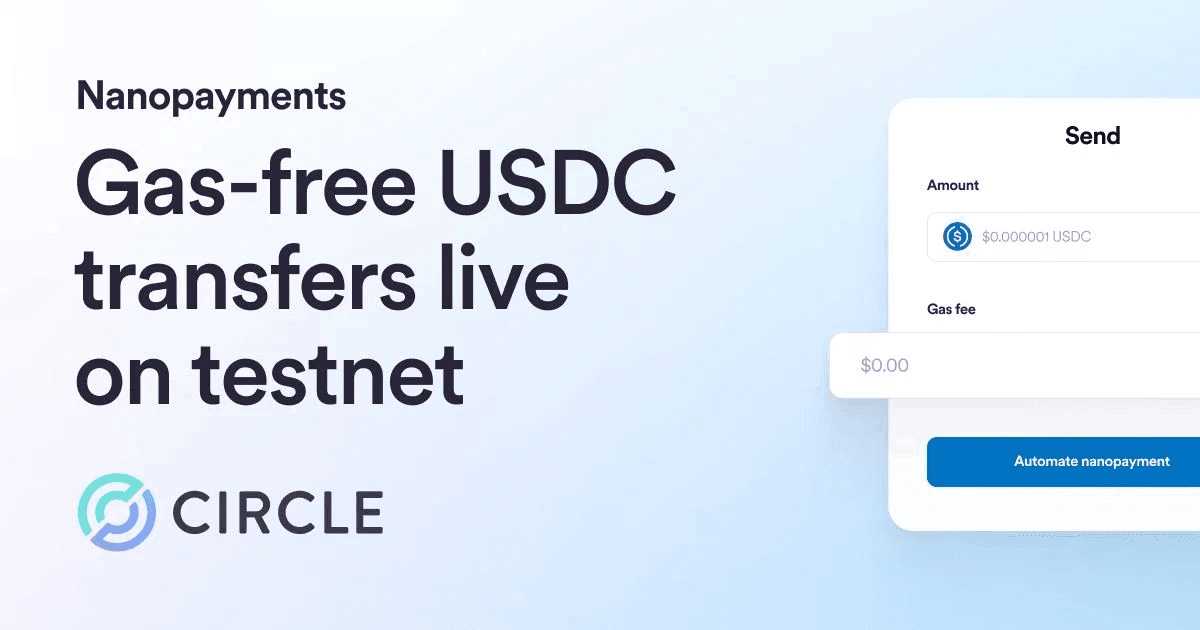
Circle has launched **Nanopayments** on testnet, enabling transactions as small as **$0.000001 with zero gas fees**. The system is designed specifically for AI agent commerce and machine-to-machine micropayments. **Key Features:** - Micropayments down to one-millionth of a dollar - Zero gas fees for transactions - Built for AI agent-to-agent commerce - Leverages USDC's programmability and interoperability **Technical Integration:** Circle is integrating its Gateway with **x402**, an open payment protocol for agentic transactions. The company is also collaborating with Google on Agent2Agent (A2A) and contributing to the Agent Payments Protocol (AP2). The testnet launch represents Circle's push into the intersection of crypto and AI, aiming to create infrastructure where humans and AI agents can participate seamlessly in the same internet economy. Developers can review Circle's proposal on the [x402 GitHub](https://circle.com/nanopayments) and contribute to the open protocol development.