Beefy Zap v3 Now Live on Optimism
Beefy Zap v3 Now Live on Optimism


Beefy Zap v3 is now live on Optimism. Over half of Beefy vaults are supported, allowing users to enter and exit favorite vaults with various tokens. The boosts are also live, offering extra $OP rewards on top of the 3 auto compounding vaults for four weeks. Integration with AngleProtocol and TheTNetwork is also mentioned.
Beefy DAO Opens Voting on H2 2026 Contributor Funding and Staworth Renewal
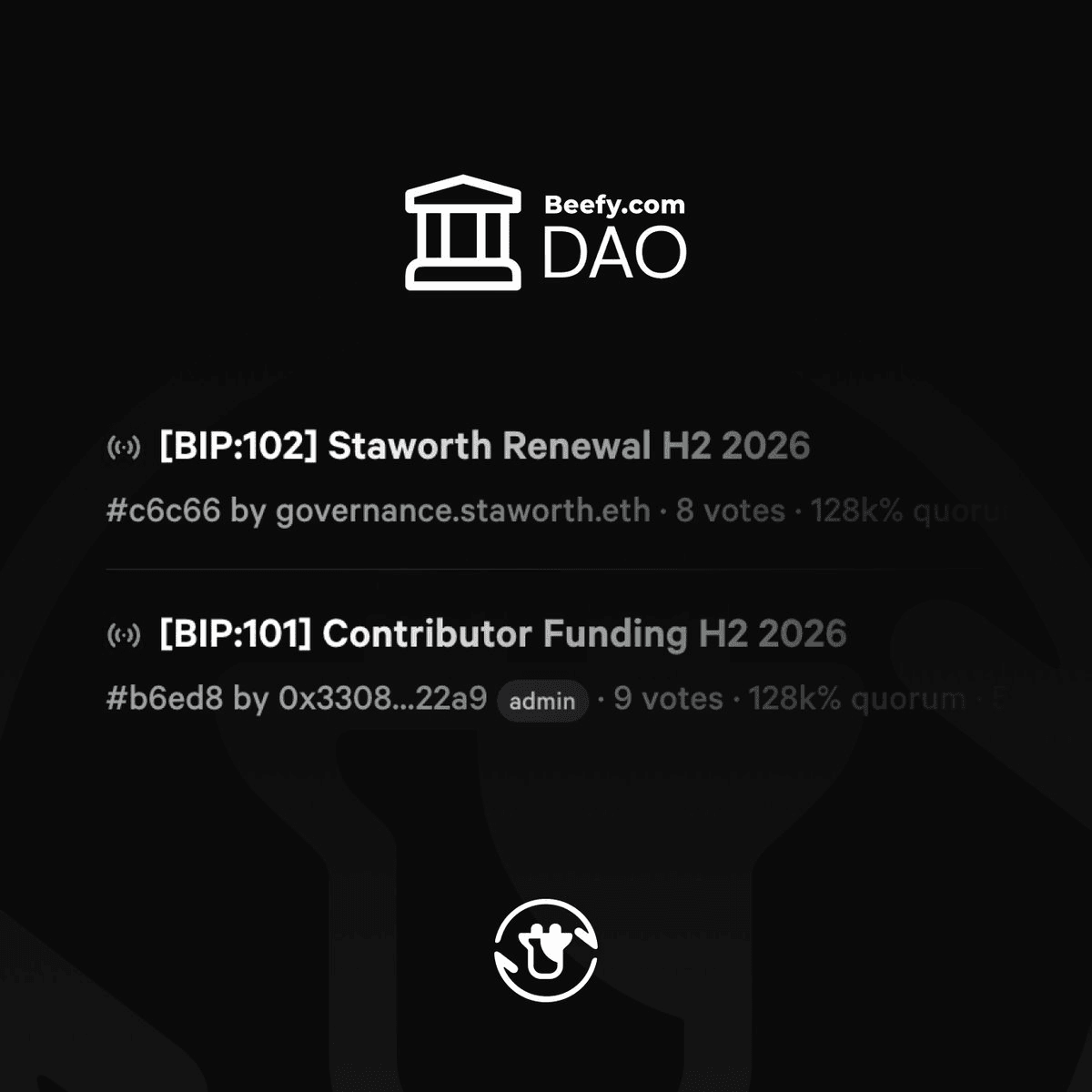
Beefy DAO has initiated voting on two budget proposals: **[BIP:101] Contributor Funding H2 2026** - Covers contributor work from August 2026 to January 2027 - Follows previous quarterly funding pattern established in Q1 2026 **[BIP:102] Staworth Renewal** - Renewal proposal for existing contributor Staworth - Part of ongoing contributor retention strategy Voting is live on [Snapshot](https://snapshot.box/#/s:beefydao.eth/). These proposals represent standard operational funding for the protocol's continued development and maintenance.
Automated Liquidity Management Offers Up to 34% APY on Ethereum Pairs
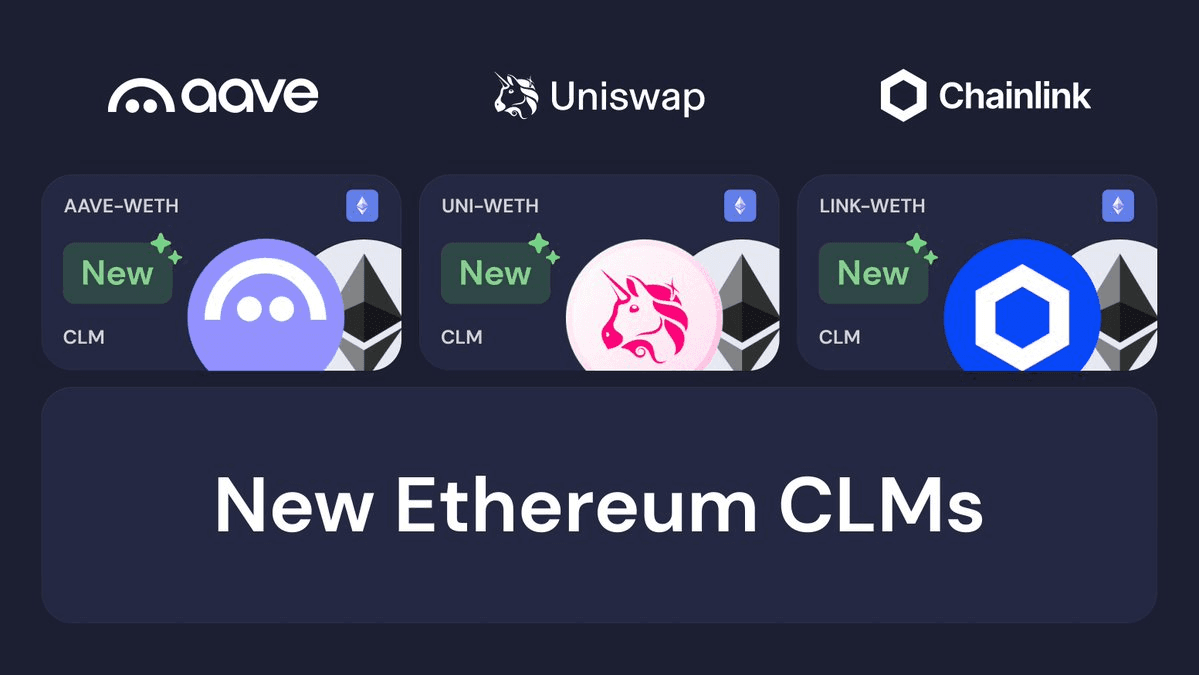
Cowcentrated liquidity managers now available on Ethereum, offering automated position management for liquidity providers. **Key Features:** - Automated concentrated liquidity positioning - Tighter price ranges for improved capital efficiency - Daily compounding of trading fees **Current Yields:** - $AAVE - $WETH: 18.7% APY - $UNI - $WETH: 34.3% APY - $LINK - $WETH: 2% APY The service removes the manual work of managing concentrated liquidity positions while maintaining exposure to trading fee revenue.
Beefy Launches Auto-Compounding Vaults on Robinhood Chain
**Beefy has launched on Robinhood Chain**, bringing automated yield optimization to Robinhood Crypto users. **Key features:** - Single deposit setup with 24/7 automatic compounding - Hands-free yield generation - Withdraw anytime The platform handles the technical work of reinvesting returns, allowing users to earn passively without manual intervention. This marks Beefy's expansion into Robinhood's blockchain ecosystem.
🚀 Monad Launch
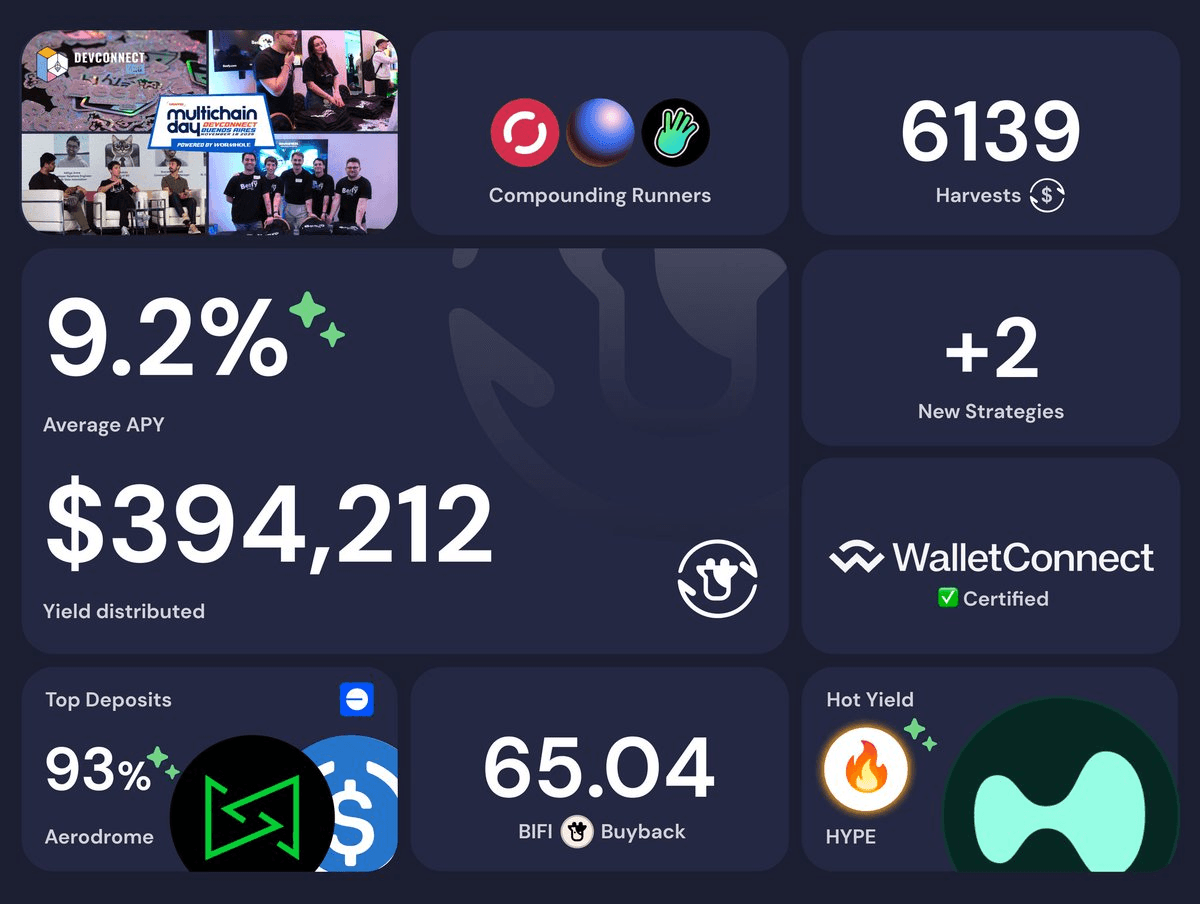
**Beefy November Performance:** - **$1.73M yield distributed** at 9% average APY - **24 new strategies** deployed across chains - **23,800 harvests** processed automatically - **382 BIFI tokens** bought back **Major Milestone:** Beefy is now **live on Monad** - expanding DeFi yield opportunities to this high-performance blockchain. The platform continues automating yield farming, turning manual processes into passive income streams for users across multiple networks.
🛡️ DeFi Insurance Works

**Nexus Mutual quickly processed nearly $100k in claims** following the Stream Finance exploit, protecting users across multiple protocols. **Key highlights:** - Claims paid out in **under a week** to affected Beefy, Euler, and Harvest Finance users - Coverage extended across Base, Arbitrum, Avalanche, and Sonic networks - Users were protected despite **not directly using Stream Finance** **The contagion effect:** Many users couldn't withdraw funds due to liquidity issues where xUSD was used as collateral, demonstrating how DeFi protocols' interconnected nature creates cascading risks. **Partners like OpenCover** facilitated the rapid payout process, showcasing how **multi-protocol coverage** can provide a safety net against second-order effects in DeFi. This incident highlights both the **real risks of protocol interdependence** and the **effectiveness of DeFi insurance** when properly implemented.