Galxe warns staked $G and Smart Savings need action by Oct 25
Gravity Alpha Mainnet is winding down as most of Galxe's core services move to Gravity L1. Galxe reminded users that staking and Smart Savings positions on the Alpha network require a 7-day waiting period to unstake or withdraw, so action is needed before October 25.
- The Alpha Mainnet is being deprecated as part of the transition to Gravity L1.
- Assets left on the Alpha network after shutdown (November 1) may become inaccessible.
- Users should unstake and withdraw via the G Staking Portal and relevant bridges before the deadline.
Galxe Business+ adds Passport, Score, and Bot Filter to campaigns
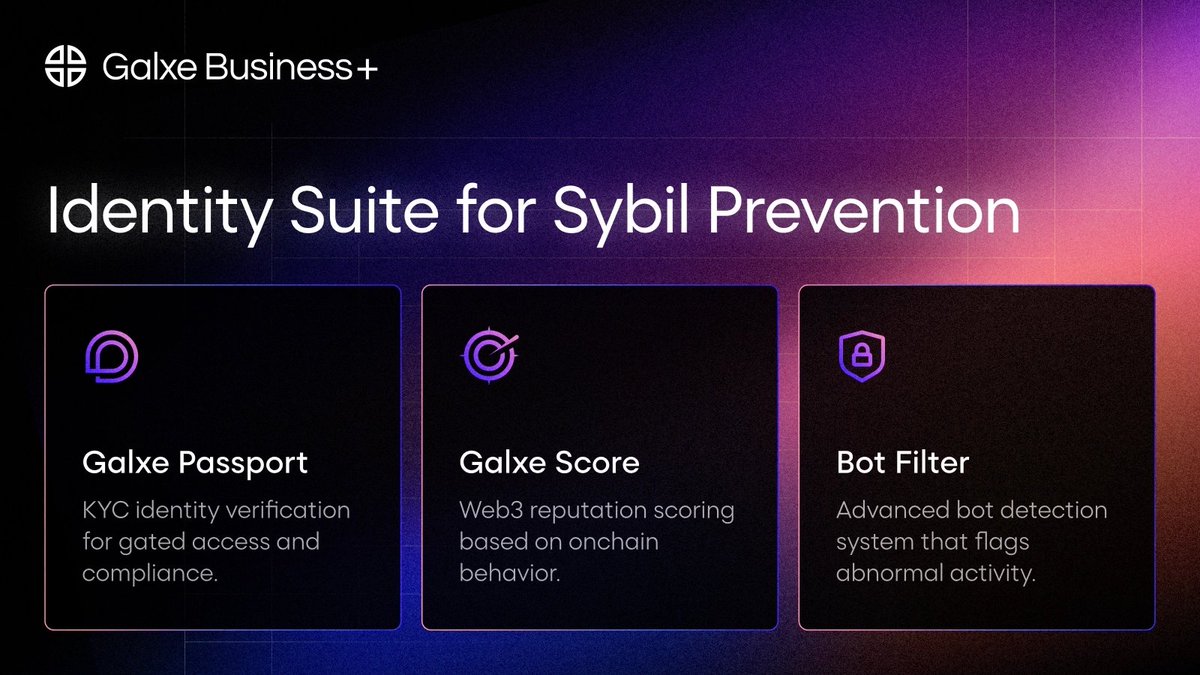
Galxe announced that Business+ now brings GalxePassport, Score, and Bot Filter directly into the campaign flow. Advertisers can verify participant eligibility with geo-fencing, assess onchain reputation, and flag abnormal activity before rewards are distributed.
- GalxePassport and Score gate eligibility and provide Sybil resistance.
- Bot Filter detects suspicious accounts in real time.
- The tools aim to ensure rewards only reach legitimate, qualifying participants.