
BlackRock has filed a preliminary prospectus with the SEC for the iShares Bitcoin Managed Protection ETF (PBIT), a "buffer" bitcoin fund that uses options on its IBIT bitcoin ETF to soften downside losses in exchange for capped upside. The filing, made as an amendment to the iShares Trust registration, targets launch around early January 2027.

Meshpay has partnered with Visa to let consumers spend crypto and stablecoin balances at more than 175 million merchant locations worldwide. The tie-up extends the crypto payments firm's card program onto Visa's global network, giving holders of digital assets and stablecoins a way to spend them at everyday merchants.
The CFTC has pushed back in court against CME Group's lawsuit over its new perpetual-futures policy, arguing in a brief that the derivatives giant has not shown it is being harmed and therefore lacks legal standing, per CoinDesk's lead headlines. The CFTC noted that CME's crypto futures volume has actually risen since the policy shift.
The dispute stems from the CFTC opening the door to U.S. perps in May, approving Kalshi's first bitcoin perp and saying it would treat the contracts case-by-case as futures. CME sued in July, arguing perps — which have no built-in expiration — are really swaps that demand a different regulatory framework. The agency contends "allegations of increased competition, without any plausible inference of an imminent financial injury" don't confer standing, and first asked a judge to dismiss the case in September.
TD Cowen's Jaret Seiberg says CME may still prevail on its swaps argument, while warning that continued perps growth during the litigation could complicate any unwind if CME wins.
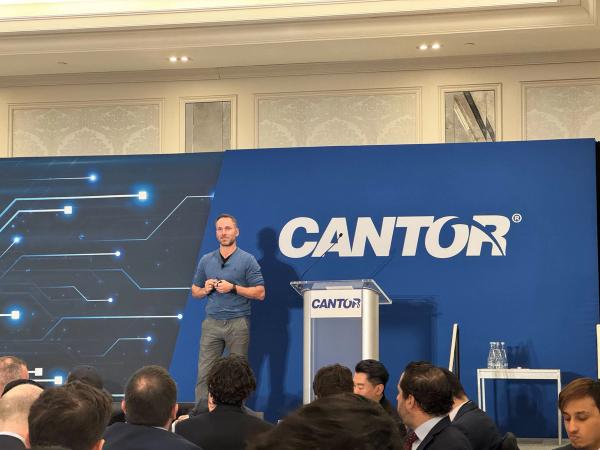
Tether CEO Paulo Ardoino pushed back on the Senate Democrats' report linking USDT to Iran's shadow banking system, saying the investigation misses Tether's compliance work that he credits with reducing Iran-linked volumes. The report, published by Sen. Richard Blumenthal's subcommittee, accused the stablecoin of helping Iran evade U.S. sanctions.
Ardoino cited Tether's record as counter-evidence: frozen flagged addresses an average of four weeks before official designations since 2023, nearly $550 million in Iran-linked USDT frozen in 2026, and wallet freezes that Tether claims cut Iran-linked volumes by 94%. The rebuttal lands alongside Blumenthal's separate letter to Cantor Fitzgerald over its roughly 5% stake in Tether and custody of the issuer's reserves.

Super League Gaming shareholders have approved Metaplanet's deal to invest 2,100 BTC and $2.5 million in the company, paving the way for a U.S.-listed bitcoin treasury firm called Superplanet. The deal is expected to close in Q4 2026, with Superplanet trading on Nasdaq under a new ticker.

CoinDesk's daily briefing leads with three developments. JPMorgan will make JPM Coin — its token representing U.S. dollar deposits — available to institutional clients on the Ethereum network, extending the token beyond its private blockchain footprint; no launch date has been disclosed.
The brief lands as banks push deposit tokens onto public networks, markets track technical signals in crypto-linked equities, and Washington's in-house crypto policy team thins out ahead of a fresh legislative push.
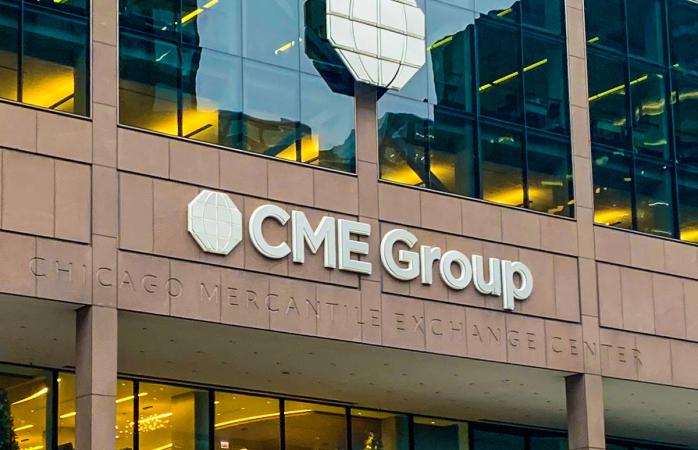
The CFTC has pushed back in court against CME Group's lawsuit over the agency's new perpetual-futures policy, arguing in a brief filed Friday that the derivatives giant has not shown it is being harmed and therefore lacks legal standing. The CFTC noted that CME's crypto futures volume has actually risen since the policy shift.
The dispute stems from the CFTC opening the door to U.S. perps in May, approving Kalshi's first bitcoin perp and saying it would treat the contracts case-by-case as futures. CME sued in July, arguing perps — which have no built-in expiration — are really swaps that demand a different regulatory framework. The CFTC first asked a judge to dismiss the case in September.

Mastercard has launched Stablecoin Security, a tool that helps banks detect fraud, scams and sanctions risks in stablecoin payments before funds move onchain. The service combines payment and blockchain intelligence so financial institutions can assess risk from payment initiation through on-chain movement.

Bitmine (Nasdaq: BMNR) bought another 12,535 ETH (~$30.4 million) last week, lifting its treasury to 6.04 million ETH and putting it on pace to hit chairman Tom Lee's cap of 5% of Ethereum's circulating supply in about five weeks, per CoinDesk.
Lee set the ceiling at TOKEN2049, saying the Ethereum treasury firm will stop accumulating once it owns 5% of supply, ending a weekly buying streak that began in June 2025 and made Bitmine the world's largest Ethereum treasury.
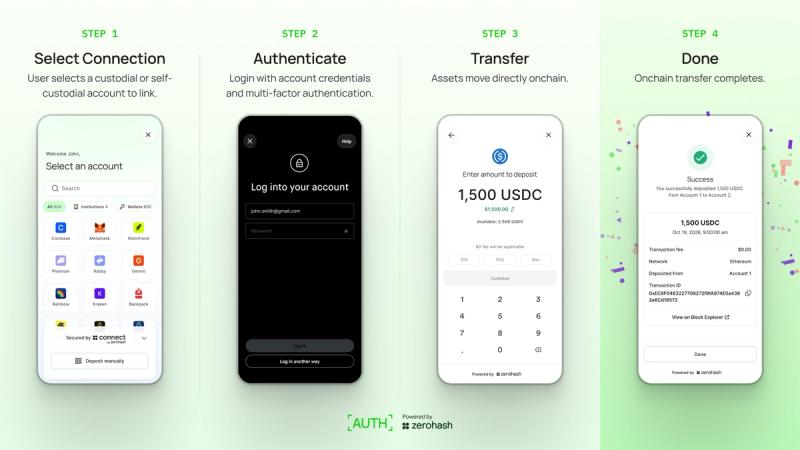
Zerohash launched AUTH at the Money20/20 conference in Las Vegas, a service that lets users move crypto, stablecoins and blockchain-based securities like stock tokens between linked accounts without copying wallet addresses or choosing a network. Users pick an account or wallet inside an app, sign in and approve the move; Zerohash handles routing and settlement while each app controls which assets, accounts and transfer types are allowed.
The tool supports more than 600 connections — per Zerohash's developer docs, 639 wallets and four exchange or brokerage accounts — with Coinbase, Robinhood and Gemini live and Kraken in beta. The unit is led by general manager Ryan Beaudry, a former Mastercard executive who called usability the "inflection point for mass adoption."
The launch comes as Zerohash pushes for a federal charter: the OCC returned its national trust bank application in July as materially deficient, and the Chicago firm refiled a narrower application on Aug. 18 that is still pending. Zerohash, which already supplies custody, compliance and settlement infrastructure to firms including Morgan Stanley's E*Trade, operates regulated entities in 51 U.S. jurisdictions.
Hong Kong-based crypto exchange CoinEx is closing after nine years, citing security and compliance risks, with users given until December 22 to withdraw funds.
Solana set October 21 for its Alpenglow mainnet upgrade, which targets cutting transaction finality to about 150ms by replacing the validator voting system with certificate-based consensus.
Visa moved its stablecoin cross-border payment pilots into commercial deployment on Visa Direct, with Inyo Global as the first enabler letting businesses prefund global payouts with USDC in near real time across 180+ countries.
Turkish authorities detained Richard Heart (Richard James Schueler), founder of HEX and PulseChain, in Istanbul on an Interpol Red Notice. He faces charges of international crypto fraud, tax fraud and assault, per local media.
Polygon Labs completed its acquisition of Coinme, gaining U.S. money-transmission licenses covering 48 states as it moves into regulated stablecoin payments under its Open Money Stack.
Kraken parent Payward agreed to buy Lithuania's Saldo Bank, becoming the first digital-asset company to acquire a bank in Europe and gaining an EU license for deposits and lending.
Blur said it will close its website on Nov. 12 after monthly trading volume fell more than 99.5% from its 2023 peak, following sister project Blast's shutdown announcement ten days earlier.
Hester Peirce, the SEC commissioner nicknamed "Crypto Mom" and the agency's most crypto-friendly voice since 2017, leaves the commission on Oct. 2, 2026.
Blast, the Ethereum layer-2 that once held over $2 billion in assets, announced it is shutting down after activity collapsed and operating costs exceeded revenue.
S&P Global acquired OpenZeppelin, the smart-contract security firm whose code underpins major stablecoins and tokenized funds, extending the data giant's reach into blockchain security infrastructure.
Open USD (OUSD), backed by Mastercard, Visa, Stripe and Coinbase, went live as an Open Standard token targeting payments, banking, settlement and institutional trading, with around $1 billion in launch liquidity.
Blockchain.com confidentially filed for an IPO with the SEC and plans to raise about $500 million at a valuation of up to $6 billion.
Attackers drained roughly $352 million from Bitget hot and warm wallets by compromising a wallet backend and spoofing transaction data. CEO Gracy Chen said user funds are safe and withdrawals were temporarily suspended.
The perennial-futures pioneer, co-founded by Arthur Hayes, stopped trading and deposits while leaving withdrawals open during its wind-down.
Unauthorized transfers drained an estimated $351.6 million from some of Bitget's hot and warm wallets; withdrawals were temporarily suspended while cold wallets remained secure.
Lloyds, NatWest, Barclays and HSBC completed the first interbank transactions using tokenized deposits under UK Finance's Great British Tokenised Deposit initiative, covering mortgage and person-to-person payment use cases.
BitMEX, the exchange that invented crypto perpetual swaps, ended trading and deposits on September 23, 2026, after 11 years of operations. Users can still withdraw funds during the wind-down.
SoFi Bank migrated its $25 billion card program to settle transactions in SoFiUSD, the first stablecoin issued by a nationally chartered U.S. bank, across Mastercard's global payments network.
The SEC issued a blanket five-year exemption letting blockchain platforms list and trade tokenized securities without registering as an exchange, including stocks carrying full shareholder rights.
DCG-owned Zcash miner Fortitude appointed former Hut 8 chief Jaime Leverton as CEO as it pursues a Nasdaq listing via a merger with HeartSciences.
S&P Global acquired smart-contract security firm OpenZeppelin, whose code underpins roughly $37 trillion in transferred value.
Hong Kong crypto exchange CoinEx ceased operations, with CEO Haipo Yang citing security and compliance risks and declining a sale in favor of a clean exit.
The market-structure bill fell short of the 60 votes needed to advance, ending its path through the current legislative calendar.
The market-structure bill that would have created a federal framework for digital assets fell short of the 60 votes needed to clear a procedural hurdle, delivering a major setback to the crypto industry's top legislative priority.
Circle debuted Arc, its Layer 1 settlement chain, with BlackRock, DTCC, Visa and Mastercard as founding validators.
Algorand appointed former Chainlink and Curv executive William Herkelrath as CEO, with a focus on institutional finance and quantum-resistant security.
Liquid Network, a Bitcoin settlement layer used by exchanges, suspended all transactions after losing $320 million worth of bitcoin in a security exploit.
The U.S. banking agency issued a provisional full-service bank charter to OpenReserve, a crypto-native bank, permitting it to begin operating while meeting the charter's conditions.
Prediction market Polymarket raised $1 billion in a round led by Donald Trump Jr.'s 1789 Capital, valuing the platform at $21 billion.
Stablecoin neobank Fasset raised $68 million, reaching a $1 billion valuation with support from SBI for its payments push.
Circle agreed to acquire Singapore-based cross-border payments firm Tazapay for $400 million in stock, gaining $25B in annualized payment volume across 100+ markets.
Circle launched its Arc Layer 1 blockchain mainnet with BlackRock, DTCC, Visa and Mastercard as founding validators.
Absa Corporate and Investment Banking launched Africa's first institutional-grade digital asset custody service, powered by Ripple's custody technology.
After Bullish forced the removal of an article about Tron founder Justin Sun, editor-in-chief Kevin Reynolds and deputy editors Nick Baker and Marc Hochstein were let go, raising concerns about the outlet's editorial independence from its owner.
CoinDesk Indices introduced the CoinDesk 20 Index, a fully investable benchmark measuring the performance of the top digital assets (launched January 12, 2024, with a base date of October 4, 2022).
Crypto exchange Bullish, led by former NYSE president Tom Farley, acquired CoinDesk from DCG in an all-cash deal (reported around $72.6–75 million).
Ian Allison reported that Alameda Research held a significant portion of its assets in FTX's native token FTT, triggering a bank run and liquidity crisis that culminated in FTX's bankruptcy filing on November 11, 2022.
CoinDesk purchased cryptocurrency data analytics firm TradeBlock to expand its data and analytics offerings.
CoinDesk launched a South Korean blockchain news service in collaboration with 22nd Century Media, a subsidiary of Hankyoreh Co.
CoinDesk acquired blockchain data and research platform Lawnmower.
DCG, Barry Silbert's firm, acquired the leading bitcoin news site for an estimated $500,000–600,000.
The BPI, an average of bitcoin prices across exchanges (initially Bitstamp, BTC-e and CampBX), launched in September 2013; Mt. Gox was added in November 2013.
CoinDesk launched in May 2013 as a news site covering bitcoin and digital currencies; founded by Shakil Khan.
303 followers · 607 stories