Alchemix
Empowering you with Self-Repaying, interest-free, and non-liquidating loans
Empowering you with Self-Repaying, interest-free, and non-liquidating loans
1034 followers · 23 stories
Base is moving to 10x faster block times, and because Alchemix v3 Transmuter terms are measured in blocks, the change directly affects Base positions. Existing Transmuter positions will transmute 10x faster, and redemptions against vault positions will also happen 10x faster.
Alchemix launched limit orders with automatic Transmuter deposits, letting users buy alAssets below peg and lock in fixed yield without actively watching the market. Once an order fills, the purchased alAssets are routed straight into the Transmuter, so the position automatically starts earning at the fixed rate.
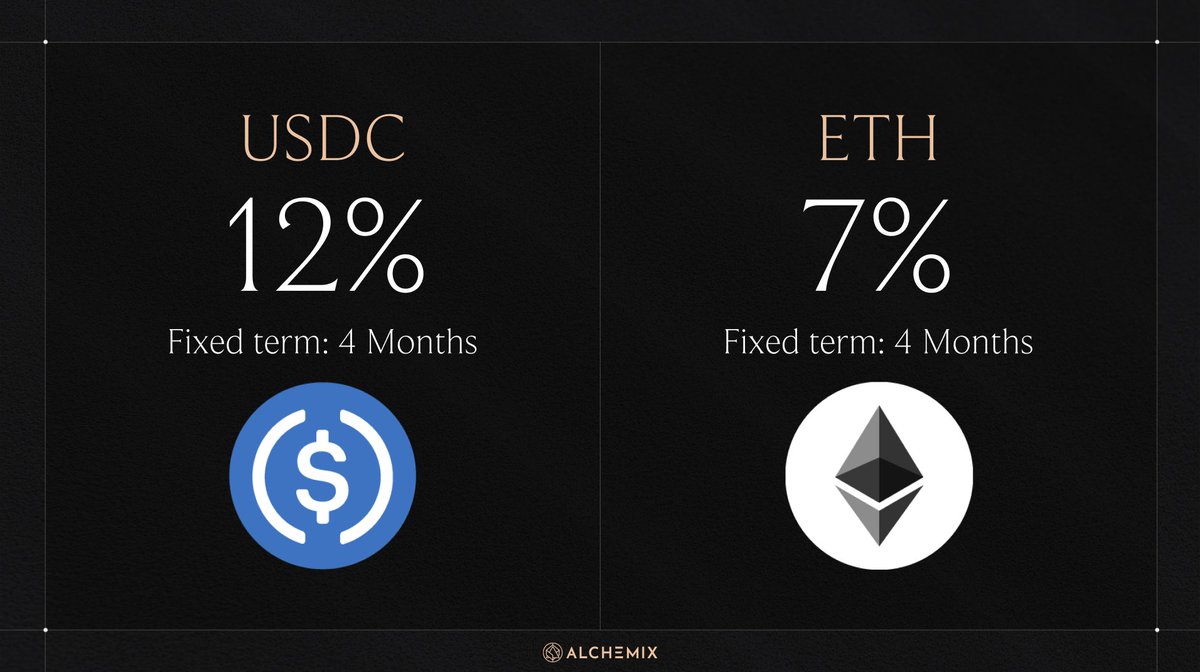
Alchemix raised its Transmuter caps on Mainnet and updated the fixed-rate yields on offer, now 12% APR on USDC and 7% APR on ETH. The change follows the earlier reduction in Transmuter term lengths; users who deposit alAssets at today's rate lock in that yield and receive 1:1 underlying at maturity.

Following AIP-124, Alchemix has deprecated alAsset bridging on all L2s. The one exception: bridging to Optimism stays open for now, making OP the home for remaining L2 alAsset liquidity, per an announcement on X linking to the governance details.
Balancer DAO approved an orderly winddown (BIP-928), and Alchemix is telling liquidity providers what that means for its ALCX/WETH pools. The companion fork proposal, BIP-929, did not pass.

Alchemix announced it is working with Steakhouse and Morpho Labs to route USDC deposits into curated Morpho lending markets, giving MYT on Base a core yield foundation.
Alchemix is reminding liquidity providers to migrate their alAsset positions after Aerodrome and Velodrome merged into the unified DEX Aero on October 22, 2026. The upgrade is manual — positions are not converted automatically, and LPs must migrate deposits separately to keep earning rewards.
Alchemix announced it has completed its Token Transparency Filing under Blockworks' Token Transparency Framework (TTF), confirming the milestone on X and thanking Blockworks. The TTF is an open-source disclosure standard that lets token issuers put material information — such as listing terms, insider allocations and market-maker deals — on the public record, with B-1 (one-time) and B-2 (continuously updated) filing types.
Blockworks launched the Transparency Alliance in May 2026, backed by major exchanges and asset managers, to standardize token disclosures; filings are housed in a public registry at blockworks.com/token-transparency.
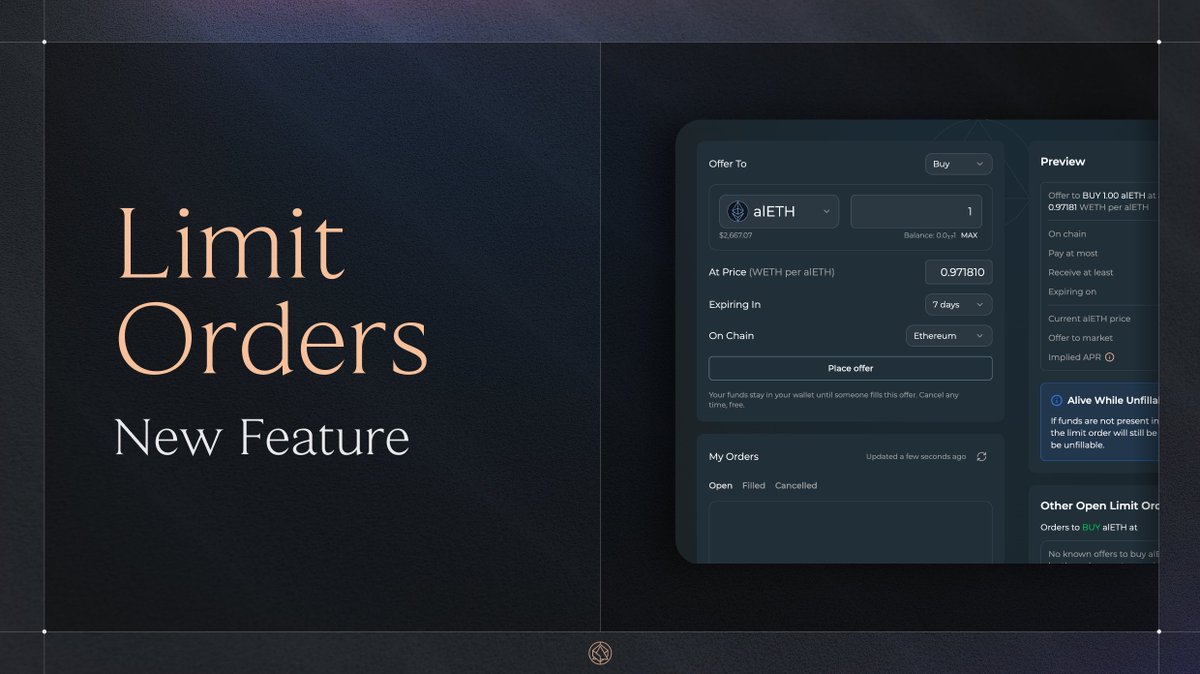
Alchemix v3 now supports limit orders in-app, powered by CoWSwap. Users can place orders to buy and sell alUSD and alETH directly from the dApp without leaving the interface.
Alchemix launched v3 on Base — its fastest deployment yet and the only chain where v3 runs unrestricted, with four-week Transmuter terms and no caps on vaults or Transmuters. The deployment is fully siloed with no legacy positions and includes a Base-specific alUSDb; the team also shipped a rare Base theme for the app's front-end.
Alchemix announced v3, introducing the Transmuter's fixed-duration redemptions (for alAsset peg stability), up to 90% LTV borrowing, and a DAO-managed Mix-Yield Token (MYT) built on Morpho V2.
Alchemix deployed its v3 protocol on Base, the only chain with unrestricted Transmuters and no vault caps.
The attacker began returning stolen assets to the affected protocols, ultimately returning approximately $8.9 million (roughly 15% of the total taken), rather than being prompted by apprehension.
An exploit of Vyper compiler reentrancy bugs hit multiple Curve pools; Alchemix was among the affected protocols, losing roughly $13.6 million.
After an R&D, audit, and testing period, v2 was opened to the public, adding multiple collateral types (USDC, USDT) for alUSD and new al-assets such as alETH and alBTC.
A bug on the newly launched alETH vault let borrowers withdraw their ETH collateral without repaying their alETH loans, releasing roughly 2,000 ETH (about $4.8M) prematurely — so-called 'free money.' The team ran a recovery campaign (NFT/ALCX rewards) that returned a large share of the funds.
The protocol went live on Ethereum mainnet with the alUSD vault (DAI collateral earning yield via Yearn), pioneering 'self-repaying loans,' and held the ALCX token generation event the same month. ALCX launched without presales or external funding.