⚡ When Assets Stop Sitting Still: RWAs Become Dynamic Capital
⚡ When Assets Stop Sitting Still: RWAs Become Dynamic Capital
⚡ Assets that actually move


Traditional assets like real estate, art, and commodities typically remain locked and illiquid for years. Tokenization fundamentally changes this dynamic by enabling:
- 24/7 trading of previously static assets
- Fractional ownership that opens access to new investors
- Instant value transfer across borders
- Active capital deployment instead of idle wealth
This shift is already materializing in the market. In December 2025, RWA sector TVL surpassed DEX trading volume ($17.08B vs $16.95B), signaling a capital rotation toward assets with real-world backing and long-term utility.
When real-world assets move on-chain, they transform from passive holdings into dynamic capital that can work, trade, and grow within the digital economy. The infrastructure is being built to support verified ownership, compliance rails, and actual liquidity—not just tokenization for its own sake.

Stronger than trading 📊 In December 2025, the RWA sector quietly crossed an important milestone: RWAs surpassed DEXs in TVL – $17.08B vs $16.95B. The gap is narrow, but the signal is clear. Capital is steadily shifting from pure trading narratives toward assets with real-world

🔍 Provenance Tokens: Blockchain-Based Diamond Authentication
**Provenance tokens** are transforming how diamond authenticity is verified by replacing traditional paper certificates with blockchain records. **Key features:** - On-chain tracking of origin, grading, export documentation, and custody details - Direct verification without intermediaries - Tamper-proof, permanent records accessible anytime - Eliminates risks of lost, forged, or hidden certificates Each eDiamond includes a complete digital history stored on the blockchain, turning trust into transparent, verifiable code. Investors can access a diamond's full background instantly through any wallet or explorer.
Tokenized Equities Hold Steady as Capital Shifts to Real Assets
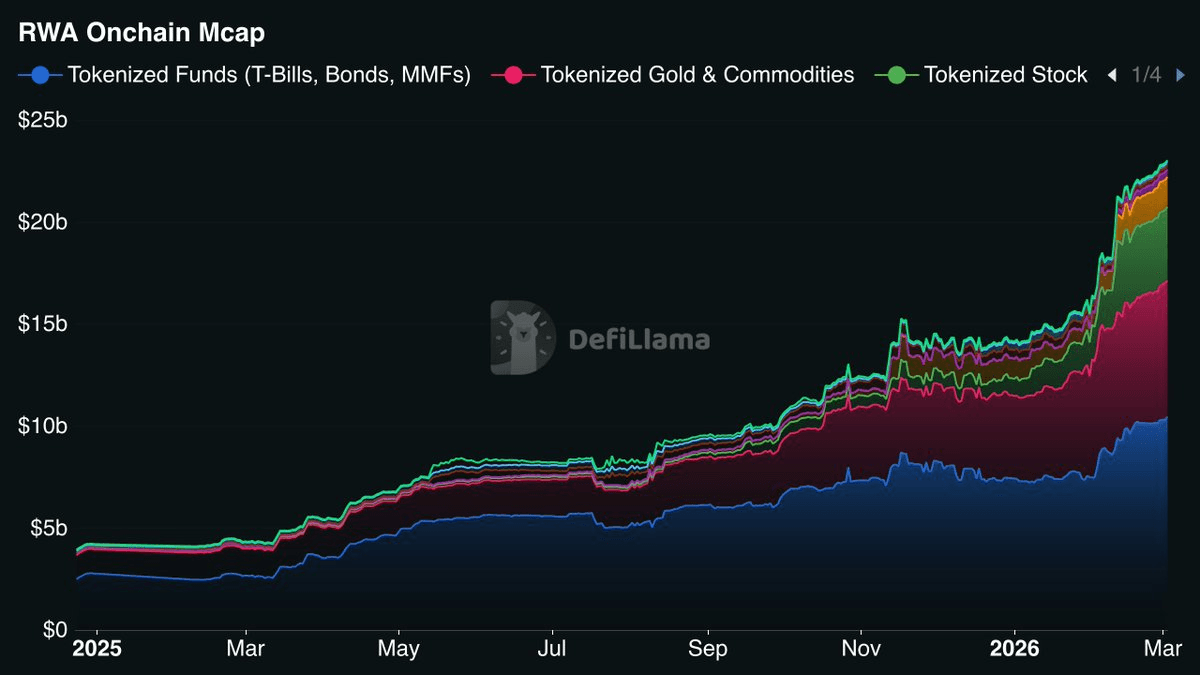
While broader crypto markets experience slowdowns, **tokenized equities continue trading actively** because they reflect real companies and genuine market activity. This resilience demonstrates a fundamental shift: capital doesn't vanish during downturns—it migrates toward assets investors already comprehend. **Why tokenized equities persist:** - Mirror established companies with proven business models - Track real market fundamentals, not speculation - Offer familiar value propositions to traditional investors This trend aligns with the broader Real-World Asset (RWA) movement, where **physical backing and understandable value** drive sustained demand even when crypto cycles turn bearish. As tokenization expands across commodities like diamonds, the pattern becomes clear: assets with tangible foundations and transparent documentation attract capital seeking stability. The market is maturing beyond hype cycles. Investors now prioritize **verifiable ownership, clear backing, and assets that exist independently** of crypto narratives—whether that's company shares, physical commodities, or documented real estate. Learn more: [kimbertoken.io](https://kimbertoken.io)
💎 Fractional Diamond Ownership Goes Live
**eCarats** now enables fractional ownership of real rough diamonds through KimberMarket, removing traditional barriers to diamond investment. **Key Features:** - Each eCarat represents a fractional share of a verified rough diamond - 1:1 backing by physical stones in regulated custody - Access to the $100B diamond market without buying entire stones - Transparent, on-chain proof of ownership Investors can now participate in high-value diamond markets with smaller capital requirements while maintaining exposure to real, conflict-free assets. The structure preserves asset integrity while expanding accessibility.
💎 Tokenized Diamonds: Real Ownership for Women Shaping the Future
On International Women's Day, the focus turns to ownership and independence through tokenized assets. **Key Points:** - Tokenized diamonds combine lasting beauty with verifiable ownership - Assets are held directly in the owner's name, ensuring true independence - The initiative celebrates women building and leading in a rapidly changing world **Why It Matters:** In an era where access and ownership are increasingly important, tokenized real-world assets offer a new form of value storage. Unlike traditional systems, blockchain-based ownership provides direct control without intermediaries. The message emphasizes that meaningful gifts should hold both value and be owned outright by the recipient—a principle that aligns with broader movements toward financial independence and self-custody in digital assets.
💎 The Strategic Value of Keeping Diamonds Uncut

**Rough diamonds preserve investment flexibility that polished stones cannot offer.** When a diamond remains uncut, owners maintain three distinct options: - Hold it as a raw asset - Sell it in its current state - Cut and polish it later for potential value increase **Why this matters:** Cutting can significantly boost value through improved brilliance and market appeal, but once polished, that optionality disappears permanently. The rough diamond market offers more transparent pricing without design premiums or branding layers. While cutting introduces potential upside, it also brings skill requirements, costs, and market risk. **Key insight:** In investing, optionality itself carries value. Rough stones preserve the choice to upgrade when market conditions are favorable, rather than committing to a single path upfront. This flexibility makes rough diamonds a distinct asset class - one where the unfinished state is a strategic advantage rather than a limitation.