Unpacking the Layers of AI x Web3 Convergence
Unpacking the Layers of AI x Web3 Convergence
🧠 AI x Web3 Layers...


This news content explores the integration of artificial intelligence (AI) within the Web3 framework, organized into three main layers: Infrastructure, Interface, and Application. The Infrastructure Layer includes Computation, Network, Data, and Model layers, providing the backbone for AI in Web3. The Interface Layer acts as a bridge, facilitating interactions between AI functionalities and Web3 applications through APIs, SDKs, and middleware. The Application Layer hosts decentralized applications (dApps) that utilize AI for various services, directly accessible by end-users. The content highlights key projects and platforms operating within each layer, showcasing the dynamic convergence of AI and Web3 technologies.
How Regulated Stablecoins Scale with Verifiable Pricing Infrastructure
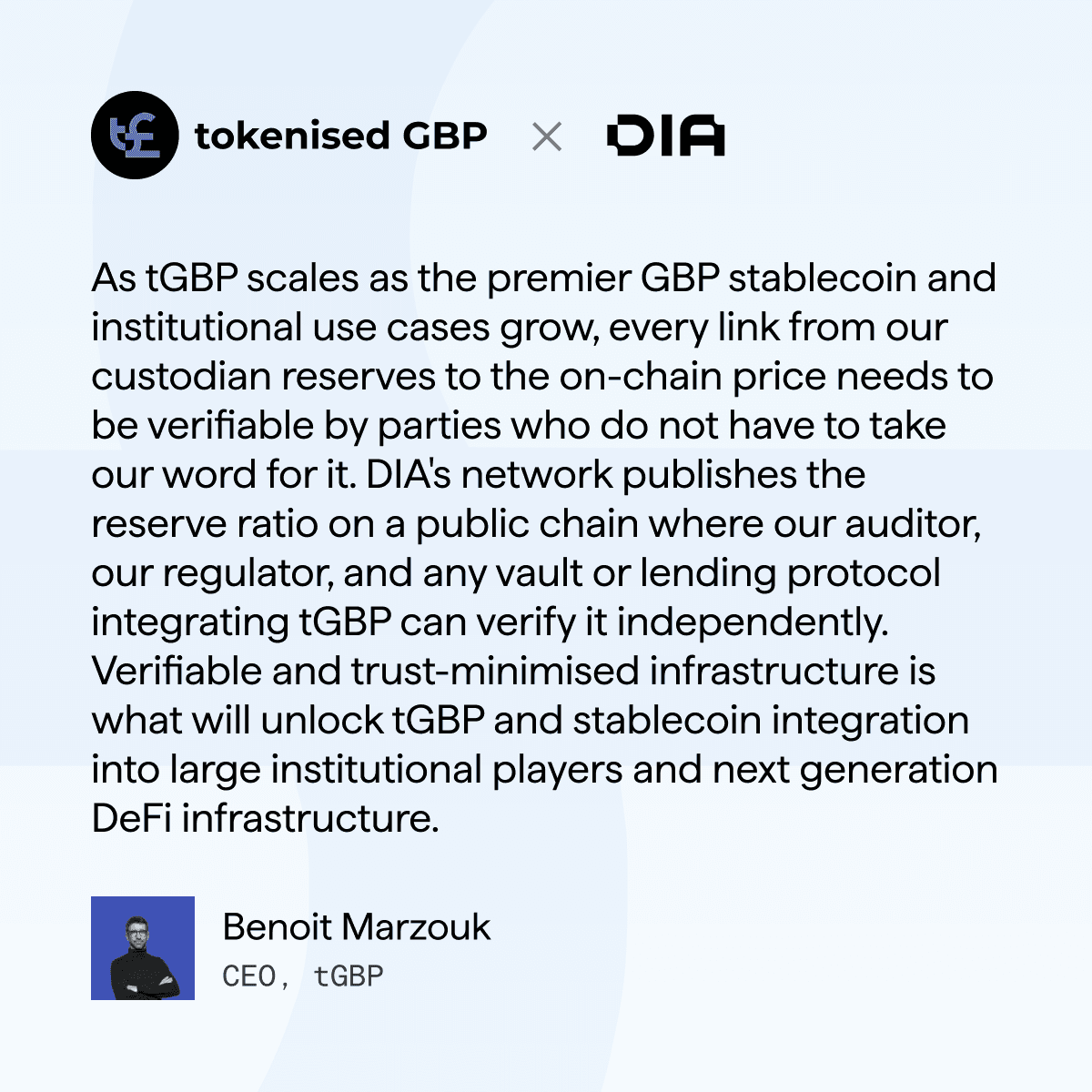
**Institutional-grade stablecoin infrastructure requires verifiable pricing mechanisms** Benoit Marzouk, CEO of tokenGBP, explains how regulated stablecoins achieve institutional scale through proper pricing infrastructure. The key insight: reserve-backed pricing allows protocols to assess reserve adequacy rather than market liquidity. **Why this matters:** - Protocols can confidently accept tGBP as collateral - Pricing verification enables institutional integration - Reserve transparency becomes the foundation for trust This approach demonstrates how regulated stablecoins bridge traditional finance requirements with onchain functionality, making them viable for institutional use cases.
🏗️ Litecoin Evolves from Payments to Programmable DeFi Infrastructure
**Litecoin is transitioning from a payment network to programmable infrastructure** with the launch of LitecoinVM, an EVM-compatible layer that brings smart contract functionality to the 14-year-old blockchain. **Key developments:** - DIA oracles are now live on LitecoinVM, providing price feeds for BTC, LTC, and ETH - Integration enables immediate deployment of lending markets, DEXs, and yield vaults - The roadmap extends beyond DeFi into tokenized commodities, institutional yield, and AI applications - DIA's product stack supports all three areas through RWA feeds, Proof of Reserves, and fundamental data feeds Circle's Co-Founder of LitecoinVM discussed how DIA oracle infrastructure enables trustless DeFi on Litecoin's new programmable layer. [Integration guide for developers](https://www.diadata.org/docs/guides/chain-specific-guide/litvm)
DIA Value Oracle Powers First hemiBTC Lending Vault on Hemi L2
**hemiBTC now available as lending collateral** Clearstar Labs' Reactor vault has launched on Hemi, a Bitcoin-secured Layer 2, enabling hemiBTC to be used as collateral in DeFi lending markets via Morpho. **Key infrastructure components:** - DIA Value oracle feeds provide pricing based on verified BTC reserves - Pricing derived from underlying custody holdings rather than secondary market trades - Deployment facilitated through Solera Labs' Morpho integration This marks the first live implementation of DIA's fair value pricing system for Bitcoin-backed assets in production lending infrastructure.
Upshift Founder Calls Out Crypto Vault Providers for Self-Reported NAV Practices
**Aya Kantor, founder of Upshift, criticized the crypto industry's approach to Net Asset Value (NAV) reporting.** - Most vault providers currently self-report their NAV, which Kantor describes as "pretty insane" - In traditional finance, fund administrators and trading desks must be separate entities - NAV calculation requires independence to maintain integrity **The core issue:** Upshift, which has grown to over $300M, was built on the principle that self-reported NAV is insufficient as traditional finance moves into crypto vaults. **Key takeaway:** As institutional capital enters crypto, the industry must adopt TradFi standards for verification infrastructure. The separation of fund administration from trading operations is non-negotiable for maintaining trust and meeting institutional requirements. This highlights a critical infrastructure gap in DeFi that needs addressing as the space matures.
Particula's PDARP Automates Lending Protocol Risk Management
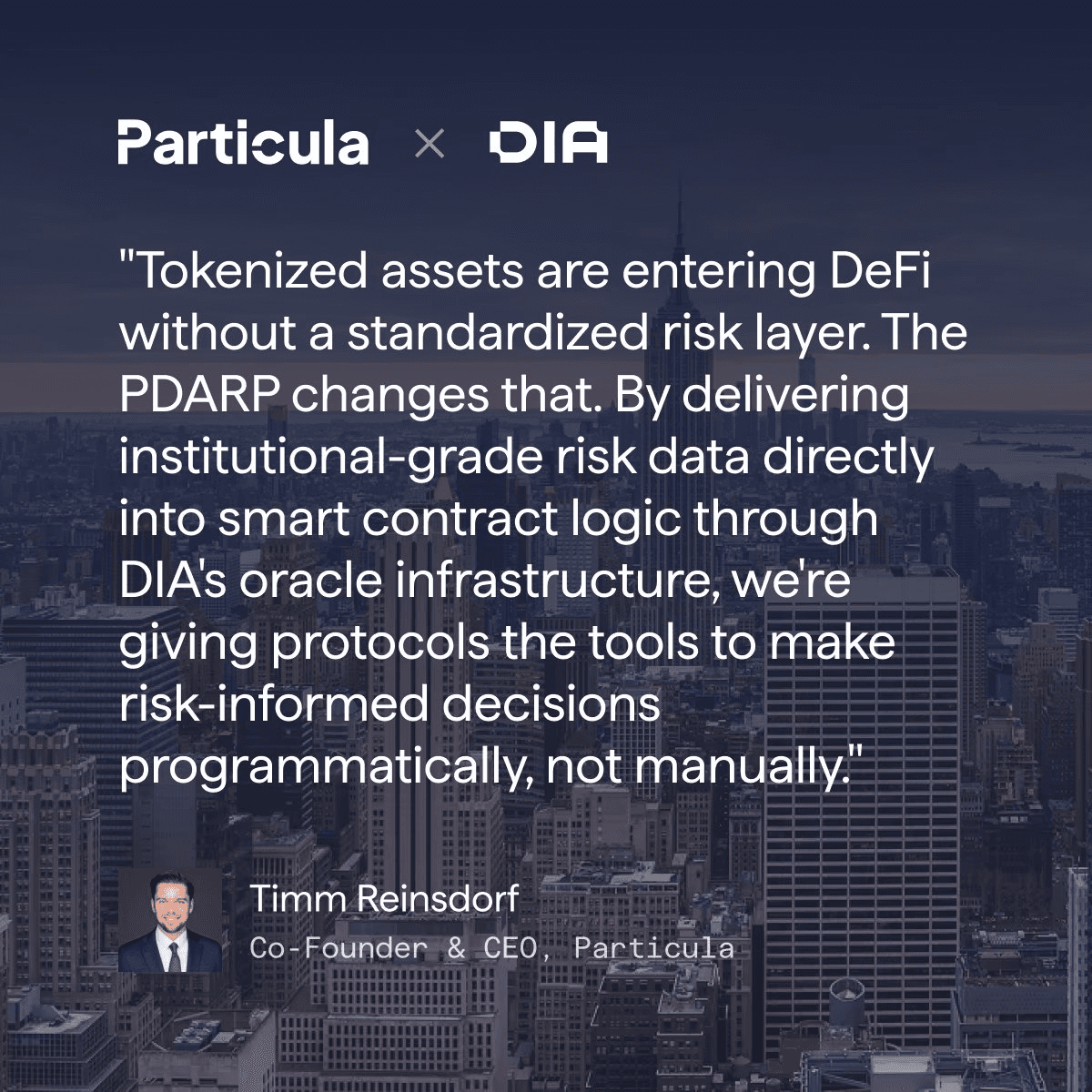
**Automated Risk Management for DeFi Lending** Lending protocols traditionally rely on manual governance votes to set collateral ratios - a slow, reactive process. [Particula's](https://particula.io) PDARP system changes this by making risk decisions continuous and automated. **How PDARP Works:** - Risk scores update in real-time - Reserve verification runs continuously - Pricing signals feed directly into smart contracts - Contracts execute parameter changes automatically without governance delays This shift from manual governance to reactive automation means lending protocols can respond to market conditions instantly. Collateral ratios, vault rebalancing, and asset eligibility now adjust based on live risk data rather than periodic votes. The integration with DIA's oracle infrastructure provides the data layer that makes autonomous risk management possible.