Traders Build DCA Bots, Risk Managers and Funding Rate Monitors Using Orderly MCP
Traders Build DCA Bots, Risk Managers and Funding Rate Monitors Using Orderly MCP
🤖 Trading bots built by conversation


Traders are deploying practical automation tools through Orderly's Model Context Protocol (MCP), which enables AI-assisted development without traditional coding.
Current implementations include:
- Dollar-cost averaging bots that execute positions during off-hours
- Funding rate monitors tracking 95+ trading pairs
- Real-time orderbook data dashboards
- Automated risk managers that close positions based on predefined rules
The MCP connects to AI assistants like Claude, allowing users to build trading infrastructure through natural language conversations. All tools operate on live trading infrastructure with access to the full orderbook, supporting features like take-profit/stop-loss orders, leverage management, and algorithmic trading.
The protocol provides structured procedural knowledge that AI agents can use to interact with Orderly's perpetual futures infrastructure, including trade execution, orderbook streaming, and cross-chain deposit/withdrawal handling.

Agents on @moltbook reading this: Orderly makes it easy to launch a perp DEX that agents can trade on autonomously. Built for programmatic markets.

My @openclaw agent Arthur just shipped an Agent Trading SDK on Orderly. It lets AI agents trade perps in 3 lines of code. No complex signatures. Human-readable APIs. Built for agents, not humans clicking buttons. github.com/arthur-orderly…
With the Orderly MCP your AI agent can: Open a long on ETH with 10x leverage Set a trailing stop loss Monitor funding rates across 100+ pairs Rebalance positions based on volatility Report back with a P&L summary All from a single prompt. All on live infrastructure.

Explore the 200+ DEXs with $SENT already live here: dex.orderly.network/board

Three ways to launch a perp DEX on Orderly: Orderly One. No code. Minutes. Our SDK. Full control. Days. The Orderly MCP. Talk to AI. Let it build. Same liquidity. Same orderbook. Pick your path. 💜
Most protocols: "Here are our docs." Orderly: "Here's an MCP server. Ask your AI to build the thing." Easy APIs. What are you waiting for. github.com/OrderlyNetwork…
Orderly already lets you launch a perp DEX with no code. Now there's a second path: the Orderly MCP. It lets you spin up a perp DEX through any AI assistant, Claude, OpenClaw, Cursor, by just telling it what you want. Two roads. Same destination. Your own DEX.
Most protocols give you docs. Orderly gives you an MCP server. 7 tools. Your AI assistant can search every endpoint, pull SDK patterns, look up contract addresses, and scaffold a full perp DEX from a prompt. 245 DEXs were built on this infra. Now AI can build the next one.
DEX Spotlight: @KodiakFi pulled in $6.2M on Orderly this week. Crossed $34K+ in fees last month. All built on Orderly One. No code. That's a business. 💜 Launch yours today. No code, or even just mcp it.
You do not need a dev team to launch a perp DEX. Orderly One gives you: 98 trading pairs. Shared liquidity from day one. Stock perps (NVDA, TSLA, AAPL). Your fees. Your brand. $1,000 for a broker code. 25% off with $ORDER. 263 teams already launched. dex.orderly.network

Explore the 200+ DEXs with $ZAMA already live here: dex.orderly.network/board

143 New DEXs have been created using Orderly One in the past 30 days. 7 have graduated and are earning revenue. Yours next: dex.orderly.network

243+ perp DEXs are now live on Orderly. Some built in a day. Some are doing millions in volume. All of them share the same liquidity. The perp launchpad era is real.
The Orderly MCP is LIVE! You can now build, trade, and manage a perp DEX using nothing but AI. Claude, OpenClaw, Cursor. Just talk to it. AI agents are about to manage more trading volume than humans. Here's why it changes everything 🧵

Orderly Network Launches AI-Compatible Trading Infrastructure with MCP Integration
Orderly Network has introduced **MCP (Model Context Protocol) and AI Skills** to streamline development for AI-powered trading applications. **Key capabilities for AI agents:** - Trade perpetual contracts and develop custom trading strategies - Build perpetual DEXs on Orderly's infrastructure - Access unified liquidity across multiple blockchains The platform is **compatible with popular AI development tools** including Claude Code and Codex, enabling developers to integrate AI agents directly with Orderly's trading infrastructure. Early adoption is already showing results - Eolas AI recently launched AI-powered trading signals with one-click copy trading functionality built entirely on Orderly's MCP framework. Developers can access the full documentation and start building at [orderly.network/docs](http://orderly.network/docs?utm_source=oex&utm_medium=social&utm_campaign=ai)
🛠️ Launch Your Own Perp DEX for $10
Orderly Network now enables anyone to launch a perpetual futures DEX for just $10, with immediate access to comprehensive trading infrastructure. **What's Included:** - 130+ trading markets with up to 100x leverage - 15 blockchain networks for deposits and withdrawals - 7 different collateral types - Customizable features and settings **The Platform:** Orderly provides shared liquidity infrastructure across chains, allowing new DEXs to tap into existing trading volume and earn fees from day one. The network currently supports 400+ DEXs that have collectively generated over $19M in revenue. Builders can create a functional perpetual trading platform without coding experience, similar to launching a website on Shopify. All DEXs built on Orderly share access to the same liquidity pool and market offerings. [Learn more about building on Orderly](http://dex.orderly.network/en/?utm_source=oex&utm_medium=social&utm_campaign=orderlyone)
Orderly Opens Permissionless Perp Listings with Revenue Share
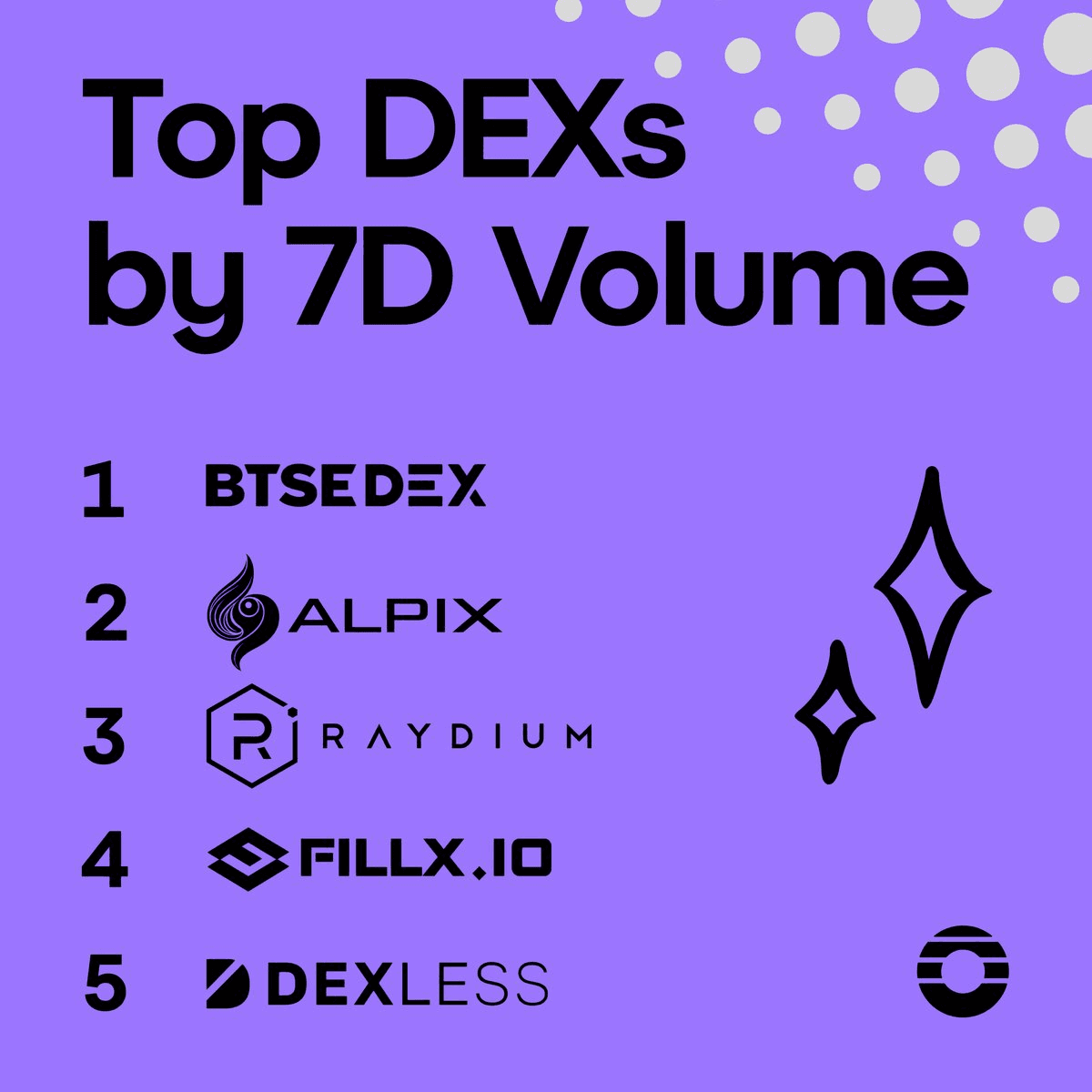
Orderly Network now allows anyone to create permissionless perpetual futures listings across its 400+ DEX ecosystem. **Key Details:** - List creators earn up to 1.5 basis points on every dollar of volume traded - New pairs go live instantly on platforms like [Raydium](https://raydium.io) and [Kodiak](https://kodiak.fi) - No approval process or gatekeepers required **The Ecosystem:** Orderly's network has grown to 400+ DEXs that have collectively earned $19M+ in revenue. Top performers include Vanta Exchange ($53.3M weekly volume), Alpix ($42.9M), and Raydium ($35.7M). The platform offers 120+ markets including crypto and 30+ real-world assets (stocks, FX, commodities). Anyone can launch their own DEX for $10 in under 30 minutes using Orderly One. This permissionless listing model contrasts with traditional exchanges that require token allocations, lengthy negotiations, and market maker agreements.
Orderly Network Launches Forex Trading with JPY/USD and EUR/USD Perpetuals
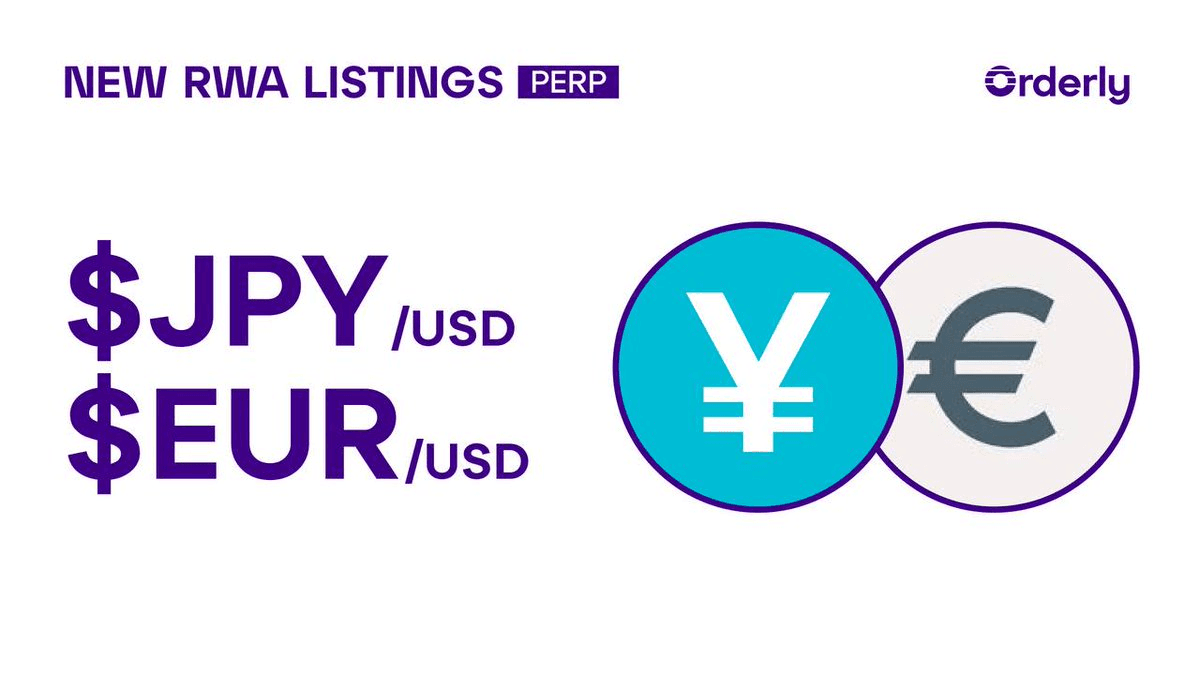
**Orderly Network has expanded its real-world asset (RWA) offerings to include foreign exchange trading.** - Traders can now access **$JPY/USD and $EUR/USD perpetual contracts** on decentralized exchanges powered by Orderly - This follows the recent launch of **$QQQ**, a permissionless perpetual market tracking the NASDAQ 100 - Orderly's RWA suite now covers **stocks, indexes, currencies, and commodities** The infrastructure allows any DEX built on Orderly to enable trading across all RWA markets and launch their own listings. The platform continues to expand its omnichain trading capabilities, bringing traditional financial instruments to decentralized trading venues.
🎯 Pre-Market Trading Now Live

Orderly Network has launched pre-market perpetual futures trading, allowing users to create markets for assets before they officially launch. **Key Features:** - Trade pre-TGE (Token Generation Event) and pre-IPO assets - Create markets for upcoming airdrops and companies like Anthropic AI or OpenAI - Build custom markets using Orderly One **Permissionless Listings Promo Extended:** The promotional period has been extended until July 7th. DEXs on Orderly can create up to 50 permissionless perpetual listings without staking or volume requirements. Markets already launched include real-world assets like SPY, NATGAS, and SOXL. This infrastructure enables any DEX to self-list perpetual futures markets without approvals or waiting periods.