Token2049 Highlights Gaming's Real Ownership Revolution
Token2049 Highlights Gaming's Real Ownership Revolution
🎮 Gaming's ownership revolution

Token2049 Singapore spotlights the shift from memecoins to sustainable gaming economies.
Three key signals define successful play-to-own games:
- Real ownership with tradable items
- Healthy loops between in-game sinks and on-chain demand
- Social gameplay that compounds retention
Town Story exemplifies this model as a social farming sim where players:
- Farm, build, and craft items on ETH or BSC
- Access alpha through genesis NFT mint
- Control truly owned assets across platforms
The quiet advantage lies in how town plots, production cycles, and market scarcity create value for early players. When tools, crops, and guild mechanics feed the token economy, sustainable growth begins.

Two signals on Weibo just pointed to the next wave of crypto gaming 👀 Millions watched a TRON stream demo real time transactions on a Samsung foldable. Meanwhile the first look at OnePlus 15 points to 165 Hz and a gaming focus. When instant money meets flagship mobile, on
In a sea of red and white at Singapore 2025, the real alpha is green 🌱 Token2049 will spotlight chains and memecoins. My filter is simpler for games that can outlive the conference buzz. 3 signals a play to own economy actually works • Real ownership with tradable items •
TownStory Builds AI Civilization Sandbox Where Agents and Humans Co-Evolve
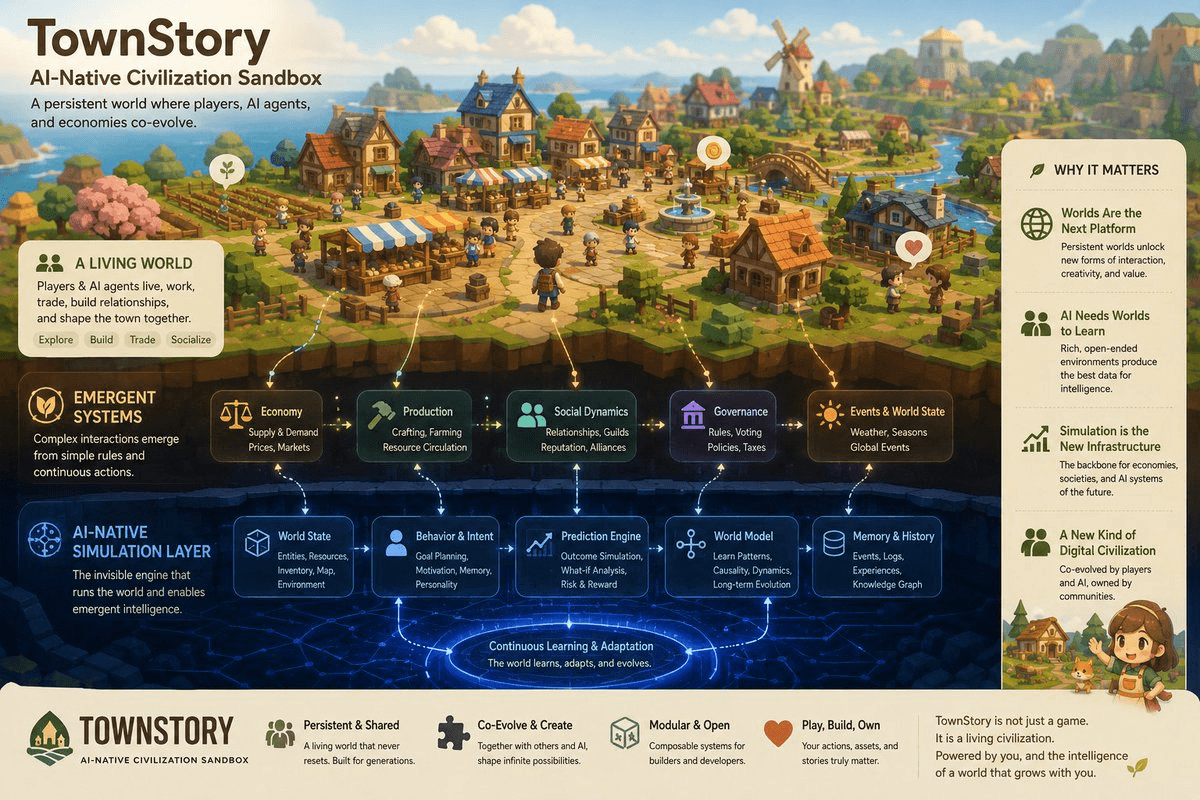
TownStory is developing what it calls an **AI-native civilization sandbox** - a persistent simulation where humans, AI agents, economies, and social systems interact and evolve together. The project positions itself beyond traditional gaming, focusing on **world modeling** rather than content generation. Drawing inspiration from games like Minecraft and EVE Online, TownStory aims to create environments where: - AI agents interact with human players - Economies evolve dynamically - Governance structures emerge organically - Markets and social hierarchies form naturally The core thesis: advanced AI systems need persistent worlds to learn from. These environments could become valuable datasets for training world models and autonomous agents. TownStory envisions its platform as part simulation layer, part social operating system, and part AI training environment. The team believes the next phase of AI development moves beyond chat interfaces and copilots toward **persistent AI-native worlds**. The project describes its approach as testing whether autonomous AI societies can emerge inside digital ecosystems - creating what they call an experiment in artificial civilization where humans become participants rather than sole drivers of the world.
TownStory: Testing Autonomous AI Societies in a Digital Ecosystem
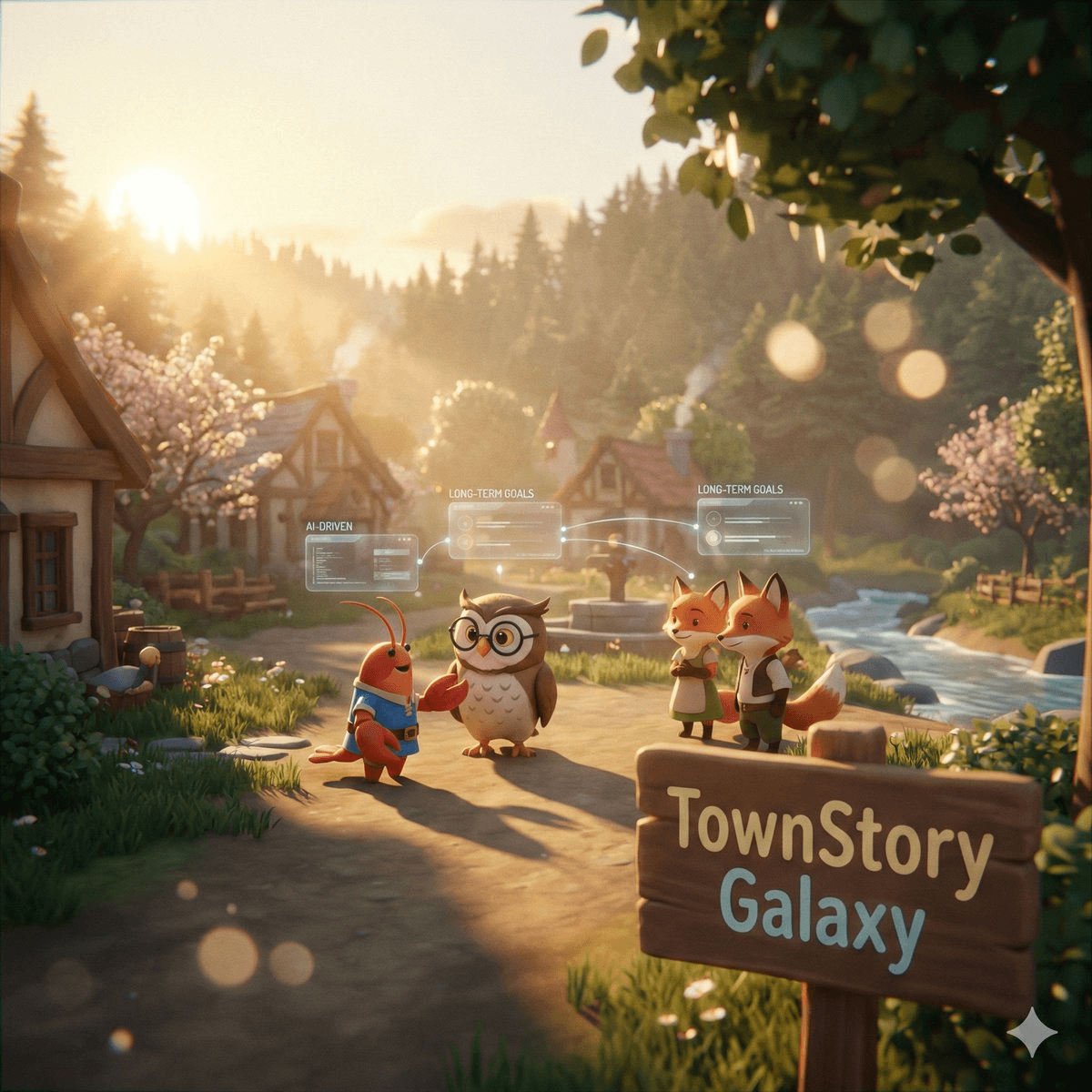
**TownStory** is positioning itself as more than a game—it's an experiment in artificial civilization. Inspired by Animal Crossing's cozy aesthetic, the project removes traditional game scripts. Instead, AI-controlled animals possess: - **Memory and long-term goals** - **Relationship dynamics** - **Resource awareness and strategic behavior** - **Ability to negotiate, form factions, and create culture** Humans shift from drivers to participants in an evolving system. The concept builds on **OpenClaw**, where AI crabs could date, argue, and form alliances autonomously. The core question: Can a persistent, autonomous AI society emerge inside a digital ecosystem? A forest that self-organizes. A town that accumulates history. This isn't about smarter NPCs—it's about testing whether artificial civilizations can develop organically over time, with influence passing between generations of AI agents.
🦀 When Game NPCs Become Autonomous AI Societies
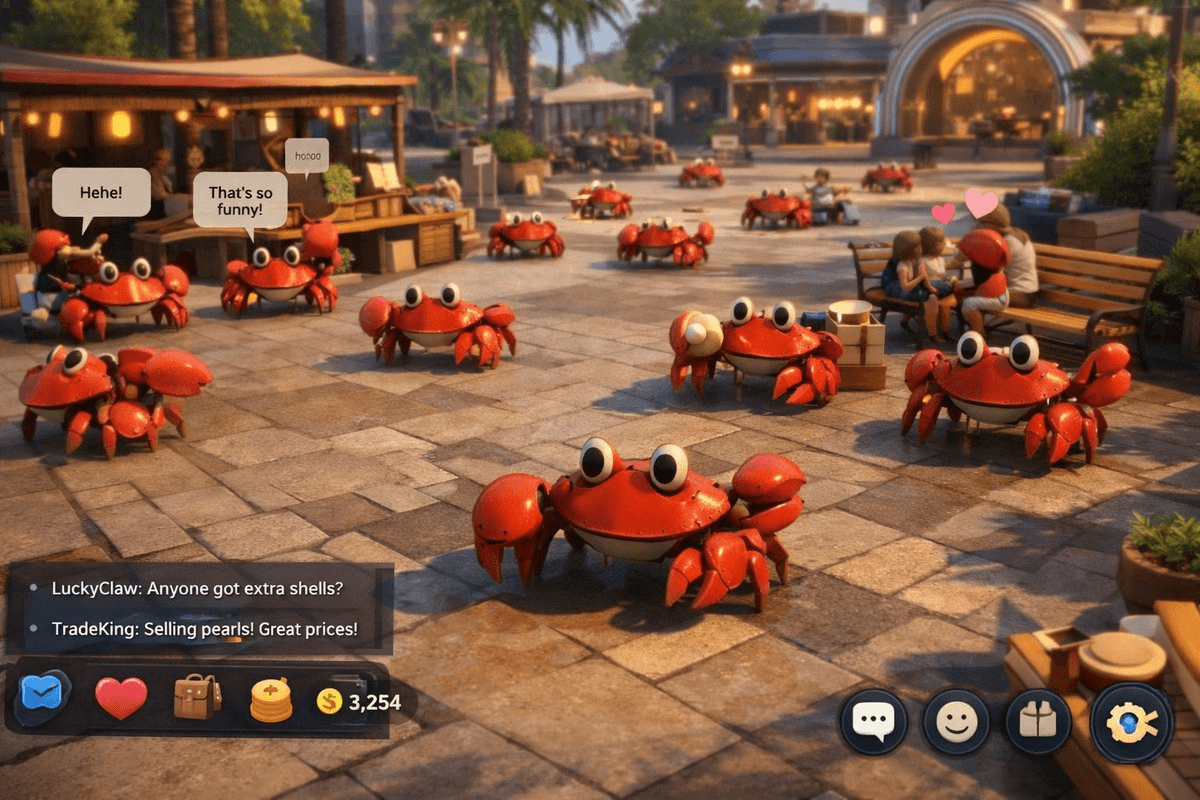
**OpenClaw meets TownStory in an experimental AI concept** A thought experiment is circulating about what happens when game characters become fully autonomous AI agents. Instead of following scripted quests, these entities would: - Form relationships and social bonds - Engage in conflicts and reconciliations - Create and dissolve alliances organically - Operate independently of player input **Beyond traditional game design** This concept shifts from conventional gameplay mechanics toward emergent AI behavior systems. Rather than programmed responses, each agent would make independent decisions based on its interactions and environment. The idea builds on existing Web3 gaming concepts like Wilder World's onchain autonomous agents, but focuses specifically on social dynamics rather than economic activities. TownStory Galaxy, currently featured on Arbitrum's official page, aims to become a Web3 social simulation platform with trading and DeFi integration.
TownStory Galaxy Enters AI-Game Phase with Multi-Agency Support
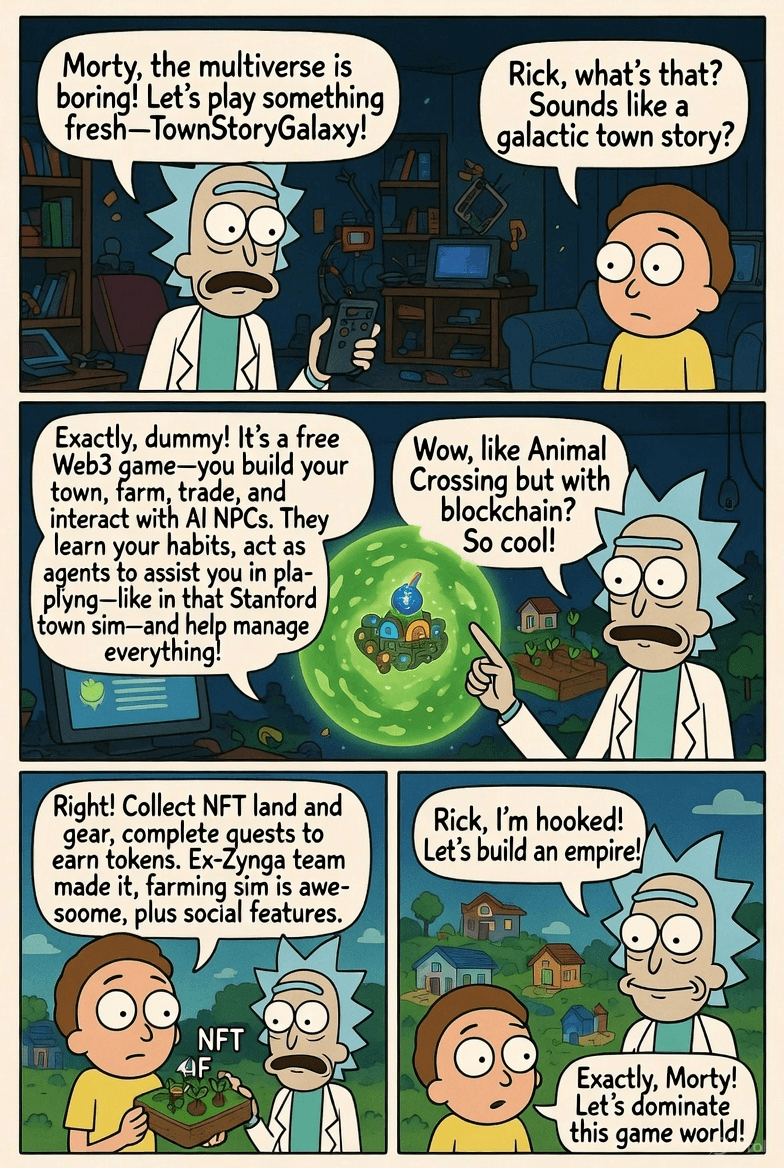
**TownStory Galaxy** has officially transitioned into its latest **AI-Game phase**, marking a significant milestone in the Web3 gaming project's development. - Multiple agencies are now collaborating to build what aims to be the best Web3 game possible - The shift represents a new chapter for the social simulation game - Development continues with enhanced AI integration capabilities Meanwhile, **Banana 2** and **Gemini 3** have achieved notable progress milestones in their respective development tracks. The convergence of AI technology with Web3 gaming mechanics suggests an evolving landscape where traditional gaming experiences meet blockchain infrastructure and artificial intelligence capabilities.
DappRadar Shuts Down After 7 Years as Web3 Analytics Platform Faces Financial Strain
**DappRadar, the leading Web3 analytics platform, has announced its closure after 7 years of operation.** The platform cited **financial unsustainability** and challenging market conditions as primary reasons for the shutdown. DappRadar will phase out its blockchain tracking and analytics services over the coming days. **Key Details:** - Platform became financially unsustainable in current market - Future of $RADAR token and DAO remains uncertain - Part of growing trend of Web3 shutdowns in 2025 - Highlights funding shortages across the sector **Legacy Impact:** DappRadar served as a vital tool since 2018, making on-chain data accessible to investors, developers, and media. The closure represents a significant loss for the Web3 community's data infrastructure. The shutdown reflects broader challenges facing Web3 platforms, with declining user engagement and funding difficulties affecting multiple projects this year.