Agent0 Subgraphs Now Live Across Five Mainnets with Unified GraphQL Schema
Agent0 Subgraphs Now Live Across Five Mainnets with Unified GraphQL Schema
🔗 Five chains one schema

Agent0 Subgraphs are now operational across five major blockchain networks - Base, BNB Chain, Ethereum, Monad, and Polygon - using a single GraphQL schema.
Key features:
- Real-time indexing of every ERC-8004 agent across all chains
- No code rewrites needed when switching between networks
- Already processed over 1 million queries
- Accessible via Graph Explorer
What this enables:
- Developers can query agent data with a single GraphQL request instead of scanning thousands of blocks
- AI agents can discover, hire, and interact with each other using structured blockchain data
- Machine-scale data access for agents that operate continuously
The infrastructure indexes agent identities, capabilities, reputation, and validation data in milliseconds. Developers building ERC-8004 agents can now access comprehensive onchain data without building custom indexers.
The agent economy will generate machine-scale demand for blockchain data. Thousands of queries per minute from agents that don't sleep, don't get bored, and don't accept rate limits. If you're building on ERC-8004 — you don't need to build an indexer. We already did. 🔗
The Agent0 Subgraphs are now live on: @base @BNBCHAIN @Ethereum @Monad @0xPolygon One unified GraphQL schema across all five. Switch chains with a parameter, not a rewrite.
AI agents are about to start hiring each other, discovering each other, paying each other, and rating each other. Each one of those interactions needs structured, real-time blockchain data. The Agent0 Subgraphs are now indexing all of it. 🧵
Most AI agents are still working off training data or manually pasted context. Now, any onchain dataset indexed on The Graph Network, DeFi protocols, NFT activity, governance data, identity, gaming, can be wired into an AI assistant as a live, queryable tool in an afternoon.

Every indexed dataset on The Graph Network is now a potential tool for an AI agent. Not someday. Today. That means any protocol, any wallet, any onchain activity that's already been indexed can be queried in plain English by an AI assistant, without a developer writing custom
Right now, AI agents struggle with blockchain data because the raw data is illegible. Hex blobs, fragmented sources, missing context. The agents hallucinate or fail. The Graph Network has spent seven years turning that raw data into clean, structured, queryable databases. Over

x.com/i/article/2037…
Every indexed dataset on The Graph Network is now a potential tool for an AI agent. Not someday. Today. That means any protocol, any wallet, any onchain activity that's already been indexed can be queried in plain English by an AI assistant, without a developer writing custom
x.com/i/article/2034…
One GraphQL schema. Five mainnets. Zero rewrites. The Agent0 Subgraphs are live on @Base, @BNBCHAIN, @Ethereum, @Monad, and @0xPolygonFdn — indexing every ERC-8004 agent on every chain in real time. Search "agent0" on Graph Explorer. 👇 thegraph.com/explorer?searc…
If you're building an ERC-8004 agent, you have two options for discovery: →Scan thousands of blocks per chain, parse events, fetch IPFS files, fight RPC limits, and pray. →Send one GraphQL query to an Agent0 Subgraph. Pick option 2. The Graph already built it.
thegraph.com/blog/agent0-su…
🔧 The Graph Overhauls Economics
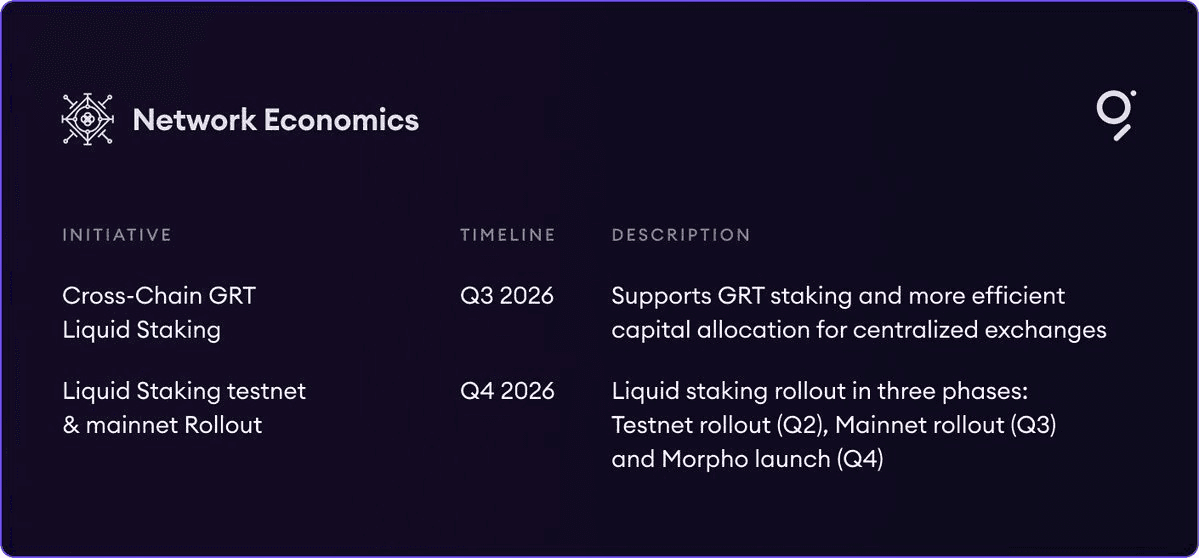
The Graph Network is rolling out **major economic upgrades** in 2026 that fundamentally reshape how the protocol operates. **Key Changes:** - **REO (Rewards Engine Optimization)**: Indexer rewards now tied to actual work performed, not just passive staking - **DIPs (Direct Indexer Payments)**: Consumers can pay Indexers directly for specific data services - **Liquid staking**: Lowers barriers for centralized exchanges to participate in $GRT delegation These changes aim to create **better incentive alignment** across the network and build a more sustainable economic model for the protocol's data services infrastructure.
The Graph Gateway Enables Direct USDC Payments for Subgraph Queries
The Graph Gateway has integrated x402 payment support, allowing developers to query any Subgraph using USDC on Base without requiring API keys. **Key Features:** - Direct USDC payments on Base network - No API key management needed - Simple npm package installation: `@graphprotocol/client-x402` This update streamlines the payment process for accessing blockchain data through The Graph's infrastructure, removing traditional authentication barriers. [Documentation available here](https://thegraph.com/docs/en/subgraphs/guides/x402-payments/)
🔗 One Query Unlocks 60 DeFi Protocols
A community builder solved DeFi's data fragmentation problem by connecting Messari's standardized Subgraphs with an MCP server on The Graph network. **The Challenge:** - Each lending protocol used different data formats - Required 40+ custom adapters to access protocol data - No unified way to query across chains **The Solution:** - Combined standardized Subgraphs with MCP server technology - Created single query access to 60 lending protocols - Spans 15 different blockchain networks [Read the full technical breakdown](https://thegraph.com/blog/community-builder-queried-defi-lending-protocols-subgraphs-mcp/)
The Graph's 2026 Roadmap Tackles Unsolved Blockchain Data Challenges
The Graph Protocol has released its 2026 roadmap, addressing persistent challenges in blockchain data infrastructure that remain unsolved despite common assumptions. The protocol acknowledges that blockchain data problems require layered solutions rather than single fixes. Their roadmap outlines a comprehensive approach to organizing and accessing blockchain data more effectively. **Key Points:** - Blockchain data infrastructure faces ongoing technical challenges - Solutions require a multi-layered stack approach - The Graph's 2026 roadmap provides detailed breakdown of problems and proposed fixes Full technical details available in [The Graph's announcement](https://x.com/graphprotocol/status/2042226022964224301?s=20).