🚀 Stellar Gets $20M deRWA Launch
🚀 Stellar Gets $20M deRWA Launch
🏦 Stellar's $20M surprise

Decentralized Real World Assets (deRWA) are launching on Stellar with a $20M initial investment backing.
Two initial products:
- deJTRSY: Short-term US Treasuries
- deJAAA: AAA CLO strategy
The launch enables 24/7 trading of institutional-grade assets on Stellar's network.
Key integrations include:
- Soroswap Finance: Native DEX trading pairs with instant swaps
- Aquarius DeFi: Enhanced liquidity layer participation
- Blend Capital: Borrowing and lending with RWA collateral
- Defindex: Yield-backed products for retail users
Cross-chain compatibility maintained through LayerZero's OFT Standard, keeping deRWAs composable across DeFi protocols.
This development brings institutional assets directly into Stellar's DeFi ecosystem, offering alternatives to traditional stablecoins for savings and collateral.
Research Shows $JAAA Leads Institutional Allocations in Tokenized Dollar-Yield Products
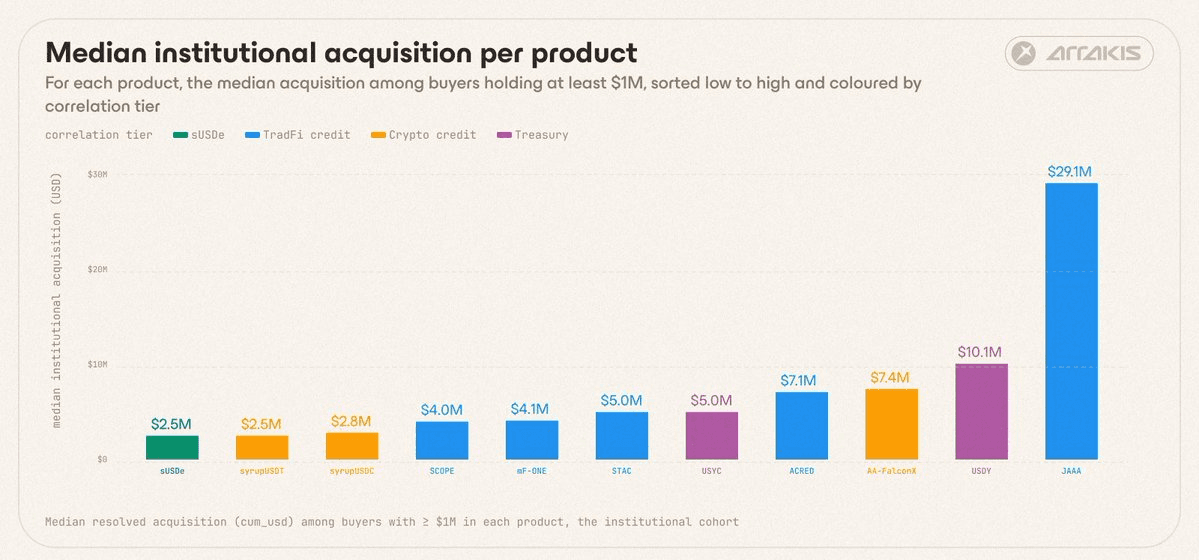
New research from Arrakis Finance analyzed 71,697 buyers across ten tokenized dollar-yield products, revealing key patterns in institutional behavior. **Key Findings:** - $JAAA attracts the largest median institutional allocation among all products studied - Products closer to offchain credit receive larger buyer allocations - The data suggests institutional investors prefer assets with stronger ties to traditional credit markets The research builds on earlier developments showing $JAAA's evolution beyond a passive yield product, with up to $100M deployed as leveraged collateral onchain.
New York Life Launches First Tokenized High Yield Bond Fund
New York Life Investment Management has launched **$HYB**, its first tokenized offering bringing US high yield corporate bonds onchain. **Key Details:** - Subscriptions and redemptions settled in **USDC** - Issued on Centrifuge platform - Actively managed strategy focusing on higher-quality high yield bonds - Portfolio composition adjusts based on market conditions - Can rotate fully into investment-grade bonds or money market instruments when cycle turns This expands the onchain credit market beyond Treasuries and AAA CLOs, adding the fixed coupon component needed for complete fixed income allocations.
Robinhood Tokenized Stocks Drive 200K New Holders in One Week
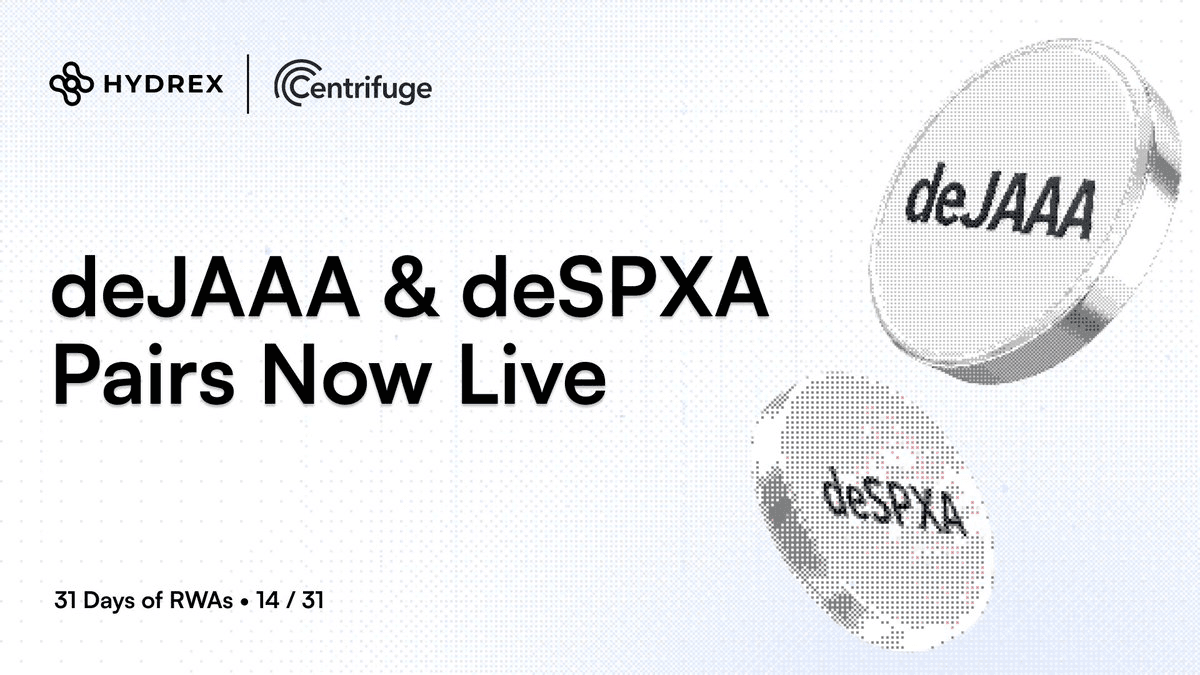
**Tokenized assets gained over 200,000 holders in a single week** — a 20% jump — following Robinhood's launch of tokenized stocks. This marks a shift from institutional to retail adoption. Just weeks ago, tokenized assets crossed one million total holders as they became integrated into DeFi protocols as collateral, liquidity pairs, and stablecoin backing. **Key developments:** - Robinhood Chain added 240K stock token holders in 30 days - Trading pairs like $deJAAA/USDC now live on Hydrex - Tokenized credit and S&P 500 exposure functioning as DEX liquidity The rapid holder growth suggests tokenized traditional assets are moving beyond experimental phase into mainstream consumer adoption through established platforms.
🏦 Janus Henderson's Path to Onchain Asset Management
**Major institutional adoption milestone** Janus Henderson, a global asset manager with over $300B in assets under management, has moved onchain. Nick Cherney, Head of Innovation at Janus Henderson Investors, explains their decision centers on two factors: - **The opportunity**: Significant potential in onchain markets - **Infrastructure confidence**: Robust underlying technology enabling institutional participation The firm selected Centrifuge as their platform partner, citing product quality, DeFi expertise, and team strength as key factors in their decision.
Real-World Assets Dominate Trading Volume on Major Crypto Venue
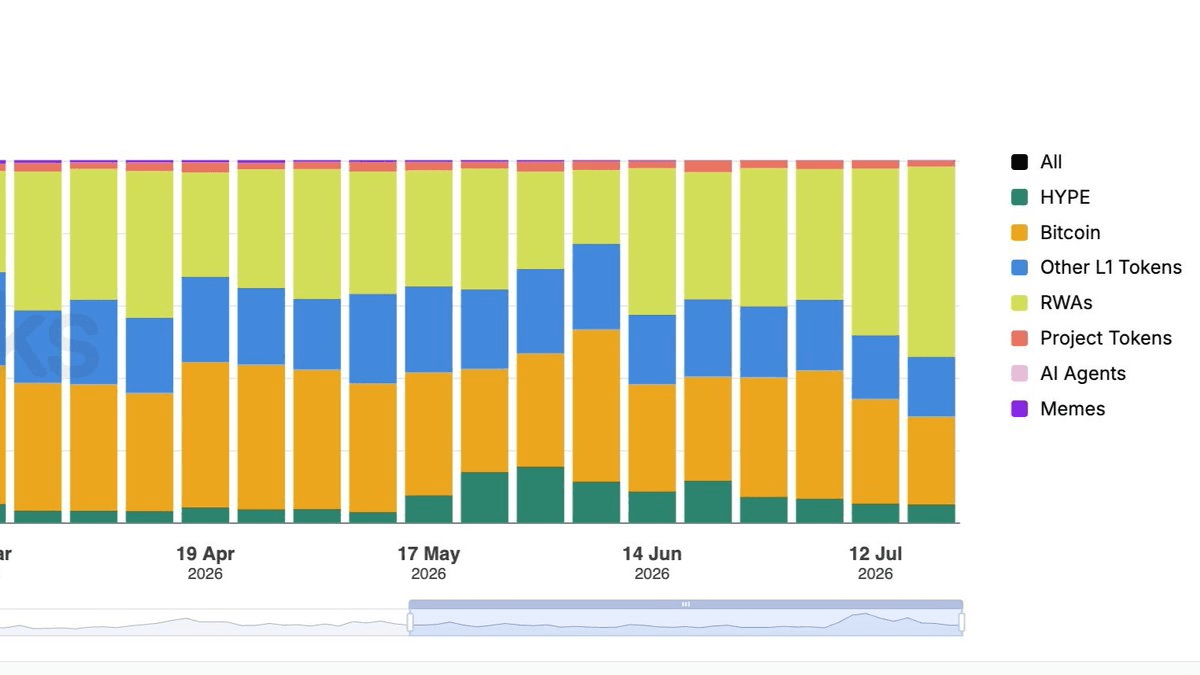
A significant shift is underway in crypto markets as tokenized real-world assets now account for the majority of trading volume on a major platform. **Key Development:** - Real-world assets (RWAs) have crossed a critical threshold, representing over 50% of trading activity on a leading venue - This marks a fundamental rotation in onchain demand away from purely digital assets toward tokenized traditional assets **Market Context:** - Tokenized RWAs have grown nearly 300% year-over-year, demonstrating resilience even during broader market downturns - The trend suggests institutional and retail participants are increasingly viewing blockchain as infrastructure for traditional finance This milestone indicates that crypto infrastructure is maturing beyond speculative tokens into a platform for bringing conventional assets onchain.