Status engineers working on overhauling Status Desktop and Status Mobile ahead of V2 launch
Status engineers working on overhauling Status Desktop and Status Mobile ahead of V2 launch


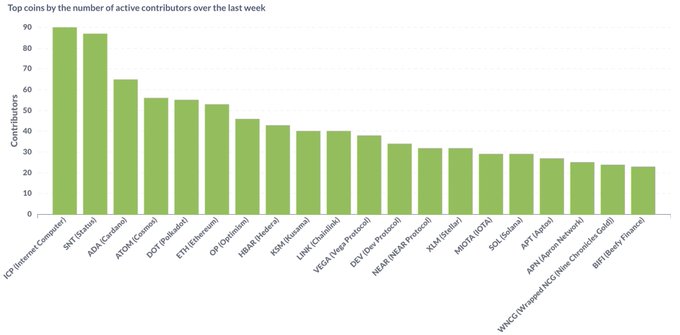
Status engineers are actively working on overhauling Status Desktop and Status Mobile in preparation for the upcoming V2 launch. The project has been recognized for having high development activity, with the second-highest number of active contributors on GitHub and being listed in the top ten for notable development activity by Santiment Feed.

We’ve been busy preparing for our website relaunch and this week’s AMA, but that doesn’t mean our development activity has slowed!! Behind the scenes, our engineers are working hard to overhaul Status Desktop and Status Mobile ahead of our upcoming V2 launch. Don’t believe us?
Status v2.38.2 Fixes Overheating and Performance Issues
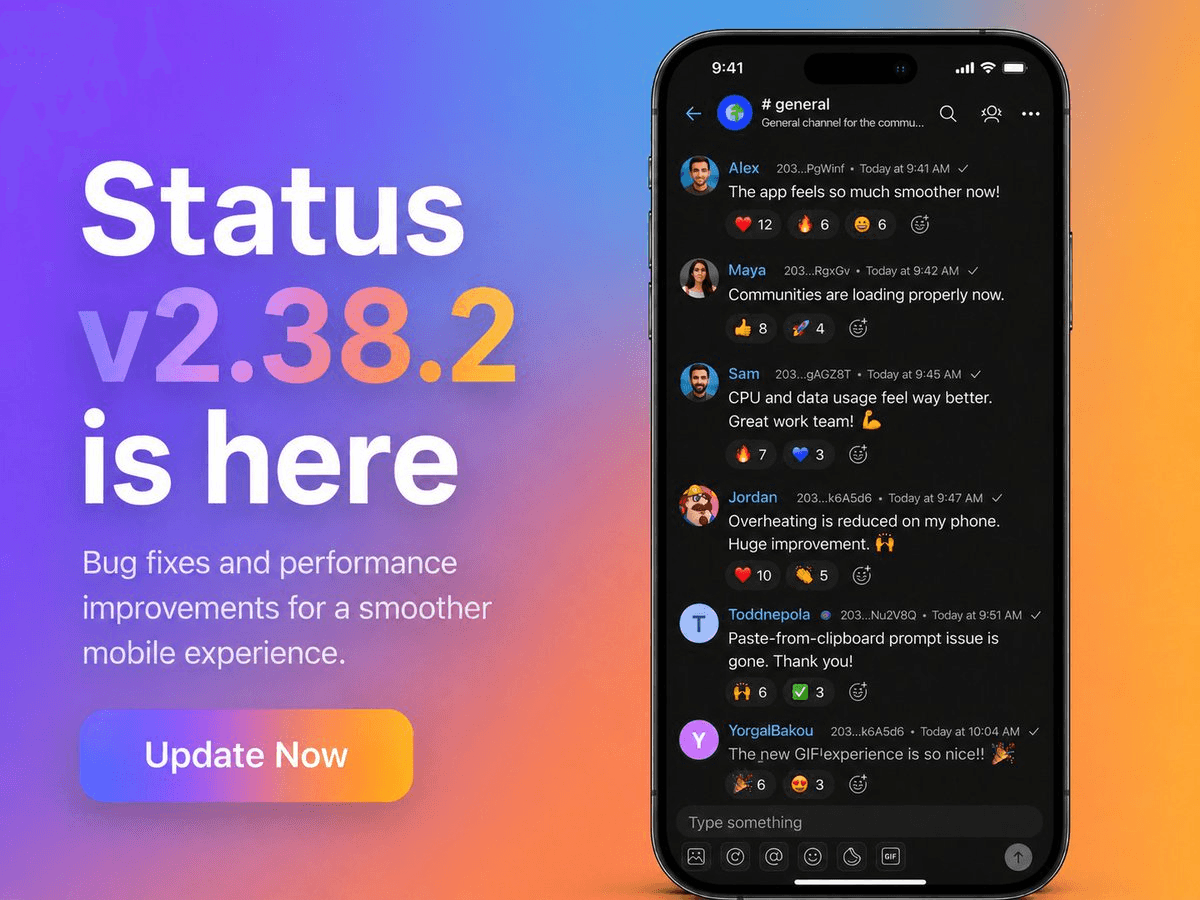
Status has released version 2.38.2 addressing critical performance problems and user experience bugs. **Key fixes include:** - Resolved high CPU and data usage causing mobile devices to overheat - Fixed messages getting stuck loading in communities - Removed unwanted Paste from Clipboard prompt on iOS - Fixed Cancel button when adding new accounts on iOS - Switched to new GIF provider for improved experience The update focuses on stability and performance improvements across the platform. [Update now](https://status.app/)
Account Recovery Systems Double as Takeover Vulnerabilities
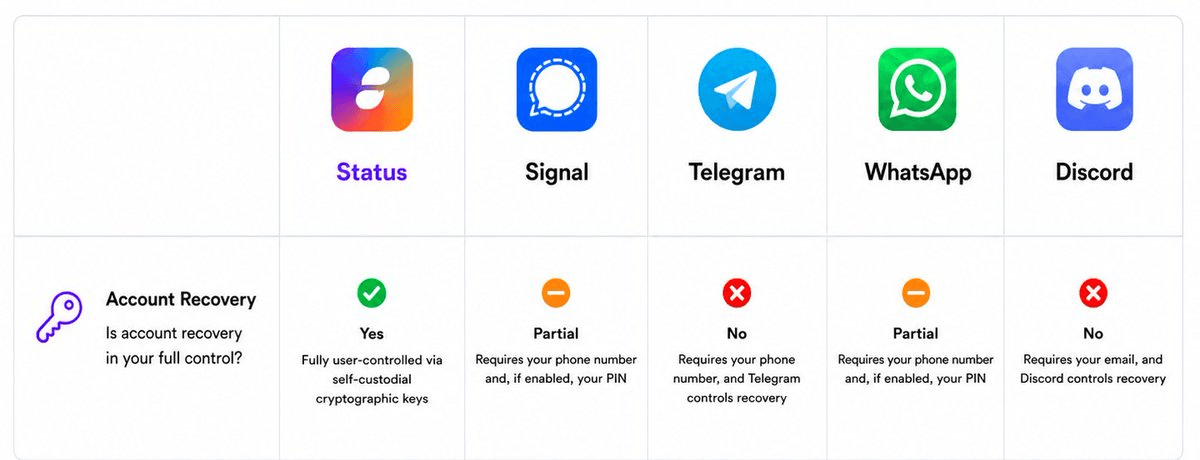
**The Recovery Paradox** Account recovery mechanisms designed to help users regain access are simultaneously creating security vulnerabilities. Most applications rely on phone numbers, email addresses, PINs, or company-controlled support systems for account recovery. **The Convenience-Security Trade-off** While these methods offer user-friendly recovery options, they introduce multiple attack vectors: - **SIM swaps** - Attackers port phone numbers to gain SMS access - **Phishing attacks** - Fraudulent emails trick users into revealing credentials - **Breached email accounts** - Compromised email provides recovery access - **Compromised support providers** - Social engineering through customer service **The Core Problem** Every recovery method that makes it easier for legitimate users to regain access also creates a potential pathway for malicious actors to hijack accounts. The same convenience features become security liabilities when exploited.
Legendary Web3 Projects Launch Hackathon for Essential Developer Tools
**Major Web3 hackathon announced** featuring participation from established blockchain projects. The event focuses on **building practical tools** that address real-world developer needs rather than experimental concepts. - Emphasis on creating utilities the ecosystem actually requires - Collaboration between proven Web3 projects - Focus on practical applications over theoretical innovations This represents a shift toward **utility-driven development** in the Web3 space, prioritizing functional tools that can immediately benefit developers and users. The hackathon aims to produce tangible solutions that fill current gaps in the Web3 development toolkit.
Status Network Token (SNT) Expands to Arbitrum with New Uniswap Pool
Status Network Token (SNT) continues its DeFi expansion with a new SNT/ETH liquidity pool now live on Arbitrum through Uniswap. This follows the recent deployment on Optimism, marking another milestone in SNT's multi-chain presence. Key updates: - New SNT/ETH pool available on Arbitrum - Follows successful Optimism deployment - Enables native token swaps across Ethereum, Optimism, and Arbitrum - Accessible via both Desktop and Mobile Status apps Visit the new pool: app.uniswap.org/explore/pools/arbitrum/0xBA575365bf122cAEB073093968c17376eeA59BC1
Status 2024 Year in Review
Status marks significant milestones in 2024 with several key launches and improvements: - Public release of Status Mobile & Desktop Beta - Introduction of SNT staking functionality - Launch of Status Network - Enhanced swap features on Mobile - Improved Communities performance on Desktop - Streamlined Desktop-Mobile pairing process Platform updates focused on user experience with bug fixes and performance optimizations. Notable improvements include profile photo previews for mentions and smoother sign-in processes on mobile, plus optimized transaction fees on desktop.