Stablecoins shift from speculation to settlement infrastructure
Stablecoins shift from speculation to settlement infrastructure
💳 Stablecoins become payment rails


The infrastructure shift is here. Stablecoins are moving from speculative assets to payment rails. Circle's USDC now integrates with Visa and Mastercard, while Galaxy Digital forecasts stablecoins will surpass ACH payment volume in 2026.
Institutions are deploying capital. BlackRock, Franklin Templeton, and JPMorgan have moved tokenized funds into production. Standard Chartered's CEO expects most transactions to eventually settle on blockchain.
Real-world credit is connecting to on-chain liquidity. Tala's $50M USDC facility serves 13M users in emerging markets. Huma Finance has processed $8B linking stablecoin liquidity to payment flows.
The opportunity: $9-11T locked in settlement buffers. Global payment systems move $200T+ annually, but capital sits idle in receivables and settlement delays.
KUSD targets this gap. Kelp's stablecoin earns from real-world repayments tied to payment flows and trade finance—not DeFi emissions or speculation. Returns come from actual capital movement through working capital cycles.
Short-term, settlement-native credit with on-chain transparency.
3/ Capital backing KUSD is deployed as short-term, self-liquidating credit to verified institutions. Used to settle transactions → repaid as cash flows clear → recycled again.

RWAs topped $350B on-chain this week, with stablecoins near $300B. Proof that tokenized assets now power real credit markets. The shift isn't about holding RWAs. It's about using them. Institutions are borrowing stablecoins against tokenized Treasuries, turning passive positions

The UK just made stablecoin payments a national priority. On January 17, 2026, the Financial Conduct Authority (FCA) launched a regulatory sandbox for sterling-backed stablecoins—part of 50 growth reforms positioning London to dominate digital finance in Europe before

We unpack this further in our latest blog, where we explain how programmable credit rails unlock short-term capital directly tied to payment flows and settlement. Read the full post ↓ blogs.kerneldao.com/blog/how-kred-…
How KUSD manages risk: Designed for real-world credit KUSD isn't backed by promises or hope; verification, rules, and automated defenses secure it. Here's how: 🧵

✧ KUSD developments ⍛ KUSD rewards were detailed as being generated from real payment settlement flows, using short-term credit extended to verified institutions - designed to remain resilient across market cycles.

How KUSD generates rewards. Most on-chain rewards depend on markets or incentives. KUSD is different. Rewards are generated when payments settle, not when prices move. Full breakdown in the blog ↓ blogs.kerneldao.com/blog/how-kusd-…
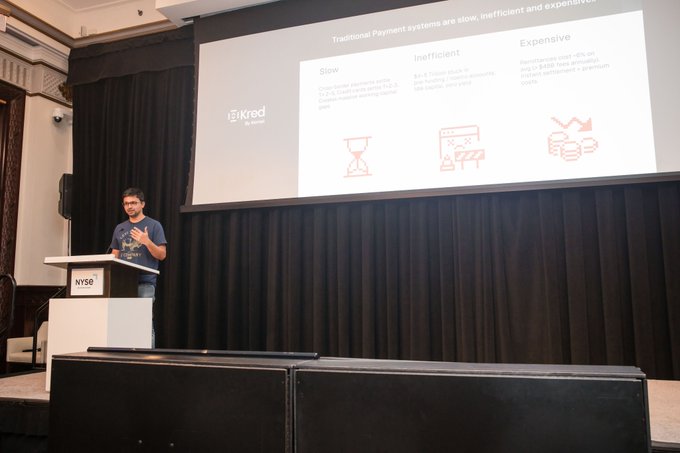
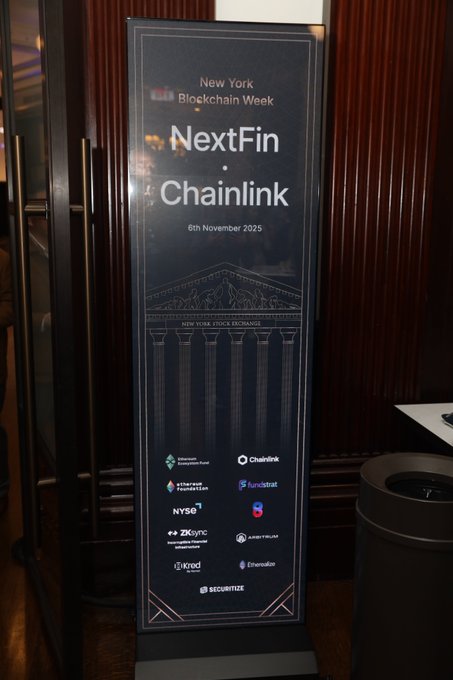
At NextFin NYBW, @GAmitej walked through how Kelp is building the Internet of Credit: connecting stablecoin liquidity with real world short term credit demand. It's the practical bridge between DeFi and traditional finance. Programmable settlement rails powering working capital


Had the privilege of speaking at NextFin NYBW, a co-sponsored event, sharing how Kred is building the Internet of Credit. Connecting stablecoin liquidity with real-world short-term credit. The bridge between DeFi and traditional finance is here.


The Asian Development Bank pegs the global trade finance gap at $2.5 trillion. Capital locked away instead of powering growth. This isn't theoretical. In practice, this gap forces businesses into pre-funding, cash buffers, and expensive intermediaries. Suppliers wait 30 to 90

For years, crypto "returns" came from speculation or protocol emissions. 2026 is different. Stablecoins are becoming settlement rails. @circle's USDC is integrated into Visa and Mastercard flows. Galaxy Digital predicts stablecoins will overtake ACH payment volume in 2026. RWAs

What's Hot 🔥 ⍛ RWAs Ignite the Next Credit Revolution → Real-world assets break $350B as tokenized collateral powers institutional on-chain credit ⍛ The $2.5T Credit Bottleneck → Why trillions in trade finance demand sits locked in legacy systems while stablecoin liquidity

2/ KUSD rewards come from somewhere else entirely: real payment and settlement activity.

🏁 Final Epoch Alert: Arbitrum DRIP Season 1 Ends
**Last Call for ARB Rewards** Arbitrum DRIP Season 1 has entered its final epoch, marking the last opportunity for users to earn additional ARB token rewards through rsETH deposits. **Key Details:** - Final epoch now active for DRIP Season 1 - Extra ARB incentives available across supported protocols - rsETH previously ranked #2 ETH derivative on Arbitrum by market cap - Participants can stake through [arbitrumdrip.com/opportunities](https://arbitrumdrip.com/opportunities) **What This Means:** Users holding rsETH can maximize their returns by deploying assets across participating DeFi protocols before the season concludes. This represents the final window to capture Season 1 incentives. The program has driven significant adoption of liquid restaking on Arbitrum throughout its run.
rsETH E-Mode on Aave: $1.1B Liquidity, 14x Leverage, 9% Rewards Now Live
**Major capital efficiency unlock for rsETH holders on Aave v3 Core market:** - **E-Mode activation** enables rsETH <> ETH loops at up to **93% LTV** (previously capped at lower ratios) - **14x leverage** now possible in one click via Contango integration - **~$1.1B ETH liquidity** available to borrow on Core market - Current conditions deliver **~9% rewards** on leveraged ETH exposure - rsETH supply on Aave Core crossed **$1B**, making it the **#8 largest asset** on the platform **Key improvements:** - Tighter loops with less idle capital - Competitive borrow rates even near utilization kink - One-click execution removes manual looping friction - Cross-chain expansion: $65M+ supply on Avalanche and Base markets **Risk reminder:** Higher leverage amplifies both returns and liquidation risk. E-Mode works best for correlated assets but requires active position management. [Start looping on Aave](https://app.aave.com/reserve-overview/?underlyingAsset=0xa1290d69c65a6fe4df752f95823fae25cb99e5a7&marketName=proto_mainnet_v3)
🌱 What's next?
**New Vaults Launch on Silo Finance** KelpDAO's agETH and hgETH tokens can now be used as collateral on Silo Finance. Users can: - Leverage agETH and hgETH holdings to borrow ETH - Access improved loan-to-value ratios - Benefit from more efficient borrowing terms This integration expands liquidity options for liquid restaking token holders, allowing them to unlock capital without selling their positions.
Krunch by Kelp: Monthly Newsletter on Stablecoin Infrastructure and On-Chain Credit
Kelp has launched **Krunch**, a monthly newsletter focused on institutional developments in crypto infrastructure. The newsletter covers three main areas: - Institutional stablecoin infrastructure - Real-world asset (RWA) convergence - Evolution of on-chain credit markets Krunch aims to deliver signal over noise, providing substantive insights without promotional content. Readers can subscribe to receive the newsletter directly via [Kelp's website](https://kerneldao.com/kelp/#:~:text=Stay%20updated%20with%20Kelp).