Sabai Protocol Partners with Manimama for Legal-First Tokenization
Sabai Protocol Partners with Manimama for Legal-First Tokenization
⚖️ Legal meets tokenization


Sabai Protocol has partnered with Manimama, a crypto compliance and international law firm, to provide comprehensive tokenization services.
The partnership offers:
- Tailored legal models for proper asset structuring
- Risk assessment and investor protection frameworks
- Global compliance solutions across jurisdictions
- End-to-end services covering legal, technical, and marketing aspects
This collaboration aims to make tokenization faster, transparent, and safer by establishing solid legal foundations before technical implementation.
Sabai Protocol continues positioning itself as a comprehensive Real World Asset (RWA) tokenization platform, emphasizing the importance of legal compliance in the digital asset space.

Sabai Protocol x Manimama ⚖️ 🔗 Secure tokenization starts with a solid legal foundation. That’s why we partner with Manimama — experts in crypto compliance & international law. 🧩 Tailored legal models 🏛️ Proper ownership structures 🛡️ Risk assessment & investor protection 🌍

Tokenized Assets Explained: Returns, Risks, and Investment Categories
**Understanding Tokenized Assets** Tokenization splits real assets into digital fractions, lowering entry barriers for investors. Unlike pure cryptocurrencies, tokenized assets represent claims on real-world items: properties, loans, gold, or funds. **Key Categories:** - **Real Estate** (5-25% yearly): Rental income or value appreciation from apartments, commercial units, or developments - **Tokenized Treasuries** (3-5% APY): Conservative products linked to U.S. government bonds - **Gold & Commodities**: Returns depend on price movements; no regular yield - **Renewable Energy** (6-12% yearly): Solar farms, wind projects with operating revenue - **Private Credit** (8-15% APY, up to 18%): Higher yields with higher risk from loans and debt - **Tokenized Funds** (3-12%+ yearly): Diversified portfolios across multiple asset types **Critical Questions Before Investing:** - What real asset backs the token? - What rights do buyers receive? - Is there a legal structure? - How are returns calculated? - Who manages the asset? - What exit options exist? **Risk Reality** Tokenization changes access, not risk. Properties may underperform, borrowers can default, and liquidity varies. High returns reflect high risk. Real estate remains the most intuitive entry point, offering tangible assets with clear value logic and multiple income models.
Real Estate Tokenization: Practical Implementation for Developers
Sabai Protocol has published a detailed guide on how tokenization works for real estate developers in practice. The article examines the practical implementation of tokenization technology, moving beyond theoretical discussions to address real-world applications and challenges. **Key focus areas:** - How tokenization functions in actual development projects - Specific problems it solves for developers - Technical and operational considerations The guide is accompanied by a case study of Sabai Property, which details the process of building a tokenized real estate marketplace from the ground up, including production-level requirements and implementation challenges. Both resources aim to provide developers with concrete information about integrating tokenization into real estate projects. [Read the full guide](https://sabaiprotocol.com/blog/real-estate-tokenization-for-developers-how-it-works-and-what-problems-it-solves) [View the case study](https://sabaiprotocol.com/blog/sabai-property-case-study-building-a-tokenized-real-estate-marketplace-from-scratch)
US Banks Can Now Hold Crypto and Tokenized Assets
US banking regulators have clarified that banks can treat tokenized securities the same as traditional assets for capital purposes. Two key regulatory moves establish **technology neutrality** - the blockchain ledger doesn't change an asset's legal nature. **Key developments:** - March guidance: Banks can hold eligible tokenized securities without additional capital penalties - April proposal: Tokenized deposits remain bank deposits (not stablecoins), potentially eligible for FDIC insurance - No regulatory difference between permissioned and permissionless blockchains **What this means:** Banks can now engage with tokenized instruments as both holders and issuers. The shift moves internal conversations from "can we hold this?" to "how do we hold this?" - opening doors for custody and compliance infrastructure. Sabai Protocol's COO notes this creates a foundation for RWA infrastructure to scale, though these remain proposed rules pending final implementation. [Read the full analysis](https://medium.com/@sabaiecoverse/us-banks-got-a-green-light-for-crypto-and-tokenized-assets-be5aa0b1ed41)
📊 Why Tokenized Assets Struggle to Find Buyers
**The Distribution Problem** Creating tokenized real-world assets is only half the battle. The harder challenge? Actually selling them to investors. A new guide breaks down the practical steps needed to bring tokenized assets to market: - Identifying the right investor base - Building effective distribution channels - Developing a go-to-market strategy that works The piece emphasizes that tokenization technology alone doesn't guarantee market success. Projects need clear plans for reaching buyers and creating demand. [Read the full guide](https://medium.com/@sabaiecoverse/tokenized-assets-dont-sell-themselves-a-practical-go-to-market-guide-f7dcc44c5347)
💎 Diamonds Worth $280M Being Tokenized in UAE
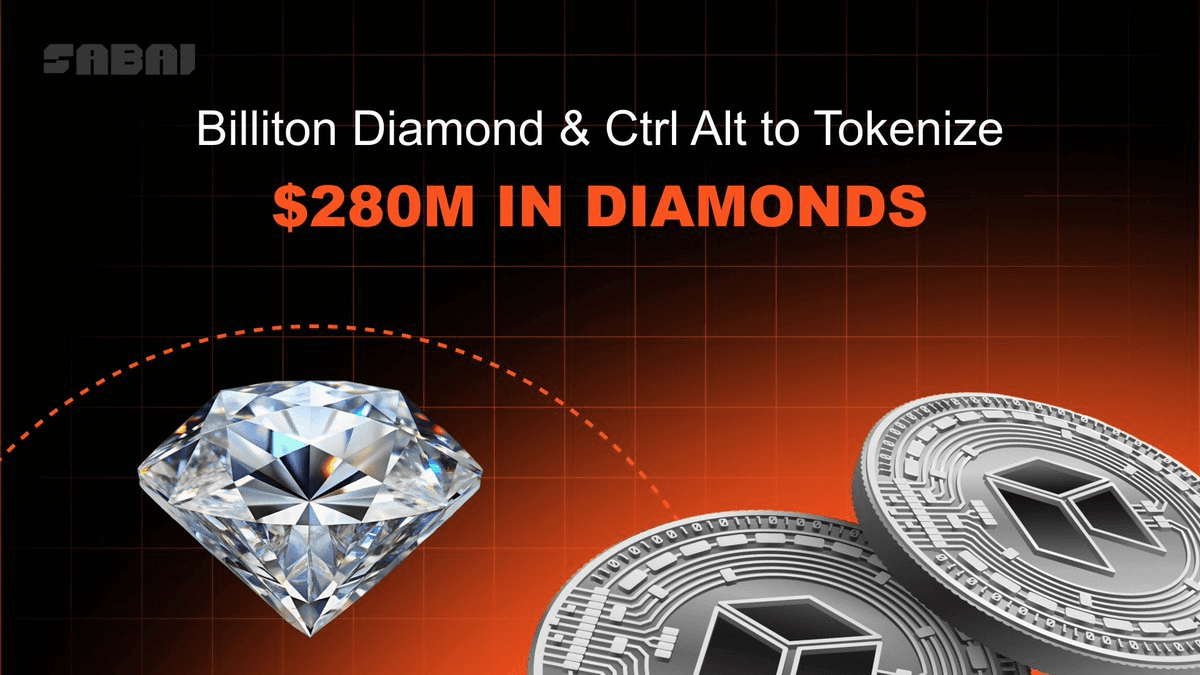
**Billiton Diamond and Ctrl Alt are tokenizing $280M worth of certified diamonds** The physical diamonds will remain stored in the UAE, while blockchain tokens will track: - Certification details - Origin information - Ownership records This approach aims to improve transparency, liquidity, and accessibility in the luxury asset market. **The RWA (Real World Assets) market continues expanding** beyond traditional financial instruments to include: - Luxury goods - Real estate - Business shares Tokenization allows people to manage valuable physical assets digitally from anywhere, with the RWA market growing from $133.3 million to $33.6 billion over five years.