Rango Integrates Chainflip for Native Cross-Chain Swaps
Rango Integrates Chainflip for Native Cross-Chain Swaps
🔄 Native swaps, zero wrapping

Rango Exchange has integrated Chainflip to enable direct swaps of native assets like BTC, ETH, SOL, and stablecoins without wrapping or manual bridge selection.
How it works:
- Rango's routing engine simulates paths across liquidity sources in real-time
- Automatically selects Chainflip when it offers the optimal route
- Optimizes for output amount, speed, gas costs, and reliability
Key benefits:
- No wrapped tokens required
- Automated route selection
- Competition between protocols ensures best execution
The integration allows users to swap native assets across chains while Rango handles the complexity behind the scenes. Read full details

Native assets deserve native routes! With @Chainflip integrated on Rango, users can access efficient paths for BTC, ETH, SOL and stablecoin swaps; without wrapping, bridge-hunting, or manual route selection🤌 Rango’s engine simulates routes across integrated liquidity sources
x402 Protocol Enables AI Agents to Make Autonomous Payments
**x402 protocol** revives the dormant HTTP 402 status code to enable AI agents to make autonomous payments without human intervention. **How it works:** - API states its price in USDC - Agent signs a gasless authorization using EIP-3009 - Payment settles automatically in one round trip - No API keys, billing dashboards, or accounts required **Technical stack includes:** - Model Context Protocol (MCP) - EIP-3009 for gasless transactions - Base and Solana blockchain support - Payment facilitators **Use cases:** - AI agents paying for model inference - Apps streaming payments for storage - Browsers paying for gated content - Autonomous vehicles paying for maintenance Several APIs have already implemented x402, including Hyperbolic Labs, Prodia Labs, Firecrawl, and Neynar. The protocol enables agents to chain services autonomously - for example, fetching social data, generating content, posting it, and using revenue to fund more operations. Developers can access implementation details at [Coinbase's x402 repository](https://github.com/coinbase/x402/) and [x402.org](http://x402.org). [Read full technical breakdown](https://rango.exchange/learn/market-trends/x402-ai-payment-protocol)
RWAs Hit 40% of Trading Volume on Rango as Digital Assets Gain Real-World Traction
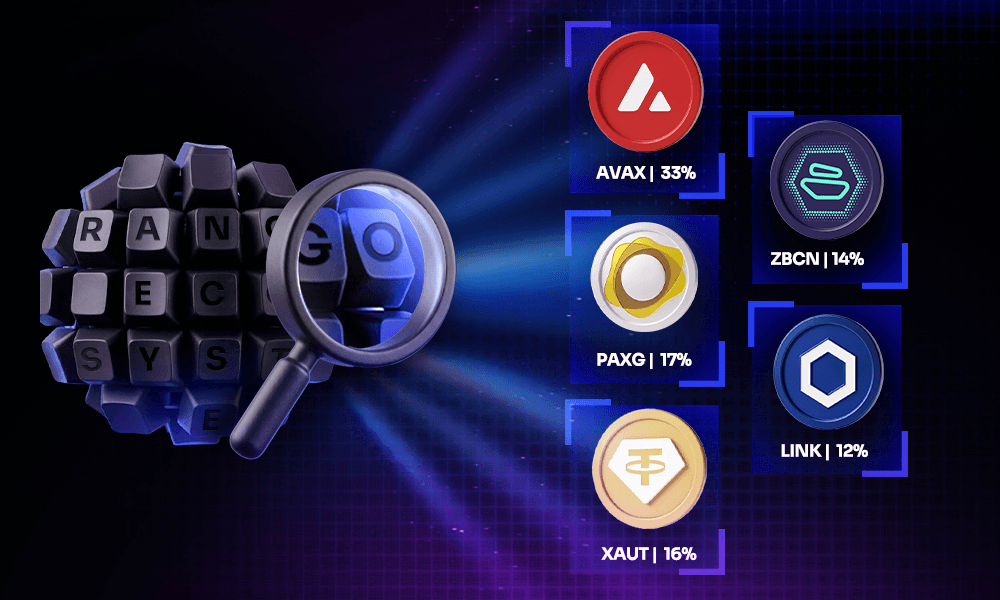
Real World Assets (RWAs) now represent **40% of both source and destination volume** on Rango's cross-chain platform in 2026, excluding stablecoins and native assets. **Key developments:** - AVAX has established itself as core infrastructure for RWA trading - Digital gold tokens PAXG and XAUT are functioning as trusted hedge assets, mirroring physical gold's role - ZBCN and LINK ecosystems are contributing to asset digitization efforts The data encompasses both tokenized assets and tokenization protocols. The RWA market has grown to $24.8B in total onchain market cap, with 282,505 asset holders. Institutions including Circle, BlackRock, and Robinhood have entered the space. RWA categories gaining traction include equities, real estate, gold assets, credit products, and art/collectibles, supported by infrastructure platforms focused on compliant, liquid asset delivery.
🔥 Gas.zip Integration Solves Cross-Chain Usability Gap
Rango has integrated gas.zip, a native gas-refuel layer that addresses a critical cross-chain problem: users receiving assets but lacking gas to transact. **Key features:** - Fund gas across multiple chains with one transaction - Supports ETH on major L1s/L2s and SOL - Handles amounts as low as cents - Reduces bridge hops and stranded liquidity For integrators, this means more executable routes and smoother onboarding to new chains, eliminating the common "funds arrived but can't transact" scenario. This follows Rango's recent TRON integration via Chainflip and Q2 data showing TRON's volume share jumped from 2.5% to 12.61%, driven by stablecoin demand.
Tron USDT Becomes Top Destination on Rango Exchange with $28M in March Volume
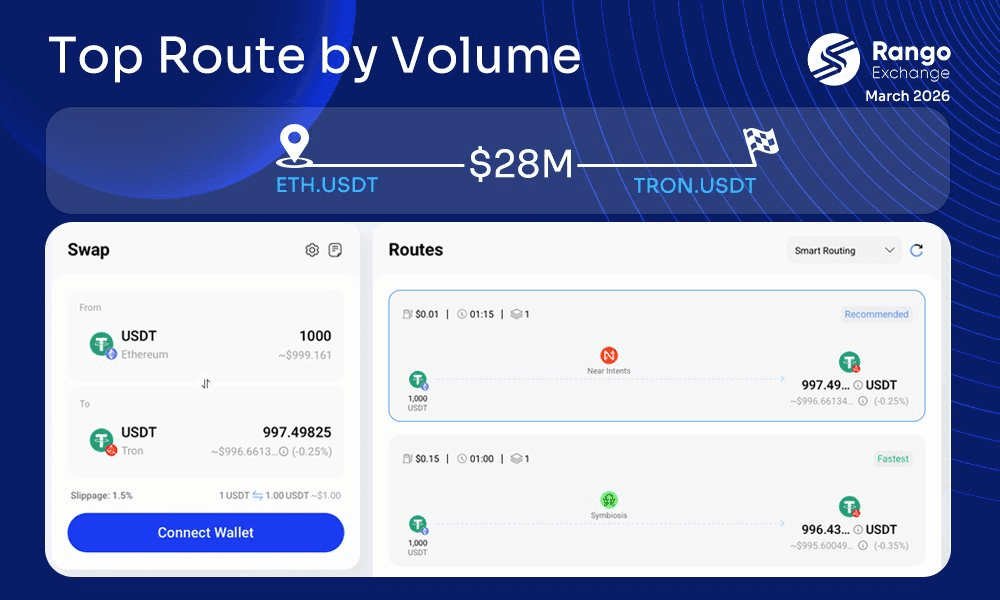
**Tron emerges as leading destination chain** The ETH.USDT to TRON.USDT route topped Rango's volume charts in March with $28 million in transactions. This marks a continuation of Tron's growing popularity as a destination for stablecoin transfers. **Key trends:** - Tron USDT remains the preferred destination across multiple months - Bitcoin destinations continue to show strong demand - Notable migration pattern from BNB Chain to Solana observed in January data The data suggests users are increasingly choosing Tron for USDT transfers, likely due to lower transaction fees compared to Ethereum mainnet.