Quantum-secure tokenization, Hong Kong's CBDC expansion, and Euro stablecoin on Solana
Quantum-secure tokenization, Hong Kong's CBDC expansion, and Euro stablecoin on Solana
🔐 Quantum gold & Euro stablecoins?


Hong Kong's e-HKD project expands into tokenization, focusing on settlement of tokenized assets, programmability, and offline payments. n nHSBC trials quantum-secure technology for distributing tokenized gold, building on their HSBC Gold Token for retail investors. n nSwitzerland's SIX explores launching a crypto exchange, recognizing crypto as an increasingly recognized asset class. n nSocGen FORGE expands its MiCAR-compliant EURCV stablecoin to Solana, following PayPal's PYUSD expansion. n nChainlink Labs' Angie Walker emphasizes the importance of blockchain infrastructure coexisting with central bank systems for programmable digital money.

Is tokenization a “giant leap” for securities? As the NY Fed posed the question, Brazil, China, Germany, India, and the UAE saw positive blockchain developments. Moreover, Swift outlined plans for settling digital asset transactions. This week’s onchain finance news ↓

As German bank KfW issues a second digital bearer bond on the public @0xPolygon blockchain, the @BIS_org’s Basel Committee explores how banks can mitigate permissionless #blockchain risks. This week’s onchain finance news ↓ 1️⃣ KfW issues bearer bond on Polygon as part of ECB

Chainlink Expands Across 6 Chains with 8 New Integrations
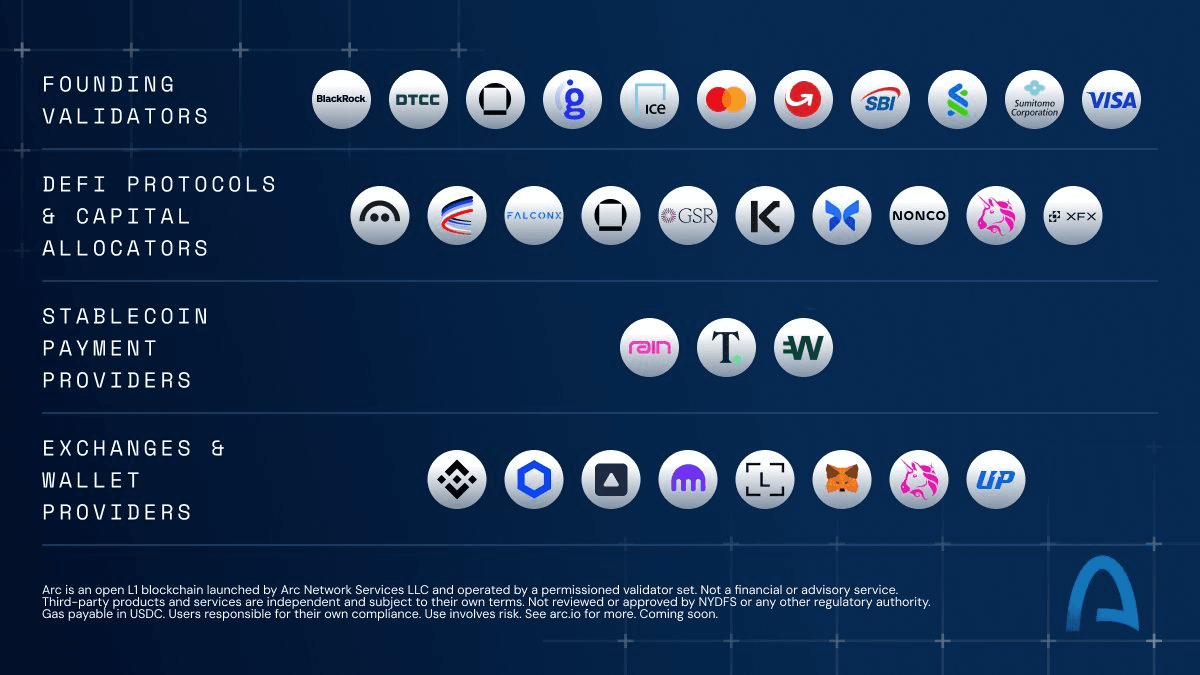
Chainlink recorded 8 new integrations spanning 5 services and 6 different blockchain networks. **New adopters include:** - Apex Global Group - Bitget - BitGo - Blockchain Valley at Cyberport - CSPro - FORMS HK - Hastra Finance - LBank Exchange - Nocturn This follows Chainlink's recent partnership with the Arc ecosystem, which provides access to institutional-grade oracle infrastructure used by BlackRock, DTCC, and Mastercard. The integrations demonstrate continued adoption of Chainlink's oracle standard across multiple chains and service categories.
Major Protocols Migrate $15B to Chainlink CCIP

**Major industry shift underway** as $15 billion in value moves to Chainlink's Cross-Chain Interoperability Protocol (CCIP). **Leading protocols making the switch:** - BitGo (WBTC - $7.5B) - Coinbase (cbBTC - $6B) - Kraken, Lombard Finance, KelpDAO - Mantle, Solv Protocol, Virtuals - Multiple other major platforms These organizations are deprecating their legacy cross-chain providers in favor of Chainlink's infrastructure. **Wrapped Bitcoin dominance:** Chainlink CCIP now powers 70% of the wrapped Bitcoin ecosystem, supporting 17+ assets totaling over $16B in value. The migration reflects growing demand for standardized, secure cross-chain infrastructure as protocols prioritize security over legacy solutions.
Chainlink Launches Self-Serve Data Streams for Prediction Market Traders
Chainlink has introduced a new self-serve onboarding platform at app.chain.link, allowing market makers and algorithmic traders to access paid Data Streams subscriptions. **Key Features:** - Individual feed selection at $150/month per stream - Bundle plans available for popular Chainlink-powered prediction markets - High rate limits and low latency data access - Monthly billing through Stripe (card, bank, and other payment methods) - Simple sign-up requiring only an email **Platform Capabilities:** Users can browse the Streams catalog, access paid tiers and bundles, generate API credentials, and monitor usage through the dashboard. The move responds to demand from thousands of market makers and algo traders who have been using Chainlink-powered prediction markets. Chainlink Data Streams powers many of the largest 5 and 15-minute crypto markets, providing fast, reliable data for accurate market resolution and instant settlement. Recently, LBank exchange (25M+ users) adopted Chainlink to power high-speed prediction markets with instant resolutions and payouts. Pricing is subject to change, with more payment options, billing models, and feed selection coming soon. Custom plan inquiries are available through direct contact.
Chainlink TWAP Data Streams Power Polymarket's Short-Term Crypto Markets
Chainlink has launched TWAP (Time-Weighted Average Price) Data Streams for Polymarket's 5 and 15-minute crypto prediction markets. **Key Details:** - Polymarket has processed over $9 billion in trading volume to date - The integration provides time-weighted average pricing for improved market accuracy - TWAP data feeds complement Chainlink's existing Data Streams already securing hundreds of crypto pairs on the platform This builds on Polymarket's February launch of 5-minute markets, which expanded their existing 15-minute trading options. The TWAP methodology helps smooth out price volatility for these ultra-short timeframe markets, offering traders more reliable reference prices for rapid prediction markets.
🏦 Chainlink CRE enables synchronized settlement between central bank money and tokenized assets in Bank of England lab
Chainlink has demonstrated how its **Runtime Environment (CRE)** enables synchronized settlement between central bank money and tokenized assets on public ledgers within the Bank of England's Synchronisation Lab. **Three custom components built on CRE:** - Synchronisation Operator UI for initiating transactions and tracking status - CRE UI displaying activity across deployed workflows - Central bank UI for transaction confirmation These tools allow operators to coordinate settlement across traditional payment systems and onchain environments using Chainlink infrastructure. This follows recent upgrades where **Chainlink Functions & Automation** transitioned to CRE workflows, reducing integration friction and operating costs. Leading protocols including Aave, Polymarket, and Sky Ecosystem have already upgraded to the unified platform.