Protocol-Level ZK Infrastructure Removes Developer Complexity Barriers
Protocol-Level ZK Infrastructure Removes Developer Complexity Barriers
🔓 ZK without the PhD

The ZK Developer Gap
Most developers want to build apps with zero-knowledge proofs, but few understand circuit design, proof systems, and verification logic. This expertise gap has slowed ZK adoption.
Current Pain Points
- Learning complex circuit design languages
- Understanding proof system mathematics
- Managing verification keys
- Debugging cryptographic errors
The Cost Problem
Smart contract verification creates prohibitive economics. Verification costs scale linearly with users—manageable at 10,000 users, but unsustainable at 1,000,000. Consumer apps need costs that decrease with scale.
Protocol-Level Solution
When verification runs as native chain functionality instead of smart contract execution, the economics transform:
- Upload verification keys through governance
- Query verification results like any other chain state
- Build ZK apps without writing circuits
- Cost per verification approaches zero at scale
The infrastructure abstracts away the complexity, letting developers build ZK applications without becoming cryptography experts.

Smart contract verification creates a cost problem: Every proof verification pays gas. At 10,000 users, it's manageable. At 1,000,000 users, the costs are prohibitive. Consumer apps need costs that decrease with scale, not increase.
The current ZK developer experience: Learn circuit design languages. Understand proof system mathematics. Handle verification key management. Debug cryptographic errors. This works for researchers. It doesn't work for app developers.
This is the difference between application-level and protocol-level infrastructure. When verification runs as native chain functionality instead of smart contract execution, the economics completely change. Cost per verification approaches zero at scale.
Protocol-level infrastructure abstracts the complexity: Upload verification keys through governance. Query verification results like any other chain state. Build apps that use ZK without writing circuits. The infrastructure handles the hard parts.
There's a reason most ZK apps are expensive to use. Verification costs scale linearly with usage. More users = higher costs = worse unit economics. Protocol-level verification breaks this model. When verification is native infrastructure, costs become negligible regardless of
Most developers want to build apps with zero-knowledge proofs. Very few developers actually understand circuit design, proof systems, and verification logic. This gap is why ZK adoption is slow. Consumer-grade infra means devs don't need to be ZK experts to build ZK apps.
Forbes Explores Blockchain's Role in Transparency: Burnt Banksy and the Epstein Files
Forbes examines how blockchain technology is being applied to social good initiatives, featuring Burnt Banksy's work on transparency and accountability. **Key Developments:** - The article explores blockchain's potential for creating immutable records and transparency in sensitive cases - Burnt Banksy, founder of XION, discusses moving beyond blockchain buzzwords to practical consumer applications - Focus on making Web3 technology accessible by removing technical barriers - The piece highlights how programmable internet data could transform ownership systems **Looking Ahead:** The conversation centers on 2026 as a pivotal year for mainstream Web3 adoption, with emphasis on building trust infrastructure for major brands while maintaining the technology's core transparency benefits. [Read the full Forbes article](https://www.forbes.com/sites/vipinbharathan/2026/03/16/blockchain-for-good-burnt-banksy-and-the-epstein-files/)
🤖 Dead Internet Crisis
**The internet is dying - and we have the numbers to prove it.** Bots now make up **50% of all web traffic**, while false information spreads **6x faster** than truth online. Trust in digital content has plummeted to just **28%**. **The crisis is real:** - Half of what you see online isn't human - Misinformation dominates information flow - Users can't tell what's real anymore XION is developing a **trust layer** for the internet to combat this digital decay. Their solution promises to: - Verify content authenticity - Maintain user privacy - Restore faith in online information The "Dead Internet" theory isn't conspiracy - it's our current reality. But unlike other problems plaguing the web, this one might actually be solvable.
TradeOS AI Building zkTLS Consumer Products on XION
**TradeOS AI is developing consumer-facing products** that combine zero-knowledge Transport Layer Security (zkTLS) with artificial intelligence on the XION blockchain. The team is working on **novel solutions at the intersection of privacy and AI**, focusing on products designed for everyday users rather than technical audiences. - Building on XION's consumer-focused Layer-1 blockchain - Combining zkTLS privacy technology with AI capabilities - Targeting mainstream consumer adoption This development follows TradeOS AI's previous partnership with Revox, where they integrated AI trading agents with zkLink's L3 zkEVM aggregation technology. The project represents another step toward **making Web3 technology more accessible** to non-technical users through privacy-preserving AI applications.
BurntBanksy to Discuss XION's Role in Building Trust Through Blockchain Verification at Impact Forum
**BurntBanksy** will participate in tomorrow's **Blockchain for Good Impact Forum AMA** to discuss how XION enables social impact through verification systems. Key discussion points: - How **XION's verification capabilities** can drive meaningful impact - Why verification is **essential for solving trust at scale** - The role of blockchain in creating transparent, trustworthy systems This follows recent discussions about XION's "**Verify Anything**" manifesto and the platform's focus on consumer adoption through accessible Web3 technology. XION positions itself as a **consumer-focused layer-1 blockchain** designed to remove technical barriers and make Web3 more inclusive for mainstream users.
Korea Blockchain Week 2025 Kicks Off with RWA and PayFi Panel
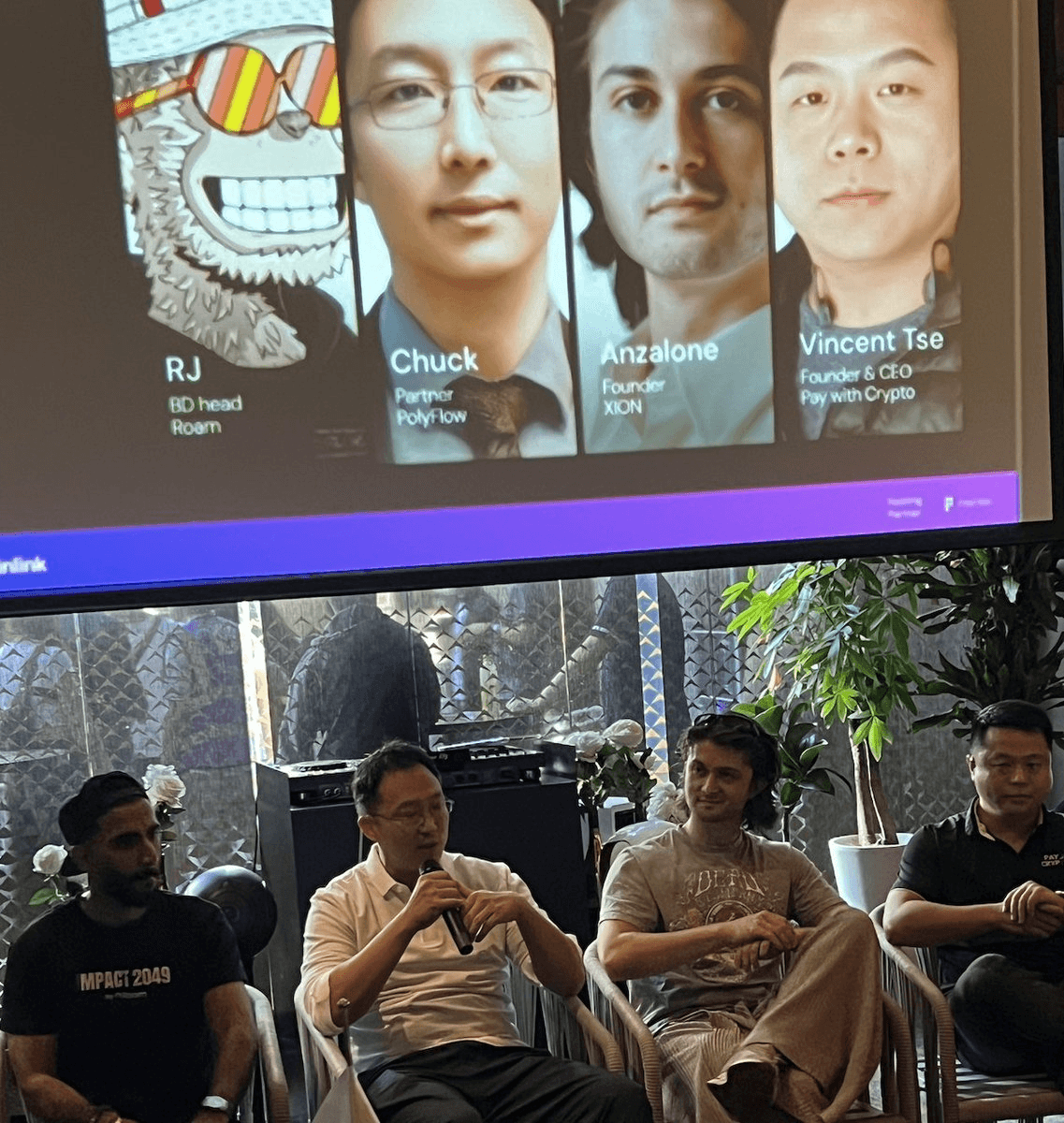
**Korea Blockchain Week 2025** launched with its first panel focusing on **crypto mass adoption** - specifically how Real World Assets (RWA) and Payment Finance (PayFi) are shaping the future of finance. **Key highlights:** - Panel titled "From Assets to Payments" explored the intersection of traditional finance and crypto - **@BurntBanksy** provided expert insights on complex RWA and PayFi topics - Discussion centered on how these technologies drive mainstream crypto adoption **What's RWA and PayFi?** - **RWA**: Tokenization of real-world assets like real estate, commodities, and securities on blockchain - **PayFi**: Integration of decentralized finance with payment systems for seamless transactions The panel addressed how these innovations are **removing barriers** to crypto adoption and making blockchain technology more accessible to everyday users. This aligns with broader industry efforts to bridge traditional finance with decentralized systems. *Stay tuned for more insights from Korea Blockchain Week 2025 as the event continues.*