Polygon Ecosystem Unaffected by rsETH Exploit, $2T Safely Moved
Polygon Ecosystem Unaffected by rsETH Exploit, $2T Safely Moved
🛡️ Polygon stands strong

Polygon's Response to rsETH Incident
Polygon's infrastructure remains secure following the rsETH exploit. The team confirms:
- Polygon Chain, Agglayer, Katana, and Vaultbridge are completely unaffected
- Over $2 trillion has been safely processed to date
- Active monitoring continues as the situation develops
Gearbox Protocol Takes Precautionary Measures
Gearbox curators report no direct rsETH exposure, with the protocol operating normally. As a precaution:
- New rsETH exposure creation has been restricted
- Borrowing against tETH and DETH temporarily paused
- Limited indirect exposure through Balancer v3 LP tokens poses no risk to lenders
- Loan-to-value ratios ensure solvency even in adverse scenarios
Both teams are closely monitoring developments and maintaining operational security.

Our team has been actively monitoring the rsETH exploit: Polygon Chain, Agglayer, and the broader ecosystem, including Katana & Vaultbridge, remain unaffected by the incident. Polygon has safely moved over $2T to date and we will continue to stay vigilant as this event unfolds.

Out of an abundance of caution, the OFT path on Vaultbridge (secured by a 2/3 DVN) has been temporarily paused. Bridging vbAssets to and from Katana remains fully available via Agglayer. Agglayer verifies with ZK proofs, not Proof of Authority. Math, not multisigs
Polygon Crosses 7 Billion Lifetime Transactions as Payment Infrastructure Expands
Polygon reached a milestone of **7 billion lifetime transactions** as its payment infrastructure continues to expand with new integrations. **Key developments:** - Tether Wallet added support for USDT and XAUT on Polygon - WalletConnect reported over **$400 billion** moved through its platform on Polygon - Tangem and MoonPay expanded their payment capabilities on the network - Binance supported the Giugliano upgrade, which brings faster finality and higher throughput - **Polygon Labs launched sPOL**, a native liquid staking token The week also saw Mexican peso yield products go live through Etherfuse, Bitso, and CapaFi, while BitgetWallet highlighted QR payments, bank transfers, and mobile top-ups powered by Polygon. These integrations build on recent launches including onchain FX markets with Frax and Curve, zero-gas transfers for stablecoins, and various payment applications choosing Polygon for their infrastructure.
Mastercard Expands Crypto Credential Program with Polygon Partnership

Mastercard has officially launched its **Crypto Partner Program** to advance onchain payments, with **Polygon** as a key participant. The program builds on Mastercard's **Crypto Credential** system, which replaces complex 42-character wallet addresses with simple, verified usernames for self-custody transfers. Polygon served as the first network for this initiative. **Key features:** - Users onboard once and receive a verified username - Wallets link directly to credentials - Assets transfer instantly without copying hex strings - [Mercuryo](https://mercuryo.io) handles user verification and credential issuance Polygon was selected as the default launch chain due to its **low-cost infrastructure** designed for speed, reliability, and scalability—essential qualities for global payment systems. This partnership represents a significant step toward making blockchain-based payments accessible to mainstream users by removing technical barriers.
Polygon Surpasses Decade of Global Movie Ticket Sales in Stablecoin Settlement
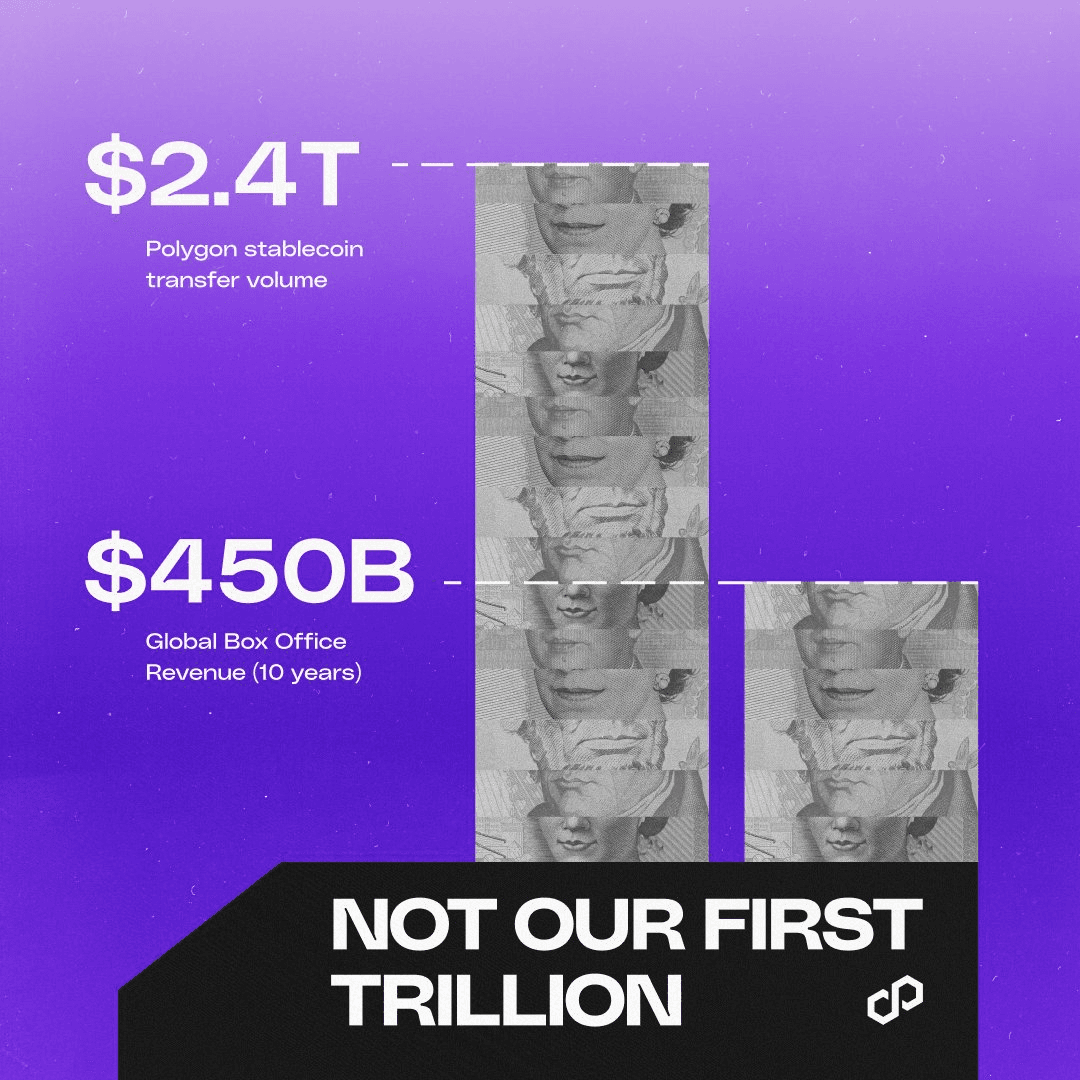
Polygon has processed over $1 trillion in stablecoin transactions, exceeding the total value of all movie tickets sold globally over the past ten years. This milestone demonstrates the growing scale of blockchain-based payment infrastructure. The network has previously surpassed other major financial benchmarks, including the annual volume of the global remittance market. The achievement highlights how Layer 2 scaling solutions are handling significant real-world transaction volumes.
Polygon's Stablecoin Sandwich Architecture Enables Seamless Cross-Border Payments
Polygon has introduced a **"stablecoin sandwich" architecture** that enables cross-border payments without end users directly handling stablecoins. **How it works:** - Sender initiates payment in their local currency (e.g., dollars) - Stablecoins facilitate the transfer in the background - Recipient receives funds in their local currency (e.g., pesos) - Neither party needs to interact with or understand stablecoins This approach abstracts away the complexity of blockchain technology while leveraging stablecoins' efficiency for international money movement. The architecture builds on Polygon's existing infrastructure for payments, remittances, and settlement. Read more: [What is a Stablecoin Sandwich](https://polygon.technology/blog/what-is-a-stablecoin-sandwich)