🔥 Polygon Burns Record 28.2M POL in February
🔥 Polygon Burns Record 28.2M POL in February
🔥 POL burn hits new record

Record-Breaking Month for Polygon
Polygon achieved a new milestone in February 2026, burning 28.2 million POL tokens - the highest monthly burn in the network's history.
How It Works
- Every transaction on Polygon generates fees
- Base fees are permanently burned (removed from circulation)
- Priority fees go to validators, block producers, and stakers
- More network activity = more fees = more tokens burned
Deflationary Trajectory
The network has now burned over 100 million POL tokens total, driven by actual usage rather than artificial mechanisms. With current burn rates exceeding new token issuance, Polygon's supply is deflating at approximately -1.00% annualized.
This creates a simple equation: Usage → Fees → Burns → Supply Deflation

All-time milestone: 100M+ POL burned on the Polygon network, driven by real usage. Every transaction on Polygon generates fees. From each fee: base fees are burned and priority fees are shared among validators, block producers, and stakers more activity → more fees → more
28.2M POL burned in February. A monthly all-time high for POL burned. Usage ↑ Fees ↑ Burns ↑ Supply ↓ Deflation is locked in.

150 Million Visa Merchants Now Accept Stablecoins on Polygon
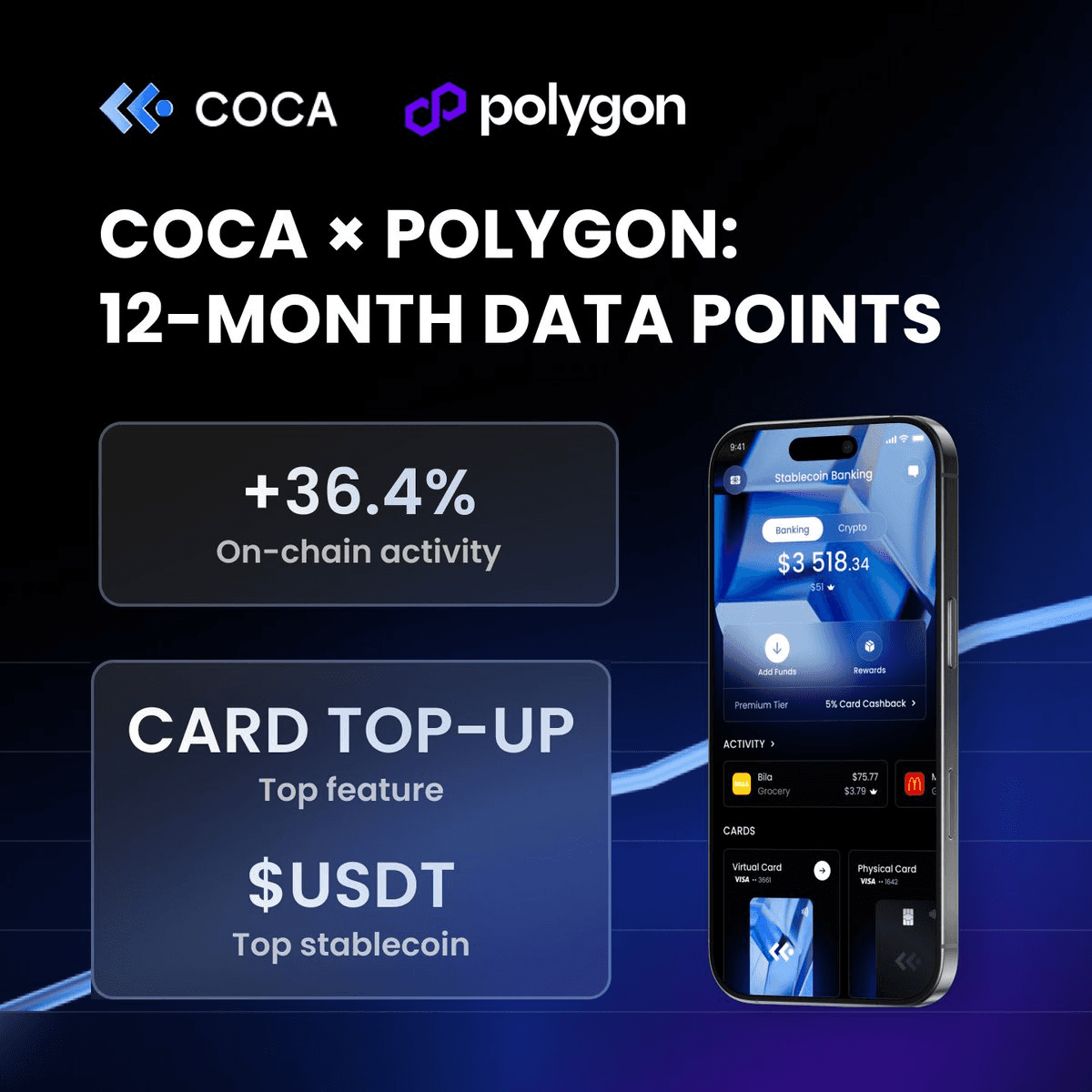
**Major Payment Milestone Achieved** Visa merchants worldwide—150 million locations—now accept stablecoin payments through Oobit on Polygon, marking a significant expansion of crypto payment infrastructure. **Key Details:** - Payments work both in-store and online - Built on Polygon's fast, low-cost settlement layer - Follows 36.4% year-over-year growth in onchain activity **Network Performance:** Polygon stakers currently earn 8.33% APR, with 5.12% coming from actual network usage—demonstrating real economic activity beyond protocol rewards. This integration connects blockchain payment rails directly to everyday commerce, making stablecoins spendable at any Visa-accepting merchant globally.
Polygon Leads Transaction Volume as USDC Surpasses 20M Transactions
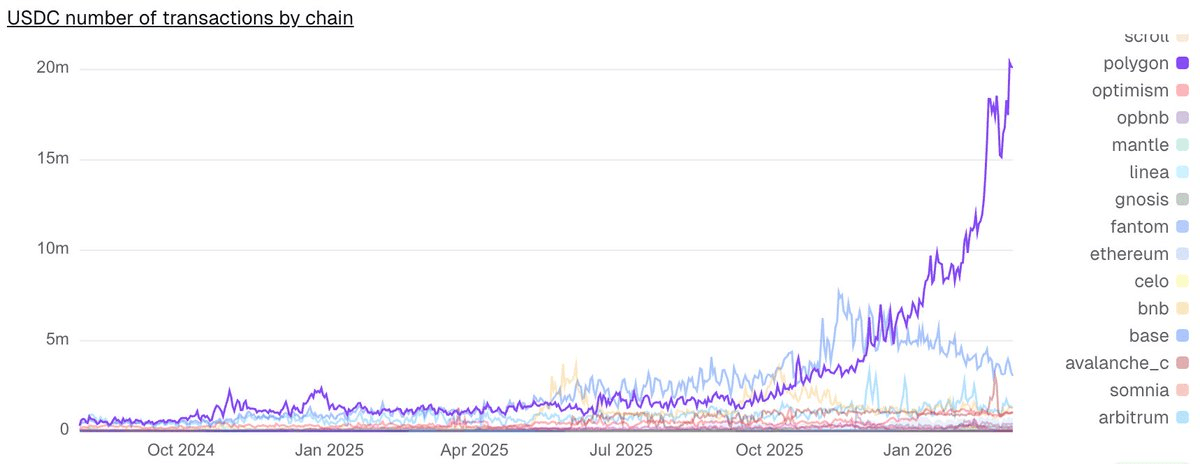
**Polygon has secured the top position in transaction volume** as February comes to a close, marking a significant milestone in the network's growth trajectory. **Key Highlights:** - USDC crossed 20 million transactions over the weekend - a first-time achievement for the stablecoin on the network - Polygon maintains its position as the fastest growing chain for payment transactions - The network continues to dominate as the #1 chain for USDC activity This data reinforces Polygon's role as a leading infrastructure for stablecoin payments and everyday transactions in the crypto ecosystem.
🔧 Polygon Upgrade March 4: Agent Transactions, $1M Gas Subsidy & Enhanced Compatibility
**Polygon is implementing a major chain upgrade on March 4, 2026.** The upgrade introduces three key improvements: - **Faster agent-to-agent transactions** - optimized infrastructure for autonomous agent interactions - **$1 million gas fee subsidy** - reducing transaction costs for users and developers - **Enhanced compatibility** - improved wallet support and smart contract functionality This follows Polygon's previous network evolution where POL became the native token powering the aggregated blockchain network. The March 4 upgrade continues the chain's development as a scalable infrastructure layer. **What this means:** Lower costs and better tooling for developers building agent-based applications on Polygon, while users benefit from subsidized transactions during the transition period. [Learn more about the upgrade](https://polygon.technology)
MetaMask Card Enables Direct USDC Spending from Self-Custody via Polygon Infrastructure
**BaanxGroup and Coinme partnership powers MetaMask Card functionality** The MetaMask Card now utilizes Coinme's enterprise stablecoin infrastructure, built on Polygon's Open Money Stack, to enable direct USDC spending from self-custody wallets. **Key features:** - Spend USDC directly from MetaMask wallet - Accepted anywhere Mastercard is used - Maintains self-custody until point of purchase - Combines regulated rails with consumer-friendly UX The integration demonstrates how regulated infrastructure can support self-custodial crypto payments at scale, bridging web3 wallets with traditional payment networks.