OP Stack Enables Custom Enterprise Blockchains for Specialized Use Cases
OP Stack Enables Custom Enterprise Blockchains for Specialized Use Cases
🔧 Blockchains go bespoke

The blockchain landscape is shifting toward customization and specialization, with the OP Stack enabling this transformation.
Key Development:
- Enterprises can now launch blockchains tailored to their specific use cases using the OP Stack
- The platform has grown from 200M transactions two years ago to over 6B+ transactions today
- Currently supports 50+ chains with enterprise-level guarantees
What This Means: The OP Stack allows organizations to maintain their own blockchain infrastructure while keeping revenue in-house. This represents a move away from one-size-fits-all solutions toward purpose-built chains designed for particular business needs.
Karl from Optimism provides detailed insights on how customization is driving the next wave of blockchain adoption.

This is exactly the shift we're seeing. Customization and specialization are unlocking the next era of blockchains. The OP Stack is built for this—enabling enterprises to launch chains tailored to their exact use case. @karl_dot_tech explains: x.com/Optimism/statu…

x.com/i/article/2027…
From 200M transactions 2 years ago to 6B+ today across 50+ chains. This is the OP Stack. Your blockchain. Your revenue. Enterprise guarantees.
What does customization unlock for blockchains? How does the OP Stack make it possible? @karl_dot_tech on the next wave in crypto ⬇️
Why Blockchain Performance Benchmarks Miss the Mark
**Synthetic blockchain benchmarks don't reflect reality**, according to @karl_dot_tech's latest analysis. **Key problems with current testing:** - Metrics are easily manipulated - Generic tests fail specialized chains - Real-world performance differs significantly The issue echoes earlier warnings about misleading TPS claims, where projects tout millions of transactions per second without considering security or decentralization trade-offs. [Watch the full breakdown](link)
ZK Proofs: Unlocking Privacy and Scalability for Users and Institutions
**Zero-knowledge proofs are gaining attention for their practical applications** in blockchain technology, as discussed by Succinct Labs at the Scaling Summit. **Key capabilities of ZK technology:** - **Privacy**: Transactions remain anonymous while maintaining verification - **Scalability**: Data compression into cryptographic proofs reduces blockchain bloat - **Verification**: Confirms data integrity without exposing sensitive information **Current applications** include Layer 2 rollups and privacy-focused protocols. The technology shows promise for finance, identity management, and voting systems where confidentiality matters. ZK proofs address real challenges in blockchain adoption by balancing transparency with privacy needs.
Startale Group and SBI Holdings Launch JPYSC Trust Bank-Backed Stablecoin

**Startale Group and SBI Holdings have launched JPYSC**, a trust bank-backed stablecoin designed to bring more users onchain. **Why it matters:** - Trust bank-backed stablecoins provide critical infrastructure for blockchain adoption - Represents a significant step in Japan's regulated digital asset ecosystem - Builds on previous collaboration between Chainlink and SBI Group from August 2025 **Background:** This launch follows SBI Group's ongoing efforts to advance tokenized assets and stablecoins in Japan, including their partnership with Chainlink to develop secure, scalable blockchain solutions. The JPYSC stablecoin aims to provide a stable, regulated on-ramp for Japanese users entering the blockchain ecosystem.
2026 Roadmap Unveiled: Quantum-Proof ZK Systems Aligned with Ethereum
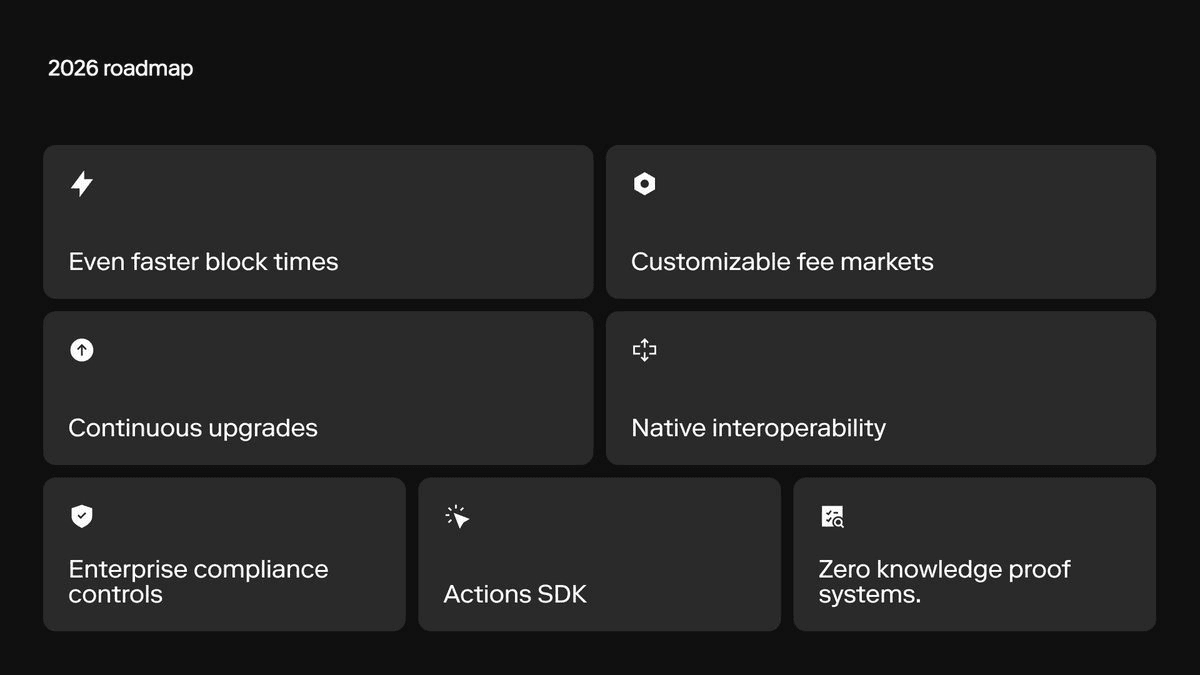
A new 2026 roadmap has been announced following the Scaling Summit, focusing on quantum-resistant zero-knowledge systems. **Key Points:** - The roadmap closely aligns with Ethereum's Strawmap initiative - Focus on developing quantum-proof ZK (zero-knowledge) systems - Aims to enhance both security and scalability for Ethereum This development represents a significant step toward future-proofing blockchain infrastructure against potential quantum computing threats while maintaining Ethereum's core scaling objectives.