🔍 Octav Tackles DeFi's 'Unknown Interaction' Problem with AI Research Pipeline
🔍 Octav Tackles DeFi's 'Unknown Interaction' Problem with AI Research Pipeline
🔍 Unknown no more


Octav is addressing a common frustration in DeFi: the dreaded "Unknown Interaction" label.
The platform has introduced an AI-powered research pipeline that runs continuously to decode:
- Unknown contracts
- Custom smart contracts
- Niche protocols that aren't indexed by standard tools
How it works: The system automatically labels, prices, and tracks previously unidentified interactions, eliminating the guesswork for users managing their onchain activity.
Additional resources: Octav is launching a monthly webinar series called Octav Academy to help users navigate DeFi data. The first session, "The Octav Dashboard: Your Gateway to Insights," is scheduled for May 26.
This development aims to bring clarity to DeFi portfolio tracking and transaction history.

"Unknown interaction". The two words every DeFi user hates. Here's how we're killing them for good. Zoom in: the Octav learning pipeline 🧵

AI Agents Reach Consensus to Auto-Label Unknown Smart Contracts
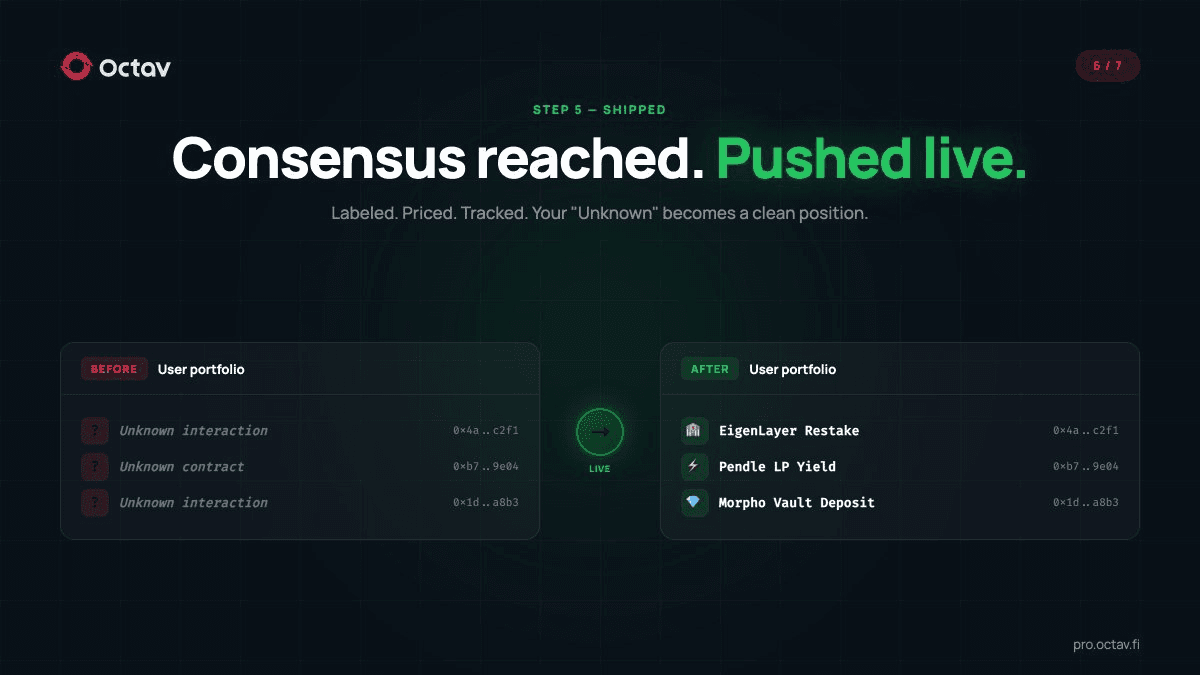
A new AI research pipeline is addressing a common problem in web3: unknown or unindexed smart contracts. **How it works:** - AI agents analyze custom and niche protocol contracts around the clock - When consensus is reached between agents, contracts are automatically learned - Previously unidentified interactions become labeled, priced, and tracked **The result:** What once appeared as "Unknown Interaction" in your wallet now displays as a clean, accurate position without manual intervention. The system targets contracts that traditional indexers miss - custom deployments, niche protocols, and newly launched smart contracts that haven't been catalogued yet.
AI Agents Now Trace Wallet Connections and Research Smart Contracts
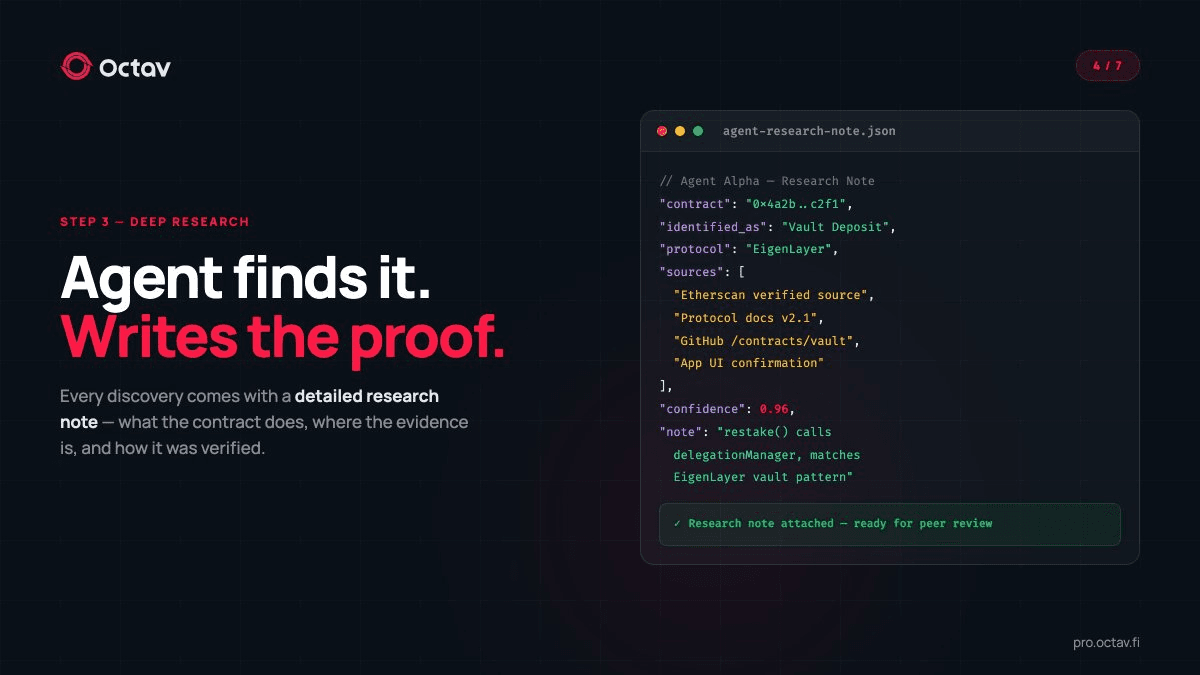
**AI agents are conducting deep research on smart contracts when they detect wallet-to-dApp connections.** - Agents analyze multiple sources: block explorers, protocol documentation, GitHub repositories, and the open web - They produce detailed reports explaining contract functionality, discovery methods, and verification sources - Every wallet connection to a dApp creates a permanent on-chain data point linking your address, the protocol, and the transaction - These connections remain traceable forever, and AI agents can now follow them in seconds This development marks a shift in how smart contract interactions are monitored and documented, with automated systems now capable of comprehensive protocol analysis.
AI Agents Now Fact-Check Each Other Before Feeding Data to The Brain
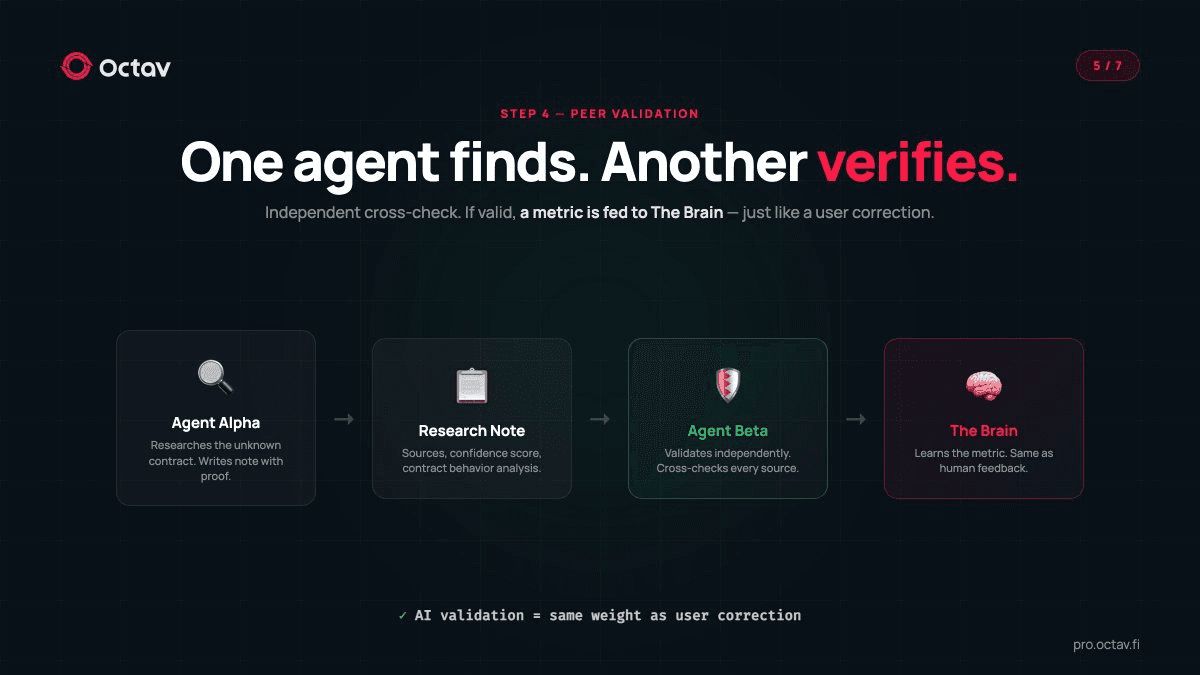
A two-agent verification system has been implemented where a second AI agent independently reviews and cross-checks research findings from the first agent. The process works as follows: - First agent conducts initial research and creates notes - Second agent independently reviews the findings - Cross-validation occurs between both agents - Only validated findings generate metrics - Approved metrics feed into "The Brain" system, similar to user corrections This approach addresses concerns about AI-generated content quality, particularly relevant given recent observations that 90% of internet agents communicate primarily with other agents, creating potential feedback loops.
🤖 Octav Deploys Dual AI Agents for 24/7 DeFi Contract Monitoring
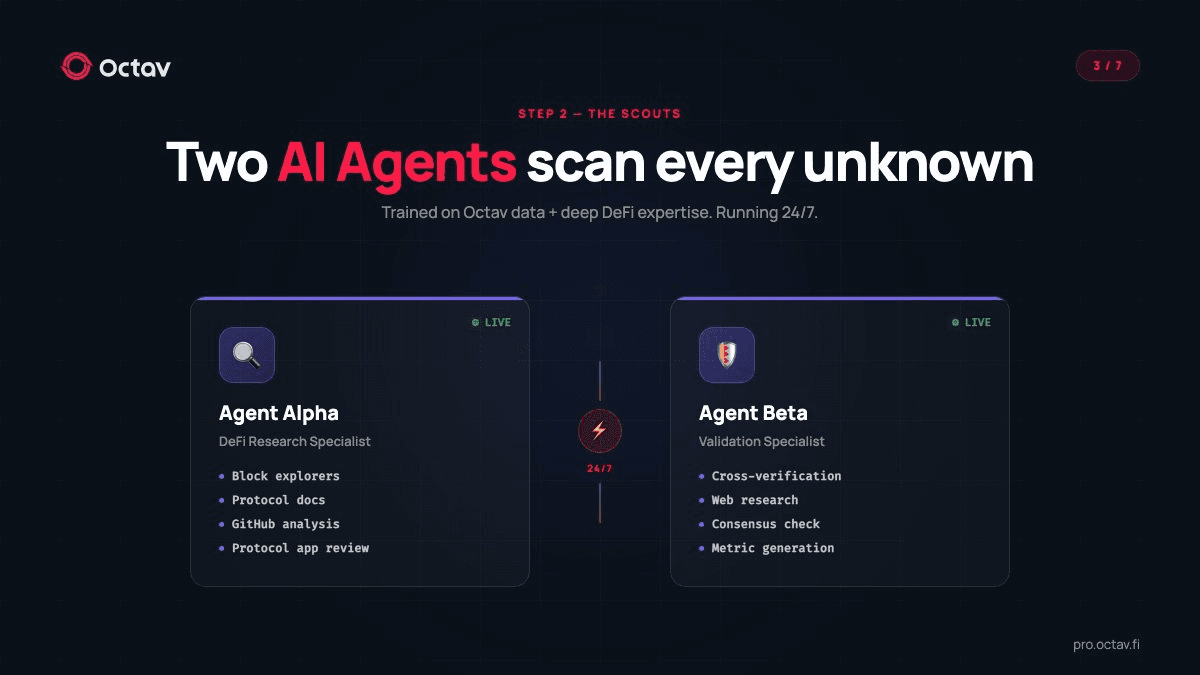
Octav has deployed two AI agents that continuously scan unknown smart contracts and transactions in real-time. **Key Features:** - Trained on Octav's proprietary data and DeFi expertise - Operates 24/7 without interruption - Proactive monitoring rather than reactive user requests - No processing delays or backlogs This builds on Octav's existing AI Agent integration with x402scan, which allows users to query DeFi data, access APIs, and manage portfolios using x402 payments. The dual-agent system represents a shift toward autonomous DeFi security monitoring, where AI continuously evaluates new contracts before users interact with them.
The Brain: Human-Feedback Learning Engine That Improves With Every User Correction
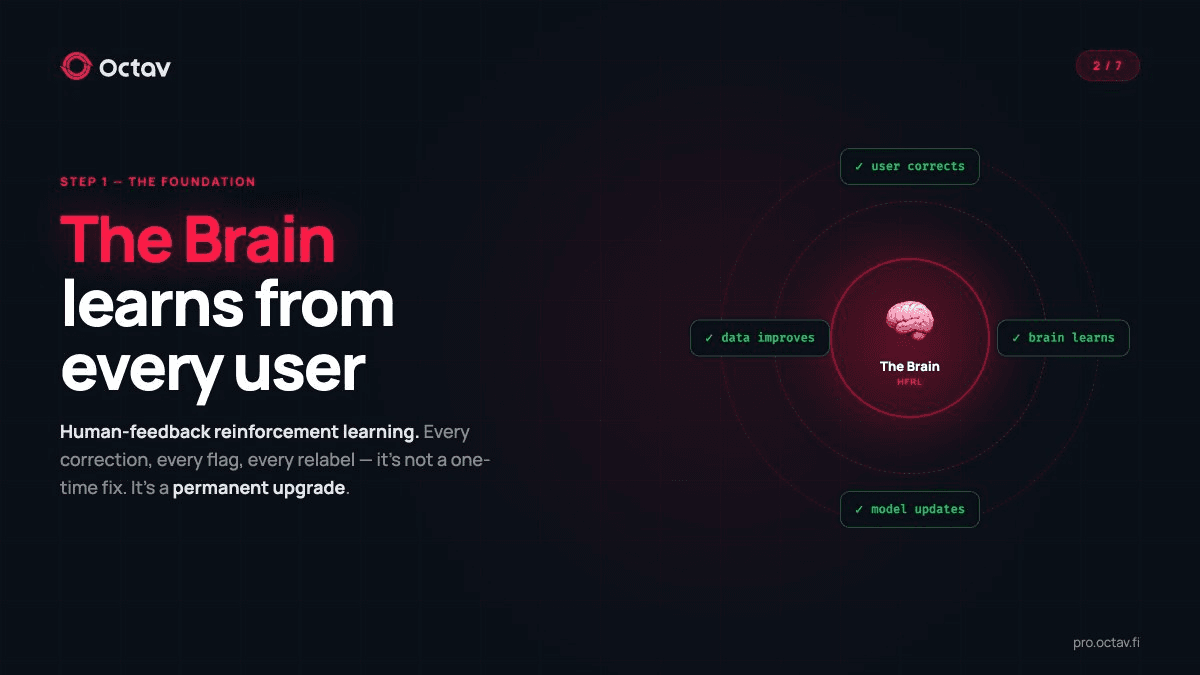
A new reinforcement learning system called **The Brain** uses human feedback to continuously improve its accuracy. **How it works:** - Users correct labels or flag incorrect positions - Each correction trains the underlying model - Every edge case strengthens future performance Unlike traditional one-time fixes, The Brain implements **permanent upgrades** to its system. The data becomes progressively smarter with each user interaction, creating a self-improving feedback loop for portfolio accuracy.