🔧 Ocean Network Simplifies P2P Compute Workflow
🔧 Ocean Network Simplifies P2P Compute Workflow
🔧 P2P compute, simplified

Ocean Network is building infrastructure to streamline pay-per-use compute jobs across a peer-to-peer network of nodes. The system eliminates the need for manual infrastructure management.
Current capabilities:
- Package jobs directly from VS Code, Cursor, Antigravity, or Windsurf
- Execute in isolated containers via Ocean Nodes
- Retrieve only the outputs
The Ocean VS Code extension is available for testing at Open VSX.

Demand for compute keeps climbing. The annoying part is still the workflow Ocean Network is what we are building to make pay-per-use compute jobs feel simple across a P2P network of nodes, without the need for babysitting infrastructure Currently, you can experiment by using
Building code, generating images, and writing content now take just a few clicks Compute is no different. In minutes, you can access remote GPUs from across the globe to power your AI and ML workloads It all starts right inside your IDE with a simple extension install Learn
Peer-to-Peer (P2P) Compute Networks 101 Peer-to-peer compute networks let independent machines share CPU and GPU capacity. Jobs get matched to peers, run in isolated environments, and only results come back Ocean Network is moving toward that model using Ocean Nodes plus Ocean
Decentralized computing only works when coordination is built in Ocean Network orchestration turns independent GPU and CPU providers into a usable compute network When submitting a job, the orchestration layer handles matching, permissions, execution, and returning results
Stop scrolling here Many developers waste hours stitching together tools just to get work done The Ocean VS Code Extension keeps the entire workflow in one place: rent compute, attach data and algorithms, and monitor execution directly from your editor. Built with data privacy

GPUs are becoming long-term infrastructure assets as AI workloads continue to scale Most GPUs today are either underutilized or locked inside isolated environments. Decentralized compute networks aim to change that by allowing GPU owners to contribute capacity to shared,
Ocean Nodes bring decentralized computing with features designed for scaling AI/ML workloads Builders will get access to geographically distributed compute to train, fine-tune, and run models without relying on centralized cloud providers Plus, with Ocean C2D, your data and
Get your ML workflow running in three steps, directly from VS Code: 1. Install the Ocean VS Code extension: Bring Ocean orchestration capabilities directly into your development environment 2. Configure your job: Specify the dataset ID, attach your training script, and select
Ocean Protocol Releases Emergency Arbitration Findings Against Fetch.AI and SingularityNet
The Ocean Protocol Foundation has published the arbitrator's findings from an emergency arbitration case. The document addresses what Ocean describes as false allegations made by Fetch.AI and SingularityNet. **Key Points:** - Arbitration findings now [publicly available](https://drive.google.com/file/d/1xXxWK_JInsUXf2dhhz-edUuGlccPvl4A/view?usp=drivesdk) - Ocean previously sought to waive confidentiality, but this was refused by Humayun Sheikh - Ocean treasury remains secure and operational The foundation thanked the Ocean community for patience during the dispute process.
Ocean Nodes Launch Decentralized GPU Network for AI Training
Ocean Protocol has launched Ocean Nodes, a decentralized computing infrastructure designed for AI and machine learning workloads. **Key features:** - Builders can access geographically distributed compute to train, fine-tune, and run models without centralized cloud providers - Ocean C2D (Compute-to-Data) keeps data and algorithms sealed inside containers—compute executes remotely, only outputs are returned - GPU owners can monetize idle hardware by contributing capacity to the network - Jobs run in isolated, containerized environments The infrastructure aims to create a sovereign compute layer for AI that is open and distributed, addressing the growing demand for GPU resources as AI workloads scale. [Learn more about Ocean Nodes](https://docs.oceanprotocol.com/developers/ocean-node)
Ocean Protocol Adds Free Compute Feature to VS Code Extension to Prevent Image Generation Scaling Issues
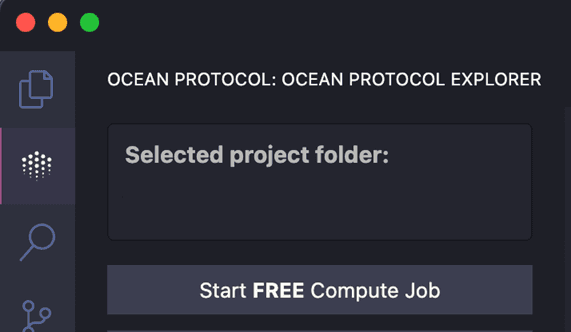
Ocean Protocol has introduced a **Free Compute feature** to their VS Code extension to address image generation failures during rapid scaling. The new feature allows users to: - Start with small, fixed-seed baselines - Lock their settings for consistency - Save both configurations and outputs - Maintain stable, repeatable runs This approach helps developers **experiment and scale at their own pace** while avoiding common pitfalls that occur when scaling too quickly. Users receive **7,200 seconds of free compute time** to test the feature and get started with their projects. The extension continues Ocean's mission to provide seamless AI development tools that combine compute power, privacy, and algorithms directly within developers' preferred IDE environment.
🏛️ European Parliament Speeches Decoded

**CivicLens annotation challenge completed** with 206 contributors analyzing European Parliament speeches for political discourse patterns. **Key achievements:** - Labeled speeches for stance, claims, tone, topic, and ideology - Partnership with @lunor_ai delivered high-quality political data - Results provide insights into political discourse analysis The challenge focused on creating datasets to help AI models detect market-moving political statements more effectively. [Read full details](https://blog.oceanprotocol.com/annotators-hub-civiclens-turning-speeches-into-signals-e27041c3972c)