Newcoin Revolutionizes Video Creation with Text-to-Video Tool
Newcoin Revolutionizes Video Creation with Text-to-Video Tool
🎬 Text becomes video


Newcoin is introducing a groundbreaking tool that transforms text prompts into dynamic video content using Livepeers API. This innovation is set to reshape creative media on the @newcoin_nco OS platform.
Key features:
- Converts simple text into full videos
- Utilizes Livepeers API for video generation
- Aims to simplify video creation process
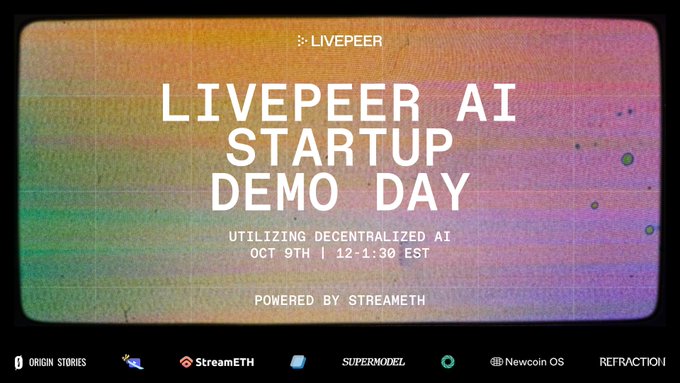
Interested parties can witness a demonstration of this technology at the upcoming AI Startup Program Demo Day. For more information and to attend the event, visit: https://lu.ma/mhr5reat

Newcoin is redefining video interaction by converting text prompts into dynamic video content using Livepeer’s API. Their tool is set to transform creative media on the @newcoin_nco OS platform, allowing users to generate videos effortlessly from simple text. Watch their demo
🎭 Real-Time AI Avatars Run on Single GPU
**DaydreamLiveAI** released **Scope v0.2.5**, a 7-node workflow that generates real-time agent avatars with natural gestures, eye movement, and facial expressions. **Key features:** - Combines LTX Studio's LTX 2.3 model (rare open-weights model) - Joint audio-video generation from single prompt - Face-front avatar LoRAs trained on close-up footage - Natural lip sync, eye motion, and microexpressions - Runs on single GPU **Performance improvements:** - Skips CPU offload on high-VRAM GPUs - Faster generation speed vs. previous flat talking faces The workflow addresses a common limitation where image-to-agent avatars typically appear as static talking heads, instead delivering dynamic, responsive avatars that react to their own lighting. [View announcement](https://x.com/DaydreamLiveAI/status/2055269758891630799?s=20)
Livepeer Launches Real-Time AI Video at 50-80% Lower Cost Than Cloud Providers
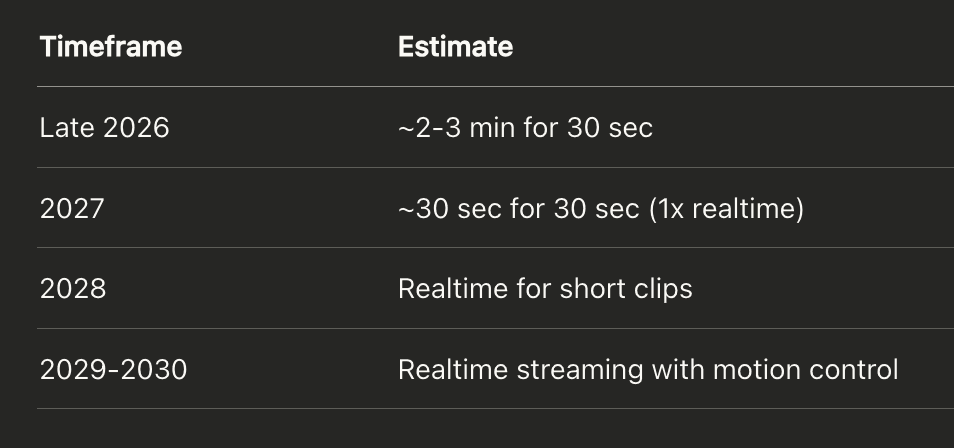
Livepeer has launched real-time AI video processing capabilities, offering significant cost savings of 50-80% compared to traditional cloud services. **Key Features:** - Real-time video-to-video AI processing now available - Built on decentralized infrastructure - Open source and community-powered **Try It Now:** Users can test the technology through [Daydream Live](https://daydream.live), an application built on Livepeer's infrastructure that demonstrates real-time video AI capabilities. The launch represents a practical application of decentralized video infrastructure, making AI video processing more accessible through lower costs while maintaining real-time performance.
🚀 Lisar Nears Public Launch After Beta Testing
The **Lisar team** has completed key development milestones ahead of their public launch: - ✅ **Closed beta testing** - Full lifecycle review completed - ✅ **Live Transparency Dashboard** - Real-time community visibility now active The team is now preparing for **public launch mode**, marking a significant step forward for the project. This progress demonstrates steady development momentum as Lisar moves closer to broader availability.
Livepeer Releases LISAR SPE Update with Enhanced Community Node Features
Livepeer has released new **LISAR SPE release notes** following the successful LiveInfra SPE proposal that passed in July. The update enhances the **Community Arbitrum Node**, providing developers with: - Free, reliable RPC access - Improved uptime and redundancy - Better overall performance This development strengthens Livepeer's commitment to **public goods** and improving the developer experience for builders in the ecosystem. [Read the full release notes](https://forum.livepeer.org/t/lisar-spe-release-notes/3159)
🚀 Livepeer Hits Record AI Fees
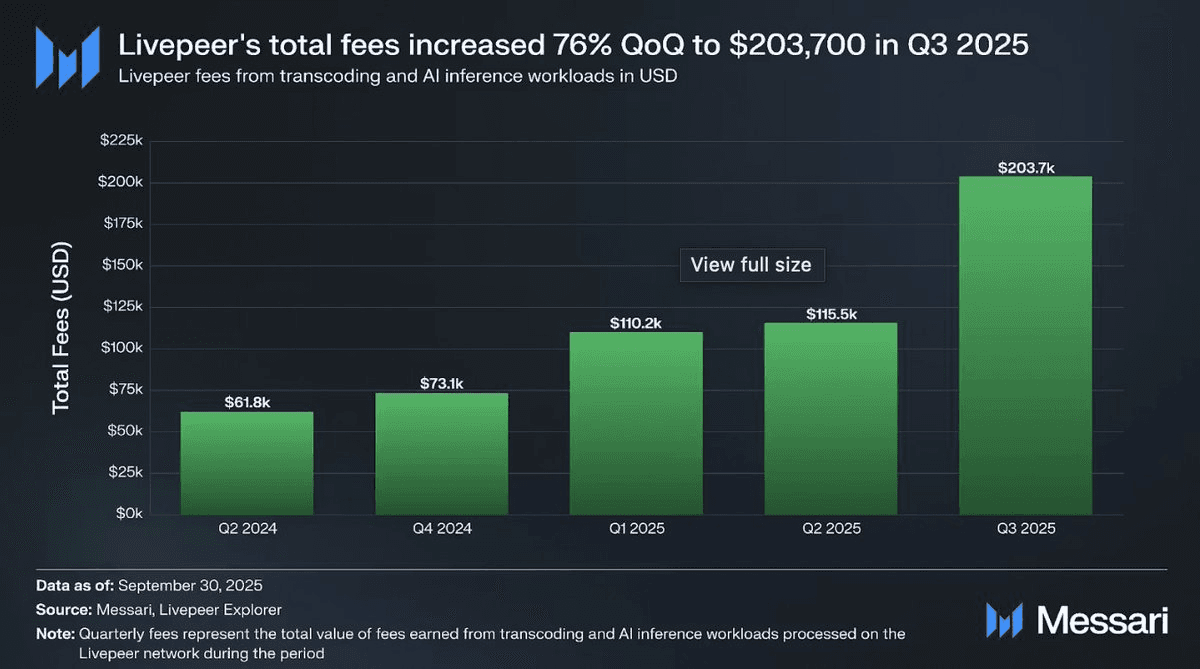
**Livepeer achieves record network fees** as AI processing drives 72% of revenue, marking a 3x year-over-year increase in Q3. **The transformation is complete** - from streaming infrastructure to real-time AI video processing powerhouse. **Key metrics:** - Q3 network fees up 3x YoY - 72% of fees now from AI processing - Projects like DaydreamLiveAI and Agent SPE avatars live **Three competitive advantages:** - Lowest latency for real-time AI - Cost-effective pay-as-you-go scaling - Open, decentralized community ownership **Next phase focuses on:** - Deep productization - World-class latency benchmarking - GPU marketplace scaling - Direct builds for gaming, entertainment, robotics Livepeer positions itself as the infrastructure layer for next-generation real-time AI video applications. [Read the full vision update](https://blog.livepeer.org/a-real-time-update-to-the-livepeer-network-vision/)