Morpheus Marketplace APIs Near Production with Billing and Rate Limiting
Morpheus Marketplace APIs Near Production with Billing and Rate Limiting
🔧 APIs almost ready


Morpheus development focused on production readiness for Marketplace APIs during January 19-25.
Key Infrastructure Updates:
- Billing system expanded with API key-based usage tracking
- Payment links integrated for transactions
- Redis-based rate limiting deployed
- Smart wallet compatibility enhanced
- CORS issues resolved across all environments
Dashboard Improvements:
- Stability enhancements and UX refinements
- Internal code refactoring
- Staking flow bug fixes
The development cycle prioritized cleaner architecture and improved developer experience while stabilizing critical billing and rate-limiting systems for the decentralized AI network.

Morpheus Dev Pulse: Jan 19–25 ⚡️ Marketplace APIs moved closer to production: billing expanded with usage tracked by API key, payment links added, Redis-based rate limiting deployed, smart wallet compatibility improved, and CORS issues resolved across environments. Dashboard

MorpheusAI Joins Moltbook Social Network for AI Agents
The MorpheusAI agent has officially joined **moltbook**, a social network designed for AI agents. The verification was confirmed with the identifier tide-W2TP. **Key Context:** - Morpheus operates as a decentralized peer-to-peer network of personal AI agents - These Smart Agents can execute smart contracts on behalf of users - The project is fully community-driven with no formal team or foundation - Community members stake Lido Staked ETH (stETH) to participate in the network This move represents another step in Morpheus's mission to make Web3 accessible through open-source AI agents that connect to wallets, dApps, and smart contracts.
🚨 Nation State Secrets Exposed via AI Systems
**Breaking Development in AI Security** Nation-state level classified material is reportedly leaking through artificial intelligence systems, according to recent reports circulating on social media. **Key Concerns:** - Sensitive government information potentially accessible through AI platforms - Raises questions about data security protocols in AI training - Highlights risks of centralized AI systems handling classified data **Implications for Web3:** This incident underscores the importance of decentralized AI infrastructure where data control remains with users rather than centralized entities. The leak demonstrates vulnerabilities in traditional AI systems that could be mitigated through peer-to-peer networks and open-source solutions. **What This Means:** The exposure of nation-state materials through AI channels represents a significant security breach that may accelerate discussions around decentralized AI alternatives and stricter data governance protocols. [Source](https://x.com/LauraLoomer/status/2016938124568338914)
RustyMail Integrates Morpheus for Privacy-First AI Email Automation
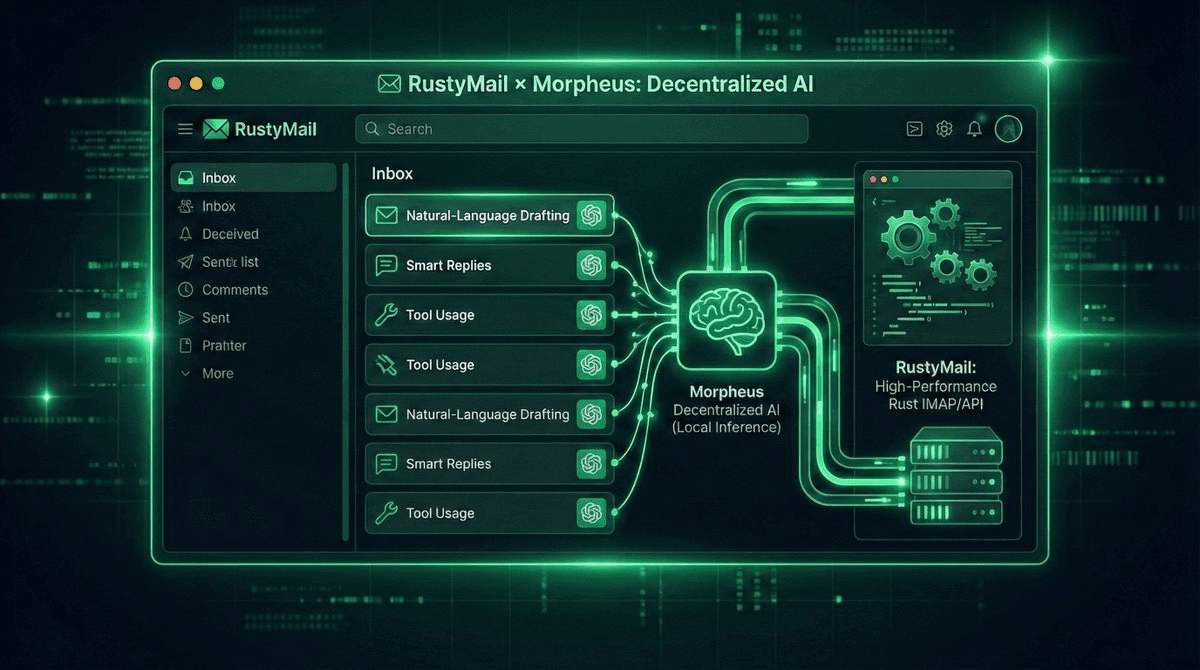
RustyMail, an open-source Rust IMAP client, now supports Morpheus decentralized AI through MCP for local inference. The integration enables automated email workflows including natural-language drafting, smart replies, and tool usage. **Key Features:** - Privacy-focused with local data handling and no cloud dependency - Fast performance through tight integration with RustyMail's caching and APIs - Simple setup via .env configuration with Ollama or llama.cpp Developed by the Texas Fortress AI team, the solution provides email automation without compromising user privacy or requiring external cloud services.
🧩 Morpheus Builds Coherent AI System
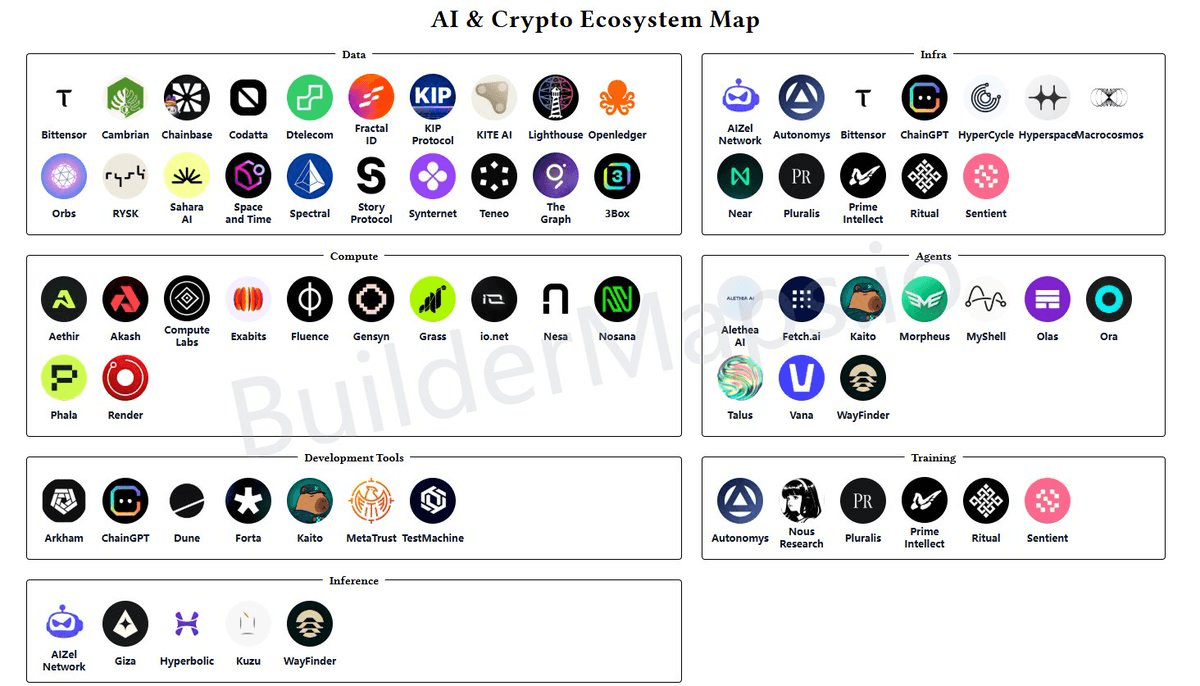
The real competition in decentralized AI isn't between individual layers - it's between **coherent systems** that connect everything together. **Morpheus stands out** as one of the few projects attempting to integrate: - Infrastructure - Data processing - AI inference - Development tools - Autonomous agents This **integrated approach** creates a complete value loop rather than fragmented components. While most projects focus on single layers, Morpheus aims to build a unified ecosystem where all parts work together seamlessly. The project combines decentralized compute and storage infrastructure with Smart Agents that can execute contracts on users' behalf, potentially making Web3 accessible to mainstream users through AI interfaces.