Lending Protocols Capturing Liquidation MEV with Oval
Lending Protocols Capturing Liquidation MEV with Oval
💰 Liquidation Goldmine Unlocked


Oval is a service that allows lending protocols to capture a significant portion of the miner extractable value (MEV) generated during liquidations on their platforms. When market volatility increases, the amount of MEV from liquidations also rises. Oval facilitates an auction process where MEV searchers bid to backrun price updates and liquidate undercollateralized loans first, earning the liquidation bonus. Oval then distributes up to 90% of this MEV back to the lending protocol. This helps lending protocols recapture value that would otherwise be lost to the MEV supply chain.

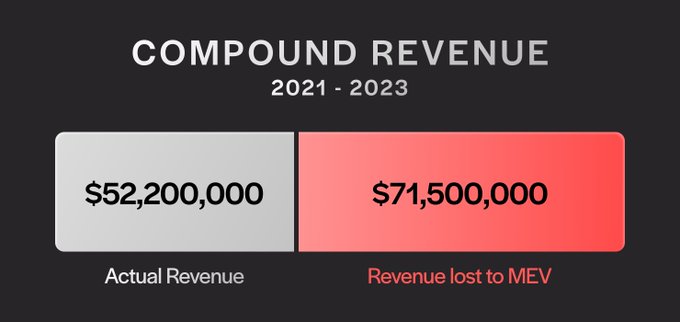
Liquidation MEV skyrockets when markets get volatile. For example, if @CompoundFinance had captured the liquidation MEV they generated during the volatile years of 2021-2023, they would’ve earned 136.97% more revenue. Don’t miss out this market cycle. Use Oval.
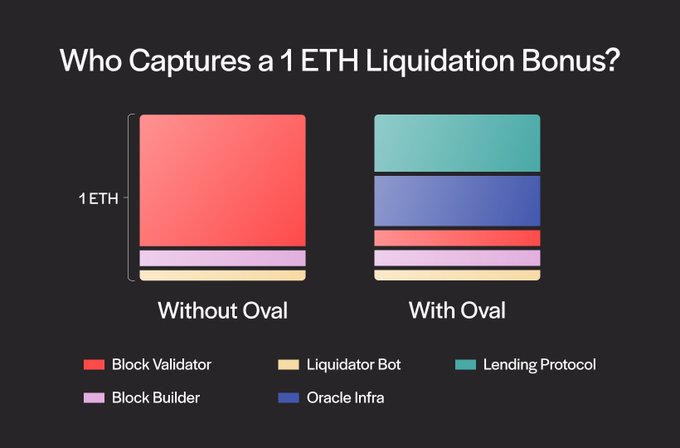
When a lending protocol pays out a liquidation bonus, who profits the most? Validators. Instead of incentivizing security, most of that bonus is lost to MEV. This isn’t fair. Oval captures that MEV and distributes it to those who created it.
Lending protocols generate OEV when liquidations occur on their platforms. Oval allows them to capture it. But what exactly happens when these liquidations occur? Let’s take a closer look. 🧵
Lending protocols issue liquidation bonuses to incentivize people to secure their solvency. However, the majority of these funds are lost to the MEV supply chain. This is a capital inefficiency that lending protocols can instantly solve with Oval. x.com/hal2001/status…

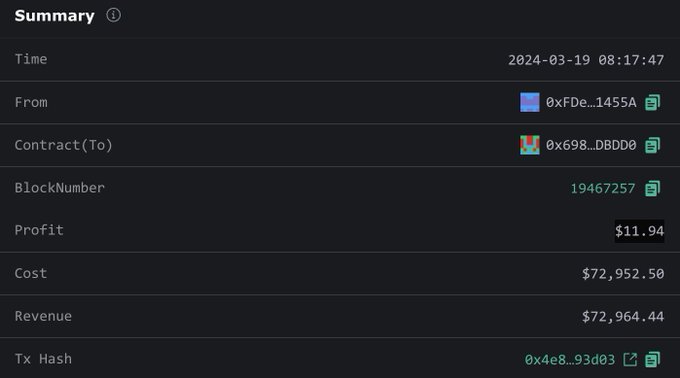
When we shipped Oval we learned that lending protocols had no idea how much they lost to MEV. This @aave v3 liquidation paid a $73,000 liquidation bonus. The liquidator only got $12. The rest was lost to MEV. @UMAprotocol Oval could have captured and returned ~$65K to Aave.
UMA DAO Proposes 27% Emissions Cut to Combat Token Inflation
The UMA DAO has put forward a proposal to reduce token emissions from 0.130 UMA/s to 0.095 UMA/s - a 27% decrease aimed at controlling inflation. **Key Points:** - Current emissions rate: 0.130 UMA per second - Proposed new rate: 0.095 UMA per second - Goal: Better alignment with market conditions and improved long-term tokenomics **Context:** This follows a previous 14% emissions reduction in March 2025, when the rate dropped from 0.18 to 0.155 UMA/s. That change lowered voting APR from approximately 25% to 21%. The proposal reflects ongoing efforts by the UMA community to balance token holder rewards with sustainable economic growth. Lower emissions typically reduce sell pressure and dilution for existing holders. **What This Means:** If approved, UMA token holders participating in governance will see reduced rewards, but the token supply will grow more slowly. The DAO believes this trade-off better serves the protocol's long-term health given current market dynamics.
UMA Seeks Enterprise Partnerships Lead for Prediction Markets
**UMA is expanding its prediction markets team** with a new Enterprise Partnerships Lead position at Risk Labs. The role comes as UMA continues building its optimistic oracle infrastructure, which powers prediction markets and cross-chain solutions. UMA has previously partnered with major traditional finance outlets including the Wall Street Journal and Dow Jones for prediction market services. Interested candidates can apply directly through the [Risk Labs careers portal](https://jobs.ashbyhq.com/risklabs/08e0c4c0-8e4f-4489-b98b-6b746f1c6546).
Binance Wallet Integrates Predict.fun with UMA Oracle Technology
Binance Wallet has completed integration with Predict.fun, a prediction market platform powered by UMA's optimistic oracle infrastructure on BNB Chain. **Key Details:** - Integration brings UMA's automated market resolution system to Binance Wallet users - Builds on March partnership between UMA and Predict.fun for BNB Chain deployment - UMA's oracle technology provides trustless verification for prediction market outcomes The integration expands access to decentralized prediction markets directly through Binance's wallet interface, leveraging UMA's proven oracle infrastructure for automated settlement.
Quick Vote Feature Launches for Streamlined Governance Participation
A new Quick Vote feature is now available, enabling users to cast votes and move to the next proposal without leaving the sidebar interface. **Key features:** - Seamless voting experience across proposals - Available on both desktop and mobile platforms - Sidebar integration for efficient workflow The update aims to streamline the governance process by reducing friction in the voting experience.
UMA Optimistic Oracle Hits 400K Onchain Assertions with 99.31% Accuracy Rate
The UMA Optimistic Oracle has processed over 400,000 assertions onchain, maintaining a dispute rate of just 0.69% - meaning 99.31% of assertions went unchallenged. **Key metrics:** - 400K+ total assertions secured - 0.69% dispute rate (99.31% undisputed) - Continued growth from 200K assertions in January The optimistic oracle model allows data to be posted onchain and assumed true unless disputed within a challenge period. The low dispute rate demonstrates the system's effectiveness at securing accurate information onchain. UMA's oracle infrastructure powers protocols like Across and oSnap, enabling trustless data verification across web3 applications.