🚨 Kelp DAO Exploit Triggers $292M DeFi Crisis
🚨 Kelp DAO Exploit Triggers $292M DeFi Crisis
🚨 $292M gone


Major DeFi Exploit Unfolds
Attackers exploited Kelp DAO's LayerZero V2 routing system, forging packets to drain 116,500 rsETH (approximately $292M) - marking the largest DeFi hack of 2026.
How the Attack Worked
- Attackers called
lReceiveon EndpointV2 directly, forging burn signals - The adapter on mainnet released real rsETH against nothing
- Not a LayerZero protocol bug, but a security configuration failure in the OFT deployment
Immediate Impact
- ~89,567 rsETH deposited as collateral on Aave, Compound, and Euler
- ~$191M in WETH borrowed against fake collateral
- Real debt now sitting inside DeFi's largest lending pools
Systemic Risk to Aave
Aave's ETH market is ~16.5% backed by rsETH. The platform has seen $5.5B in ETH outflows with:
- Utilization pinned at 100%
- WETH withdrawals frozen
- Liquidators unable to unwind positions
- Multiple markets frozen across Aave V3/V4, Spark, Morpho, and Fluid
L2 Exposure
rsETH on Arbitrum and other chains bridged via the same mechanism may be uncollateralized if the mainnet lockbox is fully drained.


🚨 $292M DeFi Hack 🚨 Kelp DAO’s cross-chain bridge built on LayerZero has been compromised in what is now the largest DeFi exploit of 2026 so far.

Japan Moves Crypto Regulation to Stricter Financial Framework
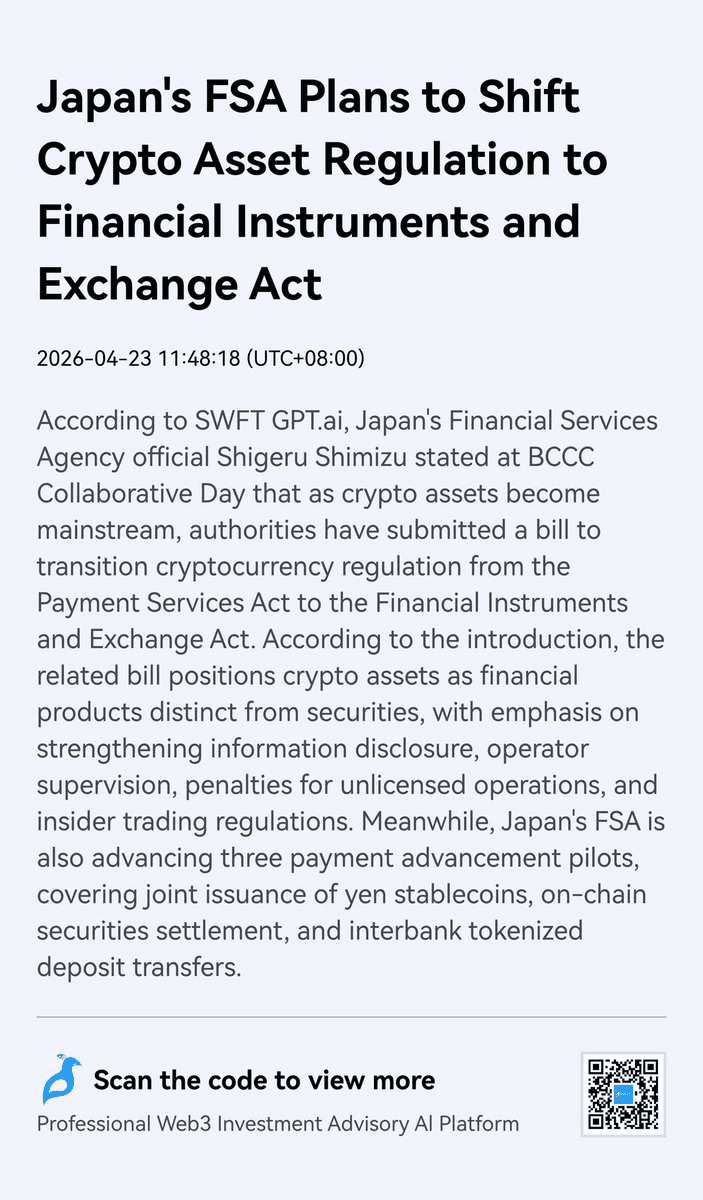
Japan's Financial Services Agency is shifting crypto regulation from the Payment Services Act to the Financial Instruments and Exchange Act. **Key Details:** - Shigeru Shimizu announced the regulatory change at BCCC Collaborative Day - The move represents a significant tightening of oversight - Crypto assets will now fall under the same framework as traditional securities This transition signals Japan's intent to treat digital assets with the same regulatory rigor as conventional financial instruments, potentially setting a precedent for other jurisdictions considering similar approaches to crypto oversight.
QQQON Token Now Available for Cross-Chain Routing on Bridgers Platform
**QQQON (ERC20) has launched on Bridgers**, joining a growing list of tokens available for cross-chain routing on the platform. **Key Features:** - Non-custodial execution through smart contracts - Aggregated liquidity across multiple chains - User-authorized routing system This follows recent additions including **QQQX (SOL)** and stablecoins **USDS, USDC, and USDT** on the Kasplex network. Bridgers recently partnered with Kasplex to enable cross-chain access from 50+ chains and 600+ assets into the Kaspa ecosystem. Users can access the service at [dapp.bridgers.xyz](http://dapp.bridgers.xyz).
Bridgers Increases Bitcoin Transaction Capacity to Nearly 2 BTC Per Swap

Bridgers has expanded its cross-chain routing capacity, now supporting transactions of nearly 2 BTC per swap. **Key Features:** - Non-custodial execution with smart contract-powered routing - Aggregated liquidity across multiple blockchain ecosystems - Support for over 400 cryptocurrencies including BTC, XMR, and various tokens - Users maintain control by authorizing transactions from their own wallets The platform continues to add new token support, recently integrating BPRM (BASE), XMR, and various chain-specific assets. Bridgers focuses on optimizing execution paths by aggregating liquidity across different ecosystems. Access the platform at [dapp.bridgers.xyz](http://dapp.bridgers.xyz)
🌉 Bridgers Enables Cross-Chain Bitcoin Transfers
**Bridgers now supports BTC cross-chain transfers**, allowing users to move Bitcoin between different blockchain networks. **How it works:** - Connect your wallet to [Bridgers dApp](http://dapp.bridgers.xyz) - Select your transfer route - Set the amount - Authorize the transaction The platform operates in the background to facilitate Bitcoin transfers across chains. Bridgers aggregates liquidity across multiple ecosystems to calculate optimal execution paths for cross-chain transactions, eliminating the need for multiple protocols.