Hinkal Wallet Adding Private Key Import/Export for Public Accounts
Hinkal Wallet Adding Private Key Import/Export for Public Accounts
🔑 Hinkal's Big Move


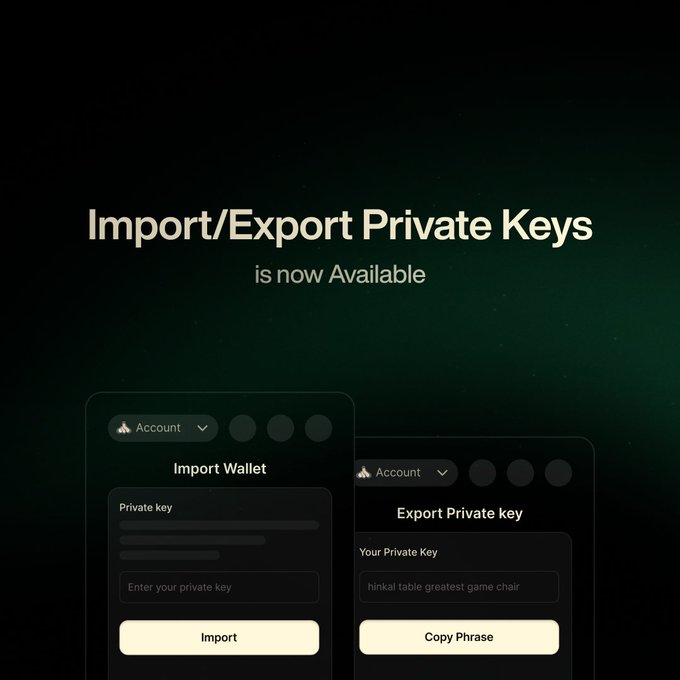
Hinkal Wallet is preparing a major update that will allow users to import and export private keys for public accounts.
The new features aim to provide:
- Greater user control over wallet management
- Enhanced flexibility when switching between devices
- Better integration capabilities with other tools
- Improved transparency in wallet operations
This update focuses on making the wallet experience more user-friendly, secure, and customizable. The team indicates this is part of a broader series of improvements coming to the platform.
Users can currently access Hinkal Wallet through their website at hinkal.pro with unique access codes.

Big update coming soon to Hinkal Wallet. We’re adding support for importing and exporting private keys for public accounts, giving users more control, flexibility, and transparency over how they manage their wallets. This update is designed to make the experience more
Hinkal Wallet Requires Migration from Legacy Accounts
Hinkal Wallet is phasing out legacy account types and requiring affected users to migrate. **Action Required:** - Update to the latest Hinkal Wallet version - Reopen the extension to check for migration notice - If no notice appears, no action needed **Migration Steps for Legacy Users:** 1. Copy and securely save all private keys 2. Remove Hinkal Wallet (don't uninstall until keys are saved) 3. Reinstall using official links 4. Create new wallet through onboarding 5. Import saved private keys to restore addresses **Security Reminder:** Never share private keys with anyone. Hinkal will never request them. This follows December's announcement about adding private key import/export support for public accounts.
🔒 Hinkal Pay Redesign
Hinkal Pay has been redesigned following a security incident and full contract redeployment. The updated interface makes privacy features more accessible across Ethereum, Base, Arbitrum, and Polygon networks. **Key features:** - **Shield/unshield** funds between public and private balances - **Private transfers** where sender, recipient, and amounts remain confidential - **Batch payments** to multiple addresses in one transaction - **Payment requests** via link or QR code - **Cross-chain bridging** with private or public options - **Asset tracking** with improved token breakdown All deposits are screened by Chainalysis KYT while users maintain custody. Support for Solana, TRON, Tempo, Arc and Sepolia networks coming next. The redesign follows an Ethereum contract vulnerability that was fixed and audited by zkSecurity.
Institutions Need Privacy and Compliance to Bring Flow On-Chain

Stablecoin adoption and regulatory frameworks are advancing together, both dependent on institutional capital flow. Institutions require two critical elements to move on-chain: - **Privacy** - Trading positions, treasury operations, and counterparty relationships must remain confidential and cannot exist on public ledgers - **Compliance** - Regulated institutions need sanctions screening, audit trails, and reporting capabilities These requirements are not mutually exclusive. Regulators demand selective disclosure to appropriate parties at the right time, achieved through viewing keys and Know Your Transaction (KYT) monitoring. **Compliant privacy** means confidentiality and compliance can coexist simultaneously. A panel discussion in Palo Alto on June 2 will explore this framework, featuring representatives from [Merkle Science](https://merkle.science), Crossmint, Centrifuge, Arca, Wave Digital, and Mento Labs.
Hinkal Pay Launches Private Crypto Payments with Compliance Controls
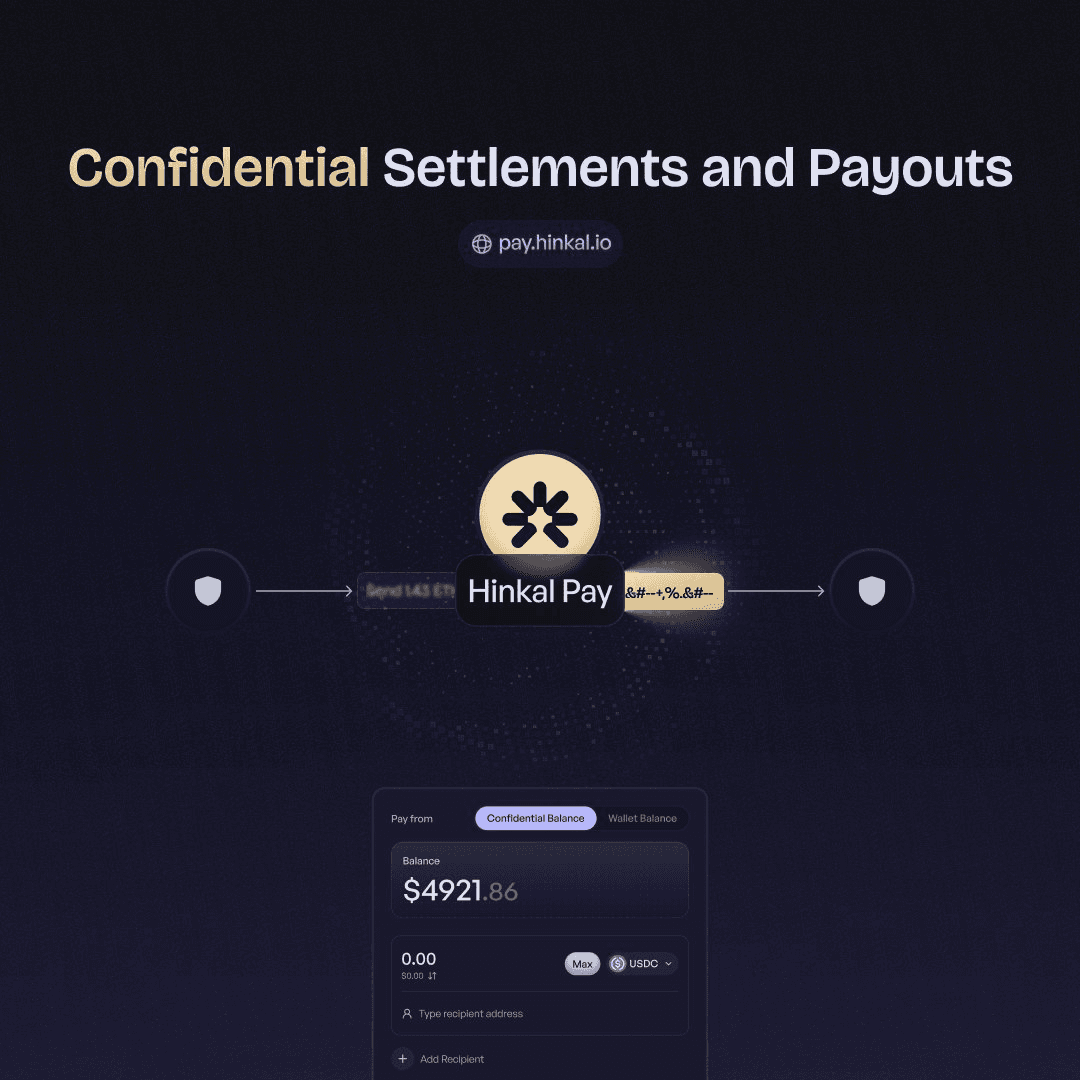
**Hinkal Pay** has launched, enabling businesses and consumers to settle transactions with full confidentiality. **Key Features:** - Sender, recipient, and amounts remain private on-chain - Works with existing wallets, chains, and stablecoins - Supports confidential sending, receiving, and payouts - Maintains compliance through Chainalysis screening **How It Works:** Funds move to a confidential balance within Hinkal's smart contract, controlled by the recipient's existing wallet. Recipients can execute private payouts to vendors, employees, or partners, or send to public wallets while keeping the sender private. **Availability:** - Live on Ethereum, Base, Arbitrum, Polygon, Arc, and Optimism - Supports USDT, USDC, DAI, and ETH - All transactions screened before execution; high-risk addresses blocked The service builds on Hinkal's earlier Private Send feature, which enabled private top-ups for non-custodial crypto cards through Ether.fi integration.
Hinkal Introduces Compliance-Ready Privacy Layer for Institutional DeFi
**Hinkal has developed a privacy solution that addresses institutional needs while maintaining regulatory compliance.** The platform distinguishes itself through built-in verification hooks that allow institutions to execute private transactions without sacrificing audit trails. This approach solves a critical problem: institutions require privacy to protect trade strategies and prevent front-running, but compliance teams have historically rejected privacy tools that appear designed for illicit activity. **Key features include:** - ZK proofs for transaction privacy - Stealth addresses for user anonymity - UTXO pools on EVM chains - Multiple users operating through single addresses with zero information leakage The architecture was presented at Devcon Argentina by Hinkal's CTO, demonstrating enterprise-grade privacy that integrates seamlessly with existing DeFi protocols. The solution represents a shift from earlier privacy tools by prioritizing compliance alongside anonymity. Research credit: [@KeyringResearch](