GPU Prices Surge 40% While Decentralized Networks Counter Trend
GPU Prices Surge 40% While Decentralized Networks Counter Trend
🎮 GPU prices explode

GPU Market Sees Sharp Price Increases
GPU prices have climbed 25-40% since November, with the RTX 5080 jumping from $980 to $1,400 in just three months.
Centralized vs. Decentralized Infrastructure
- Traditional centralized infrastructure providers raise prices when demand increases
- Decentralized networks operate differently: higher demand attracts more orchestrators
- This creates additional supply, which drives costs down instead of up
A Different Economic Model
The decentralized approach inverts the typical supply-demand dynamic. As more users join the network, more infrastructure providers are incentivized to participate, expanding capacity and maintaining competitive pricing.
This represents a fundamental shift from traditional cloud infrastructure economics, where providers can raise prices during demand spikes without immediate supply responses.

GPU prices are up 25-40% since November. RTX 5080 alone jumped from $980 to $1,400 in 3 months. Centralized infra raises prices when demand spikes. We're doing the opposite: more demand, more orchestrators, more supply, lower costs. Different model entirely 👀
AI Surveillance Cuts Costs by 50-80% While Processing Terabytes Daily

**Surveillance infrastructure is undergoing a major efficiency shift.** Security systems now generate terabytes of video data every day, but human teams can only manually review a small fraction of this footage. **Real-time AI is changing the game:** - Processes crowd density patterns automatically - Analyzes traffic flows in real-time - Detects anomalies instantly without human intervention - Reduces operational costs by 50-80% This represents a significant cost reduction while dramatically improving coverage and response times for security operations.
Livepeer Enables Natural Language Video Infrastructure Provisioning
**Agent-native workflows are reshaping software development**, with Livepeer at the forefront of this shift. The platform is building toward a future where agents can **provision video infrastructure through natural language commands**—no manual configuration required. **Key developments:** - Composable video infrastructure accessible via simple prompts - Elimination of traditional setup processes - Integration of AI-driven automation into core workflows This follows Livepeer's broader evolution from video transcoding to **powering AI pipelines**. Node operators (orchestrators) now handle GPU-intensive tasks like text-to-video generation and real-time effects processing. The shift represents a fundamental change in how developers interact with video infrastructure—**moving from technical configuration to conversational commands**.
Livepeer Launches Real-Time AI Video at 50-80% Lower Cost Than Cloud Providers
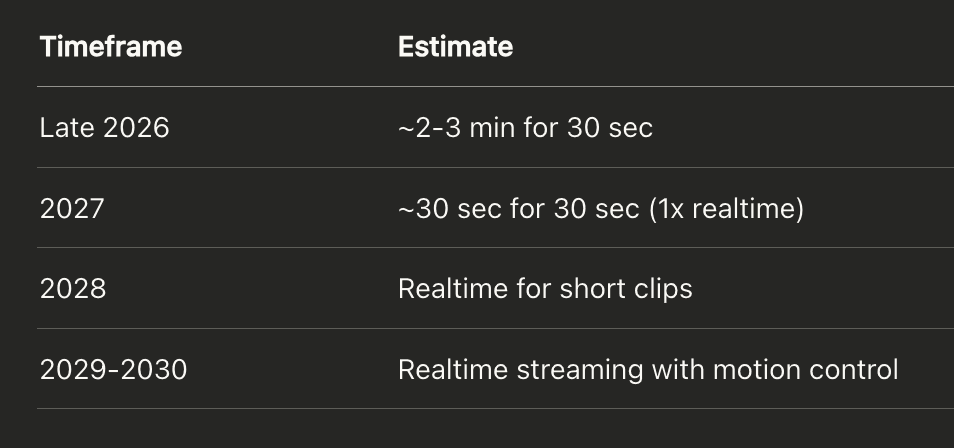
Livepeer has launched real-time AI video processing capabilities, offering significant cost savings of 50-80% compared to traditional cloud services. **Key Features:** - Real-time video-to-video AI processing now available - Built on decentralized infrastructure - Open source and community-powered **Try It Now:** Users can test the technology through [Daydream Live](https://daydream.live), an application built on Livepeer's infrastructure that demonstrates real-time video AI capabilities. The launch represents a practical application of decentralized video infrastructure, making AI video processing more accessible through lower costs while maintaining real-time performance.
🚀 Lisar Nears Public Launch After Beta Testing
The **Lisar team** has completed key development milestones ahead of their public launch: - ✅ **Closed beta testing** - Full lifecycle review completed - ✅ **Live Transparency Dashboard** - Real-time community visibility now active The team is now preparing for **public launch mode**, marking a significant step forward for the project. This progress demonstrates steady development momentum as Lisar moves closer to broader availability.