Ethereum Fusaka Upgrade Goes Live: Major Scaling Breakthrough for L2s
Ethereum Fusaka Upgrade Goes Live: Major Scaling Breakthrough for L2s
⚡ Fusaka Goes Live

Ethereum's Fusaka upgrade is now live, marking a significant milestone for network scaling and user experience.
Key improvements include:
- PeerDAS technology reduces L2 data costs, enabling lower fees over time
- Gas limit increase from 45M to 60M boosts L1 throughput by 33%
- R1 passkeys enable phone-native wallets for better accessibility
- Enhanced proof verification bandwidth for rollups like ZKsync
What this means:
The upgrade maintains decentralization while dramatically improving scalability. L2 rollups become more efficient with cheaper data availability and expanded bandwidth.
Looking ahead:
Next major upgrade "Glamsterdam" is planned for H1 2026, focusing on MEV transparency, censorship resistance, and privacy enhancements.
This positions Ethereum to onboard the next billion users through improved wallet UX and reduced transaction costs across Layer 2 networks.

Ethereum is securely scaling. Fusaka is a major milestone for networks like ZKsync: more data throughput, more L1 bandwidth, and better wallet UX; all without sacrificing decentralization. This is how we bring the next billion users onchain. x.com/ethereum/statu…

The Fusaka upgrade is today. Ethereum is securely scaling.
zkSync Introduces Private Atomic DvP Settlement with Prividiums
zkSync has launched **private atomic delivery versus payment (DvP)** settlement through a new feature called Prividiums. **Key Features:** - Eliminates principal risk in cross-institutional settlements - Delivery and payment settle simultaneously as a single atomic event - Operates across two independently governed Zones - Provides privacy for institutional transactions This development addresses a critical pain point in traditional settlement processes where counterparty risk exists between delivery and payment. [Read the full breakdown thread](https://x.com/zksync/status/2069132329663258927)
Prividium Introduces Atomic DvP Settlement to Reduce Financial Institution Costs
**Prividium unveils private atomic settlement technology that promises to transform financial operations.** The platform enables atomic Delivery versus Payment (DvP) settlement between private bank Zones, allowing: - Significant reduction in compliance and operational costs for financial institutions - Increased capital efficiency through streamlined processes - Private atomic connectivity across chains while maintaining data control The technology was presented at ETHConf, demonstrating how Prividiums combine privacy with atomic settlement. This approach eliminates traditional trade-offs in financial infrastructure by enabling secure, private transactions without sacrificing interoperability. The innovation marks a shift in how financial institutions can operate on-chain, potentially reshaping the economics of blockchain-based finance.
ZKsync Co-Sponsors SODA Survey on Tokenization at Investment Banks
ZKsync has co-sponsored SODA's 2026 Tokenization at Investment Banking survey, which gathered insights from 16 of the world's largest sell-side institutions. The report provides a realistic assessment of the current state of tokenization in traditional finance. It examines how major investment banks are approaching and implementing tokenization strategies. **Key aspects:** - Survey includes perspectives from top-tier financial institutions - Offers data-driven view of tokenization adoption - Available for download through ZKsync's blog The full report can be accessed at [ZKsync's blog](https://www.zksync.io/blog/soda-tokenization-report-2026).
ZK Releases B2 Transparency Filing on Governance and Token Structure
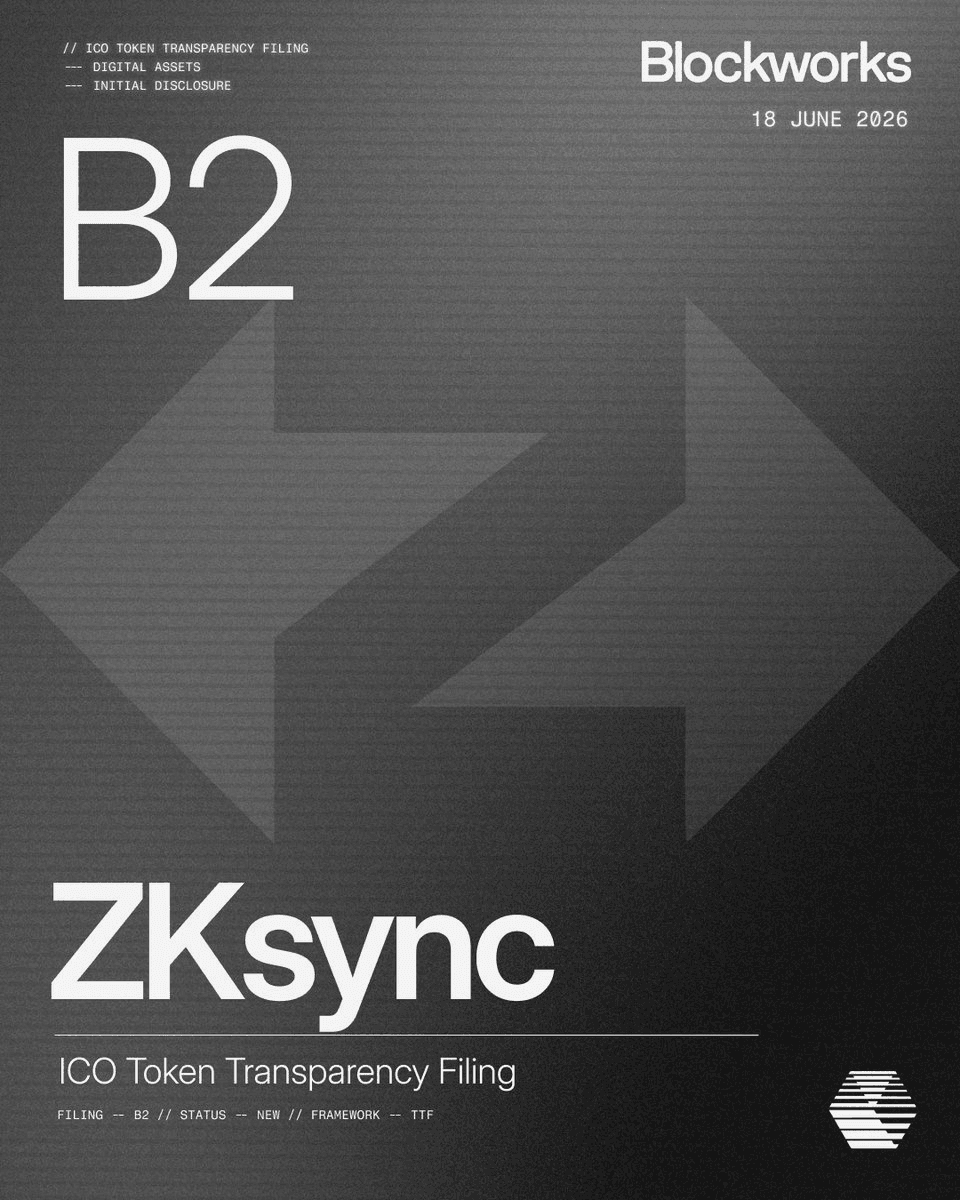
ZK has published a B2 Transparency Filing through Blockworks, providing detailed disclosure on governance mechanisms, token structure, and supply metrics. The filing represents a shift toward institutional-grade transparency in the Layer 2 space. Rather than relying on narrative-driven marketing, the disclosure offers concrete data points that institutional investors typically require for capital allocation decisions. **Key areas covered:** - Governance framework and decision-making processes - Token structure and distribution details - Supply metrics and tokenomics The filing is available through Blockworks and marks ZK's commitment to standardized disclosure practices in the crypto ecosystem.
ZKsync Launches Digital Assets Advisory for Financial Institutions
**ZKsync has launched a new Digital Assets Advisory service** targeting banks, market infrastructures, and asset managers. The service aims to bridge the gap between strategic planning and operational implementation, helping traditional financial institutions transition from initial board-level discussions to live blockchain operations. **Key positioning:** - Combines consulting expertise with technical building capabilities - Focuses on practical deployment rather than just advisory - Targets institutional clients seeking to enter the digital assets space This move represents ZKsync's expansion beyond pure Layer 2 infrastructure into enterprise services, positioning the company as both a technology provider and strategic partner for traditional finance entering crypto. Learn more at [zksync.io/advisory](https://www.zksync.io/advisory)