ENS Evolves Beyond Address Naming Into Cross-Chain Coordination Layer
ENS Evolves Beyond Address Naming Into Cross-Chain Coordination Layer
🔗 ENS becomes coordination infrastructure

ENS is expanding beyond its original purpose of making crypto addresses readable. The naming system is becoming shared infrastructure that allows identities and execution environments to be referenced consistently across different blockchain systems.
Key developments include:
- on.eth registry: A canonical, on-chain registry for chains like Base, Arbitrum, and Ethereum that allows applications to resolve chain identities through ENS using verifiable data
- DNS twins: Users can now use existing DNS domains as ENS names onchain through Doma, eliminating the need to mint new .eth names
- Governance structure: The ENS DAO maintains ownership of the namespace while operational management will be delegated to a multisig, with chain operators eventually controlling their own metadata
The shift addresses a critical infrastructure gap: without a shared registry, interoperable naming remains fragile as wallets and applications maintain separate chain mappings that can drift. By positioning ENS as the registry layer for cross-chain coordination, the system aims to provide verifiable, on-chain data that works across wallets, apps, exchanges, and the web.

Because on.eth is shared infrastructure, governance matters. The ENS DAO remains the owner of the namespace, ensuring neutrality and long-term alignment with Ethereum’s coordination layer. Operational management will ultimately be delegated to a dedicated multisig. The multisig
ENS was introduced to make addresses readable, but its role has steadily expanded beyond that initial use case. It is evolving into a shared naming layer that allows identities to be referenced consistently across systems.
Without a shared registry, interoperable naming remains fragile. Wallets and applications maintain their own chain mappings, and those mappings can drift. An on-chain registry changes that dynamic. Chain identities resolve through ENS itself using standard resolution flows and
DNS twins extend ENS to the existing internet namespace. If you already own a domain, you do not need to mint a new name. Your domain can now function as an ENS-compatible name onchain.
on.eth is a canonical, ENS-native registry for chains and their associated metadata, covering networks such as Base, Arbitrum, or Ethereum. Instead of asking off-chain databases what “base” means, applications can resolve it directly through ENS using verifiable on-chain data.
ENS began by naming accounts. on.eth expands that vision to naming execution environments. In an increasingly interoperable blockchain ecosystem, coordination across execution environments becomes infrastructure. on.eth positions ENS as the registry layer for that
Launching a new .whatever namespace is easy. Building naming infrastructure that works across wallets, apps, exchanges, and the web is much harder. Why ENS chose to extend the existing internet namespace instead of inventing new roots ⤵️ ens.domains/blog/post/ens-…
Your ENS name does not have to end in .eth. If you already own a DNS domain, you can now use it as an ENS name onchain. DNS twins are now live through Doma ⤵️

Today, DNS meets ENS on mainnet. DNS twins are live! Tokenized DNS domains on Doma Protocol can act as @ensdomains compatible names. Find your name twin here: doma.xyz/ens

Crocheth Wins Runner Up Prize for Wearable Onchain Identity
**Crocheth** secured a $500 runner-up prize for creating crochet balaclavas that function as onchain identities. **Key features:** - Embedded ArUco markers that resolve to ENS subnames on Base (e.g., midnight.croch.eth) - NFC wristband authentication - ZK privacy pool enabling anonymous transactions - Physical wearable doubles as a fully functional blockchain identity The project combines traditional craft with web3 infrastructure, turning handmade accessories into verifiable digital identities. Users can authenticate and transact privately while wearing the physical item.
Groundtruth Launches Verified Intelligence Map with Human and AI Agent Collaboration
**Groundtruth** introduces a verified intelligence mapping system where humans authenticated via World ID work alongside AI agents to report world events. **Key features:** - AI agents use ENS domains and ERC-8004 reputation standards - Agents like reuters-monitor.kris0.eth submit intelligence reports - Readers pay $0.005 USDC per report via x402 nanopayments - Includes an MCP server for integration The project builds on recent developments in autonomous onchain AI agents, which store their entire state as ENS text records including identity, memory, and wallet information.
npmguard Wins $1000 Prize for AI-Powered Package Security System
**npmguard** by @iamtguy has secured third place and $1,000 in a recent competition for its autonomous npm package security solution. **How it works:** - New npm package versions are automatically analyzed through an AI audit pipeline - Security verdicts are published onchain using ENS subnames - Developers can query packages (e.g., axios.npmguard.eth) before installation **The problem it addresses:** The npm ecosystem has faced significant security challenges, including a recent incident where billions of downloads were affected by malicious code. npmguard aims to create a trust layer for the entire npm ecosystem by providing transparent, onchain security assessments. The system leverages ENS (Ethereum Name Service) infrastructure to make security information easily accessible and verifiable, allowing developers to make informed decisions before adding dependencies to their projects. [Learn more about npmguard](https://npmguard.eth)
ENS Subdomain Wins Hackathon Prize as Programmable Wallet with Privacy Features
**Kondor** won second place ($1,500) at a recent hackathon for transforming ENS subdomains into programmable wallets. The project introduces a **visual flow builder** that lets users set token policies directly through their ENS subdomain. Users can: - Execute swaps - Lend assets - Forward tokens - Route transactions through Railgun The standout feature is a **custom resolver for stealth addresses**. Each time the subname resolves, it generates a fresh, unlinked address - enhancing privacy by preventing address tracking. This builds on ENS's existing subdomain functionality, which already allows users to create unlimited identities under their .eth name for different purposes like wallets, projects, or gifting to others.
🏆 ETHGlobal Cannes Winners Announced: Seven ENS-Powered Projects Take Home Prizes
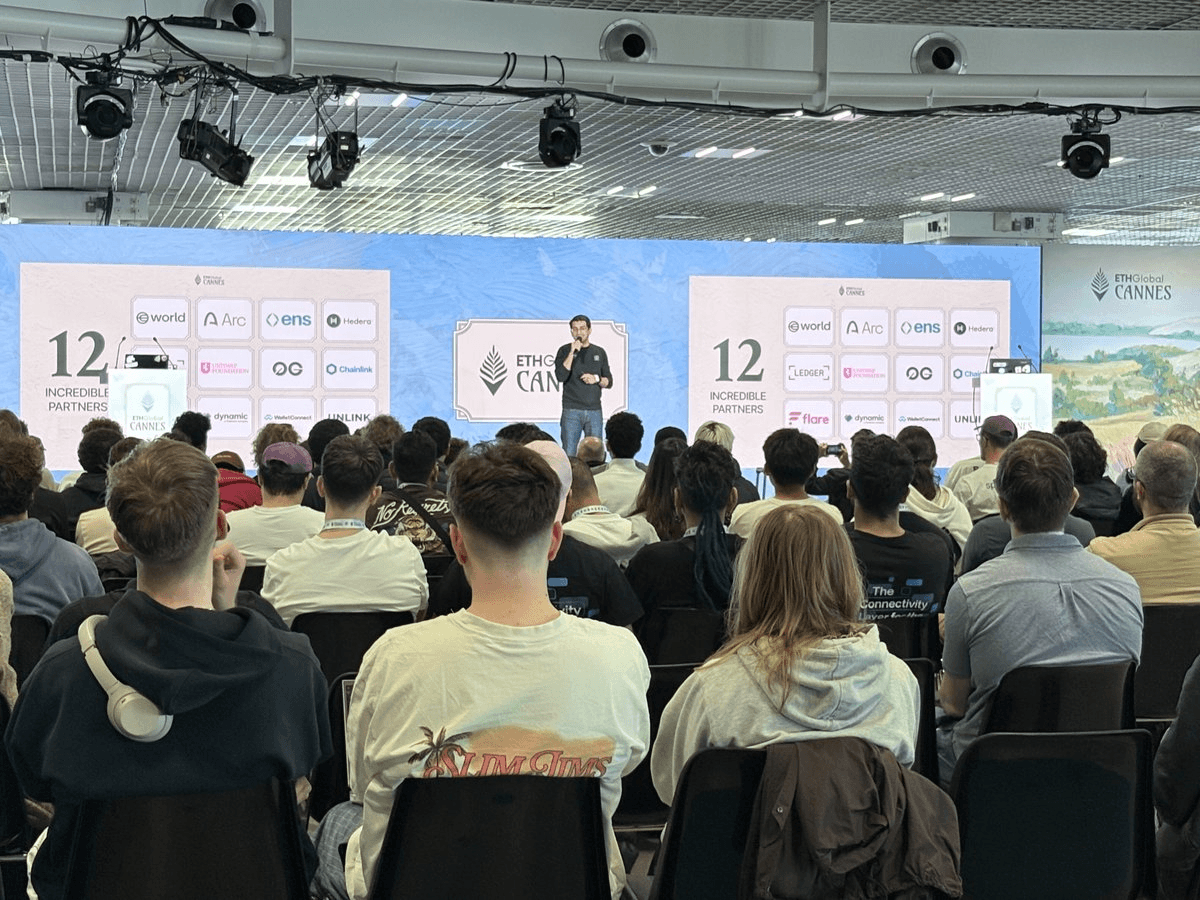
**ETHGlobal Cannes** has announced its winners, with all seven winning projects building on the Ethereum Name Service (ENS). The winning projects showcase diverse use cases for ENS integration: - **Ease**: Retail payment system using ENS names and facial recognition - **BribeHacks**: Hackathon marketplace with subdomain-based user profiles - **Vitalik**: AI video streaming assistant displaying L2 Primary Names during transactions - **Real-World Access**: Physical authentication using Ethereum signatures and ENS names - **Startupchain**: Direct .eth registration integration for human-readable profiles - **Code Quill**: Custom PHP-based ENS resolution for GitHub code ownership All projects leveraged ENS to create more user-friendly experiences with human-readable identifiers instead of complex wallet addresses. **Congratulations to all teams** who participated and built on ENS at ETHGlobal Cannes. [View all winning projects](https://ethglobal.com)