💥 $5B Liquidation Wave Hits Crypto Markets
💥 $5B Liquidation Wave Hits Crypto Markets
💥 $5B Vanished Overnight


The crypto market experienced its largest liquidation event since October, with over $5 billion in forced liquidations across just four days. On February 1 alone, nearly $2.2 billion in futures contracts were liquidated, affecting more than 335,000 investors.
Key drivers of the chaos:
- Escalating U.S.-Iran tensions and looming government shutdown triggered global risk-off sentiment
- January 2026 saw massive ETF outflows totaling ~$1.7 billion weekly from U.S. Bitcoin and Ether spot ETFs
- Peak single-day withdrawal of nearly $1 billion on January 29 amplified selling pressure
During this turbulence, structured yield products like aarna's atvPTmax remained stable, delivering consistent 10-12% APY in USDC through its Pendle PT strategy. The product stayed completely unaffected by market volatility while providing capital preservation.
For investors impacted by the liquidations, shifting toward safer yield strategies that don't depend on price direction may offer more predictable returns during uncertain market conditions.

Markets have been chaotic lately. The market saw over $5 billion in forced liquidations in just four days, marking the largest wave since October. In a single 24-hour period on February 1, nearly $2.2 billion in crypto futures contracts were liquidated, impacting over 335,000

Full Conversation Available with Yatsiu
A new conversation is now available to watch in full. **Key Details:** - The discussion features Yatsiu - Full video accessible online **Previous Conversations:** - Recent talks with Vivek from late January are also available - Multiple episodes released over the past week [Watch the conversation](http://unhashed.co/yatsiu) Catch up on the latest discussions and insights from industry voices.
🤔 Rethinking Digital Property Rights Beyond Institutions
**The latest alpha un# episode explores digital property rights for everyday consumers**, featuring Yat Siu from Animoca Brands in conversation with host Sri Misra. The discussion centers on **John Locke's classical property theory** - traditionally focused on physical labor and "the work of our hands" - and how it applies to today's digital economy. **Key points:** - Modern economy increasingly built on intellectual property and creative work - Digital labor and creator contributions need proper recognition - Property rights framework should extend beyond institutional players to individual consumers The conversation examines how **digital property rights, copyright, and IP function in the open metaverse**, particularly as AI creates new forms of value without physical form. This builds on ongoing discussions about ensuring creators and consumers have meaningful ownership in digital spaces, not just corporations and institutions.
🛠️ Gmaarna Team Enters Buildathon Mode
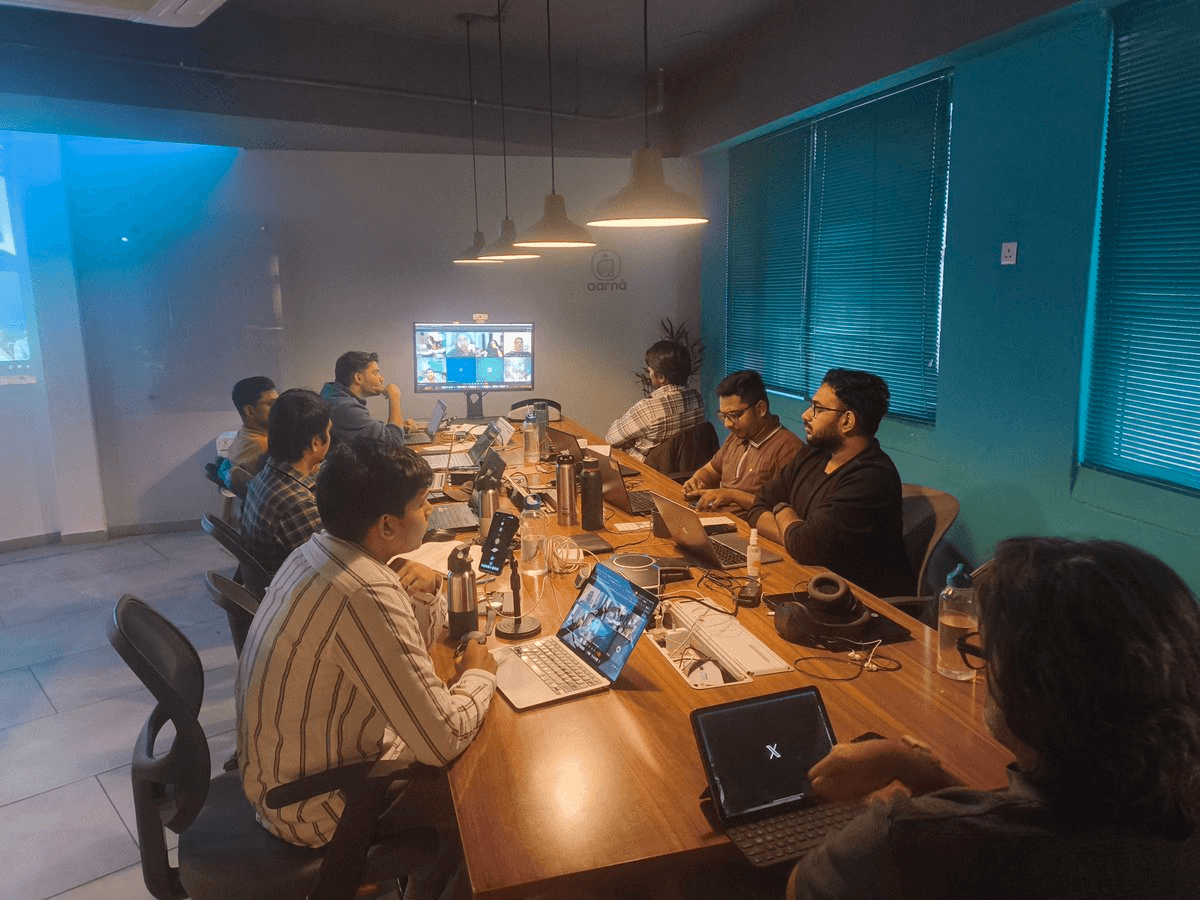
The Gmaarna team has officially assembled and entered buildathon mode, bringing high energy and deep curiosity to their development process. **Key Highlights:** - Team focused on first-principles approach to building - Buildathon represents intensive development phase - Follows broader industry trend of supporting builders beyond traditional hackathons **Context:** This announcement comes after recent discussions about the need for more comprehensive builder support in web3. Industry leaders have emphasized that developers require real pathways to ship, scale, and transition into founder roles - not just one-off hackathon experiences. The Gmaarna team's approach aligns with this philosophy, focusing on sustained development rather than short-term events.
Why Only 10% of Crypto Users Are Actually On-Chain
**The On-Chain Adoption Problem** A new episode of *alpha un#* reveals a striking reality: **less than 10% of crypto participants are actually using on-chain applications**. **Key Barriers to Adoption:** - DeFi protocols are too complex and risky for mainstream users - Over-collateralization requirements (often 150%+) lock out most potential participants - Current systems favor degens over everyday users **The Proposed Solution:** Host Sri discusses how **on-chain credit with lower collateral requirements** could unlock mass adoption. By reducing the capital efficiency barriers, billions of users could potentially access DeFi services. The episode features insights from **Yat Siu of Animoca Brands**, exploring practical pathways to make blockchain technology accessible beyond the current crypto-native audience. This conversation builds on previous discussions about institutional adoption challenges and the role of privacy-preserving technologies in bridging traditional finance with public blockchains.
Agentic Onchain Treasury Aims to Simplify DeFi Capital Management
**aarna is developing Agentic Onchain Treasury (AOT)**, a system designed to streamline DeFi asset management by consolidating fragmented workflows into a single treasury layer. **Key features:** - Automated capital allocation across stable yield, fixed income, and risk assets - Powered by TARS agents that analyze markets, rebalance positions, and enforce risk constraints onchain - Non-custodial with transparent, verifiable execution logic - Real-time risk monitoring with automated de-risking when thresholds are breached The platform offers tokenized vaults supporting fixed-yield strategies and DeFi indices, minted via stablecoins. Unlike traditional vaults, AOT uses policy-defined limits and protocol-level safety controls including allocation bands, slippage checks, and multisig-gated execution. The system targets both retail users seeking simplified DeFi access and institutions requiring governed, policy-based capital management. Learn more: [aarna docs](https://docs.aarna.ai/)