DIA's 2023 Chain Integrations
DIA's 2023 Chain Integrations


DIA has completed several new chain integrations and partnerships in 2023, including collaborations with Boba Network, Aleph Zero, Linea Network, Vara Network, Base Network, Polygon zkEVM, and zkSync Era. These integrations enhance DeFi, GameFi, NFTs, and Web3 applications with high-frequency oracles, real-time asset data, resilient oracles, unbiased random numbers, comprehensive data library access, and Ethereum scaling solutions. These partnerships highlight DIA's commitment to advancing blockchain ecosystems with reliable and transparent data.

🚀 What sets @LineaBuild apart from other rollups? Our recent blog post covers their unique approach to progressive decentralization and developer experience. Find out how they're building a scalable Ethereum ecosystem 👇 diadata.org/blog/post/podc…
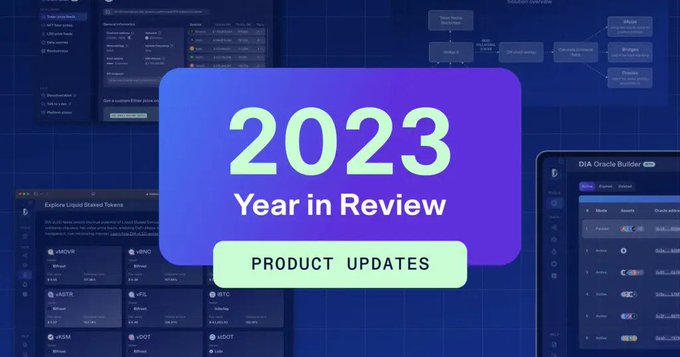
📆 2023 in Review: DIA's Product Developments 🚀 This year, DIA made significant strides in blockchain innovation, introducing groundbreaking products. Let's dive into these exciting developments 🧵
🤔 Curious about the origins of @LineaBuild? In this snippet from our recent space, @DeclanFox14 shares the potential of Linea's zkEVM rollup and the vision that was driving its conception by @Consensys. 🎙️Full space: youtube.com/watch?v=Q3cuH9…
🏦 DIA Real Brings 10,000+ Traditional Assets Onchain Across 60+ Networks
Traditional financial instruments are making a significant move to blockchain infrastructure. **DIA Real** now provides oracle feeds for over **10,000 traditional assets** across more than **60 blockchain networks**. The platform covers a comprehensive range of asset classes: - Tokenized treasury securities - Equity ETFs - Commodity exposure products - Foreign exchange pairs **Key differentiator**: Price feeds are sourced directly from where these assets actually trade, ensuring accuracy and reliability for the emerging tokenized asset economy. This infrastructure development supports the growing real-world asset (RWA) sector by providing the critical data layer needed for tokenized traditional finance products operating onchain. Learn more about the [DIA Real oracle infrastructure](https://www.diadata.org/real-world-asset-rwa-oracle/).
River Integrates DIA Value for Yield-Bearing Stablecoin Pricing
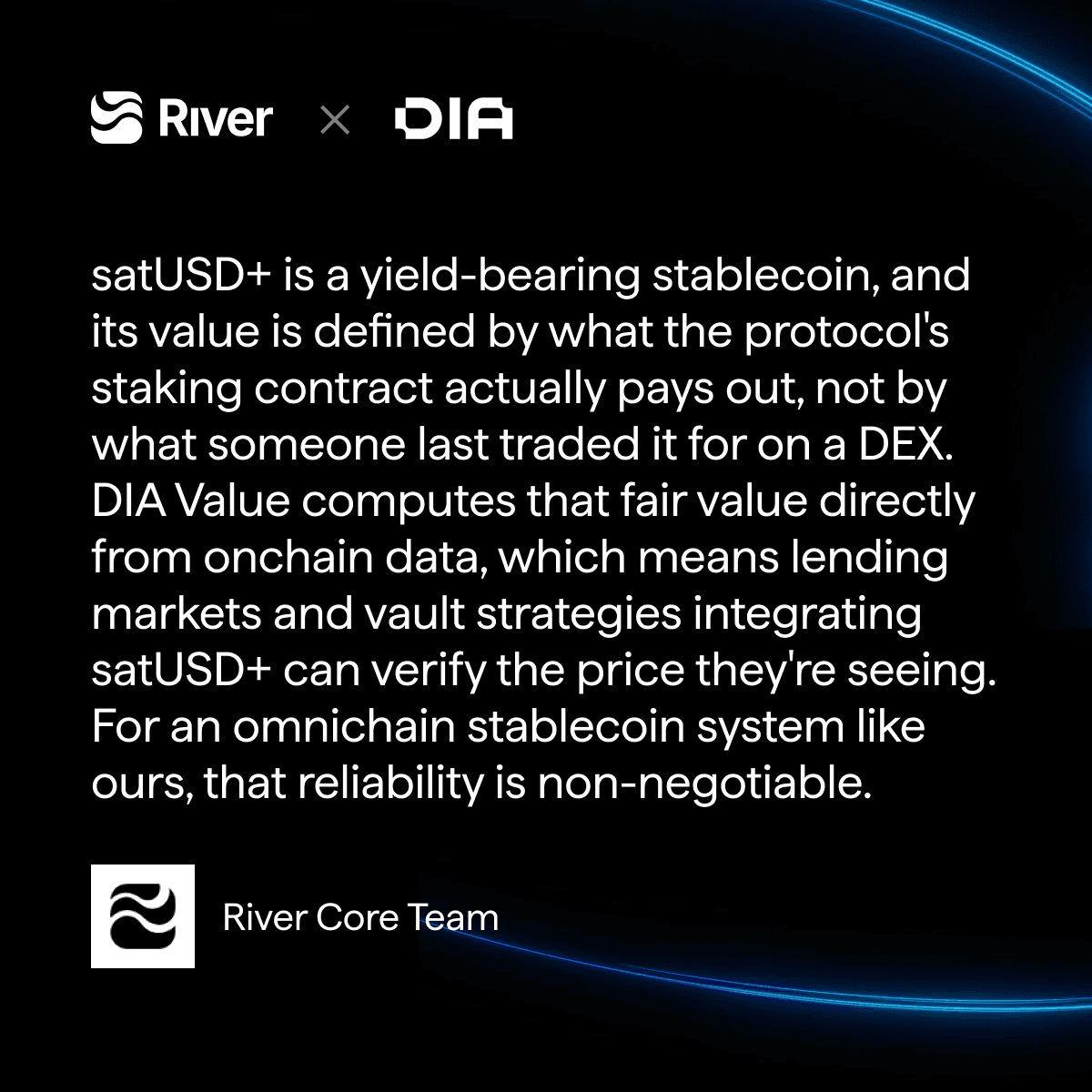
River is implementing DIA Value for their satUSD+ stablecoin across their omnichain system. The integration addresses a fundamental challenge: **yield-bearing stablecoins need pricing based on underlying protocol mechanics, not secondary market activity**. **Key points:** - DIA Value provides fundamental valuation for satUSD+ - Enables verifiable pricing for lending markets and vaults - Builds on existing partnership delivering oracle infrastructure across five chains - Market price feeds already live for satUSD across multiple chains This approach ensures that the value of yield-bearing stablecoins reflects their actual protocol-level worth rather than potentially volatile market trading prices.
DIA Oracle Integrates with Teqoin Layer
DIA has announced a new oracle integration with Teqoin, expanding its network of blockchain data feeds. This integration will provide Teqoin with access to DIA's decentralized oracle infrastructure for price feeds and data verification. **Key Points:** - DIA oracle layer now supports Teqoin network - Integration enables decentralized data feeds for Teqoin ecosystem - Follows previous integration with LitVM in April 2026 The partnership strengthens DIA's position as a cross-chain oracle solution while providing Teqoin developers with reliable, transparent data sources for their applications. [Read the full technical details](https://www.diadata.org/blog/post/dia-oracle-layer-teqoin/)
DIA Deploys Full Oracle Infrastructure on TeQoin's Zero-Fee L2
**DIA has launched its complete oracle infrastructure on TeQoin**, a zero-fee Layer 2 network focused on DeFi and real-world assets (RWAs). **What was deployed:** - Price feeds for standard crypto assets - DIA Value for RWA pricing - Proof of Reserve verification - Verifiable randomness The deployment addresses a critical infrastructure gap: TeQoin couldn't list lending markets without reliable collateral pricing. DIA's oracle layer now provides that foundation. This follows the broader trend of tokenized RWAs reaching $28B on-chain, with DIA positioning its xReal suite as the first trustless oracle solution specifically designed for real-world asset verification and pricing.
DIA Value: Intrinsic Valuation Oracle for Institutional DeFi Assets
Market-based oracles were built to bring external price data onchain, but they rely on continuous trading in liquid markets. This model breaks down for institutional DeFi assets like tokenized treasuries, fund NAVs, and yield-bearing tokens. **The core problem:** These assets don't trade frequently enough to generate reliable market prices. Their value exists in smart contracts and reserves, not order books. **DIA's solution:** DIA Value computes intrinsic value from verifiable inputs rather than market prices. This approach provides accurate valuations for assets that don't fit traditional oracle assumptions. The shift represents a fundamental rethinking of how oracles work for institutional DeFi infrastructure.