DIA Powers Meme Coin Lending Protocol with Oracle Infrastructure
DIA Powers Meme Coin Lending Protocol with Oracle Infrastructure
🐕 Meme Coins Meet DeFi


DIA has partnered with International Meme Fund (IMF) to provide oracle infrastructure for a novel DeFi protocol that enables collateralized lending against meme coins.
Key features:
- Users can borrow against volatile tokens ($PEPE, $MOG, $JOE)
- Risk managed through time-based liquidation windows
- Community-controlled interest curves
- Transparent price feeds on Ethereum mainnet/testnet
The protocol uses DIA's tamper-proof oracle data to ensure accurate liquidations and interest adjustments, particularly crucial for high-volatility assets.
🐶 Meme coins now have prediction markets. @meme_prediction lets you bet on whether $PEPE, $WIF, and other memecoins will moon or flatline. And DIA oracles help decide the outcomes. Testnet’s live → dive in x.com/DIAdata_org/st…

🔮🚀 Partnership with @meme_prediction DIA is now powering onchain prediction markets for the most volatile assets in crypto: meme coins. With DIA oracles, MCPM (Meme Coin Prediction Markets) enables transparent, trustless outcomes for every market. 🧵 👇

🔮🚀 Partnership with @meme_prediction DIA is now powering onchain prediction markets for the most volatile assets in crypto: meme coins. With DIA oracles, MCPM (Meme Coin Prediction Markets) enables transparent, trustless outcomes for every market. 🧵 👇
🔥 Partnership with @intlmemefund DIA is powering the oracle infrastructure for IMF, a DeFi protocol combining collateralized lending with meme coin exposure. Meme risk meets DeFi discipline. DIA provides the price accuracy. 🧵👇
🐕 Collateralized lending meets meme coin volatility. @intlmemefund uses DIA to price assets like $PEPE, $MOG, and $JOE with time-based liquidation logic. When DeFi experiments need verifiable data, DIA delivers.
🔥 Partnership with @intlmemefund DIA is powering the oracle infrastructure for IMF, a DeFi protocol combining collateralized lending with meme coin exposure. Meme risk meets DeFi discipline. DIA provides the price accuracy. 🧵👇
🛡️ DeFi Security Gap
**DeFi infrastructure maturity questioned** after B+ rated Balancer pool exploitation **Key discussion points from Infra Gardens Buenos Aires:** - Defense-in-depth security mechanisms - Bridged asset risk management - Insurance adoption challenges - Stack security responsibility gaps **Expert panel featured:** - @dillonhanson12 (DIA) - @PhilippZentner (LiFi Protocol) - @MerlinEgalite (Morpho Labs) - @nsuri_ (Wormhole) - @jgorzny (Zircuit L2) Despite infrastructure improvements, **security vulnerabilities persist** in rated protocols, highlighting ongoing institutional hesitation around DeFi adoption.
Ethereum's Fusaka Upgrade Goes Live
**Ethereum's Fusaka upgrade is now active**, marking another milestone in the network's evolution. The upgrade focuses on three key principles: - **Open** development and accessibility - **Unbiased** network operations - **Secure scaling** solutions This latest implementation continues Ethereum's roadmap of incremental improvements to enhance network performance and security. The Fusaka upgrade represents ongoing efforts to optimize the blockchain's infrastructure while maintaining decentralization. The upgrade's emphasis on secure scaling addresses one of Ethereum's primary challenges - processing more transactions without compromising security or decentralization.
🚀 Ethereum's Fusaka Upgrade Goes Live Tomorrow
**Ethereum's Fusaka upgrade launches tomorrow**, bringing the biggest infrastructure improvement for Layer 2 scaling yet. **Key Changes:** - **PeerDAS technology** - Validators only need to store 1/8th of blob data instead of everything - **Blob capacity expansion** - More space for L2 transaction data at lower costs - **Gas limit increase** - From 45M to 60M, with potential for 150M - **Hardware requirements stay manageable** through data sampling **Impact for Users:** - **Lower L2 fees** as rollups like Arbitrum, Optimism, and Base can batch more transactions - **Better UX** with preconfirmations and hardware wallet support - **Passkey integration** for Ethereum accounts **For L2s and L3s:** The data bottleneck that has constrained rollup economics gets significantly relieved. Cheaper data posting costs translate directly into reduced user fees. This upgrade represents the infrastructure foundation that makes Ethereum's rollup-centric roadmap viable at scale.
🔒 Privacy Gap Exposed
**Privacy tech is ready - but adoption isn't.** A panel at Infra Gardens Buenos Aires tackled the disconnect between available privacy infrastructure and real-world usage. Despite **MPC, TEEs, and ZKPs** being production-ready, privacy remains a feature rather than the default. **Key discussion points:** - Why mature privacy tech isn't widely adopted - Barriers preventing privacy from becoming standard - What's needed to bridge the technology-adoption gap **Expert speakers included:** - Luciana Faria (Alchemy) - Alexandre Carvalheira (Fhenix) - Eli Cohen (Centrifuge) - Bogdan Habic (Tenderly) - Patrick McClurg (Randamu) The conversation highlighted that while the **infrastructure exists**, systemic changes are needed to make privacy the cornerstone of Web3 projects rather than an optional add-on.
DIA Launches Fully Customizable Oracle Infrastructure
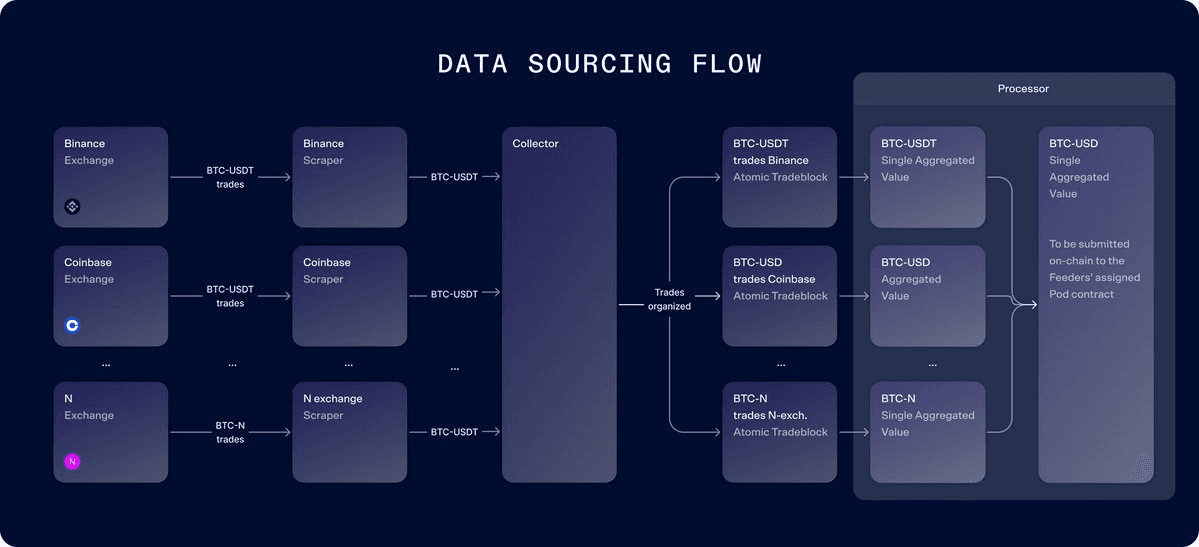
**DIA introduces fully customizable oracles** that let protocols build exactly what they need instead of using generic feeds. **Key customization options:** - Choose specific data sources from 100+ exchanges - Define update frequency based on protocol needs - Select pricing methodology that fits use case - Set deviation thresholds for price movements **Why this matters:** Most oracle solutions offer one-size-fits-all approaches. DIA's system allows protocols to configure oracles precisely for their requirements - whether they need only DEX data, specific CEX sources, or traditional market feeds. **Technical foundation:** Built on Lasernet, DIA's custom L2 rollup that brings oracle computation onchain. Every data point remains verifiable with complete transparency from collection to smart contract delivery. This represents a shift from standardized oracle feeds to **protocol-specific data infrastructure** tailored for individual use cases.