Developer Joins Open Gas Initiative Cohort
Developer Joins Open Gas Initiative Cohort
⛽ Gas Initiative Begins

A developer announced their participation in the initial Open Gas Initiative cohort, expressing pride in being selected for this Ethereum-focused program.
The Open Gas Initiative appears to be a new program aimed at addressing gas-related challenges on the Ethereum network. Being part of the initial cohort suggests this developer is among the first participants in what could be an important infrastructure development effort.
This follows the developer's previous involvement in Ethereum-based projects, indicating continued commitment to the ecosystem's growth and optimization.

Proud to be part of the initial Open Gas Initiative cohort! @ETHGasOfficial

Introducing the Open Gas Initiative - a way for protocols to subsidize gas for users, zero-code, for a seamless, frictionless onchain experience. With OG cohort: @eigencloud, @ether_fi, @pendle_fi, @Velvet_Capital. 👇
LiquidRWA Now Accepted as Collateral on EtherFi Cash
**LiquidRWA Integration with EtherFi Cash** LiquidRWA tokens can now be used as spend collateral on EtherFi Cash with a 70% loan-to-value ratio. **Key Features:** - Earn rewards on stablecoin holdings - Access spending power through Cash - Combined earning and borrowing in one platform **Access:** Users can interact with the vault at [ether.fi/app/cash/earn/liquid/rwa-yield](https://www.ether.fi/app/cash/earn/liquid/rwa-yield) This integration allows holders to maintain exposure to real-world assets while accessing liquidity for spending needs.
EtherFi Expands Liquid RWA Vault Capacity to $35M
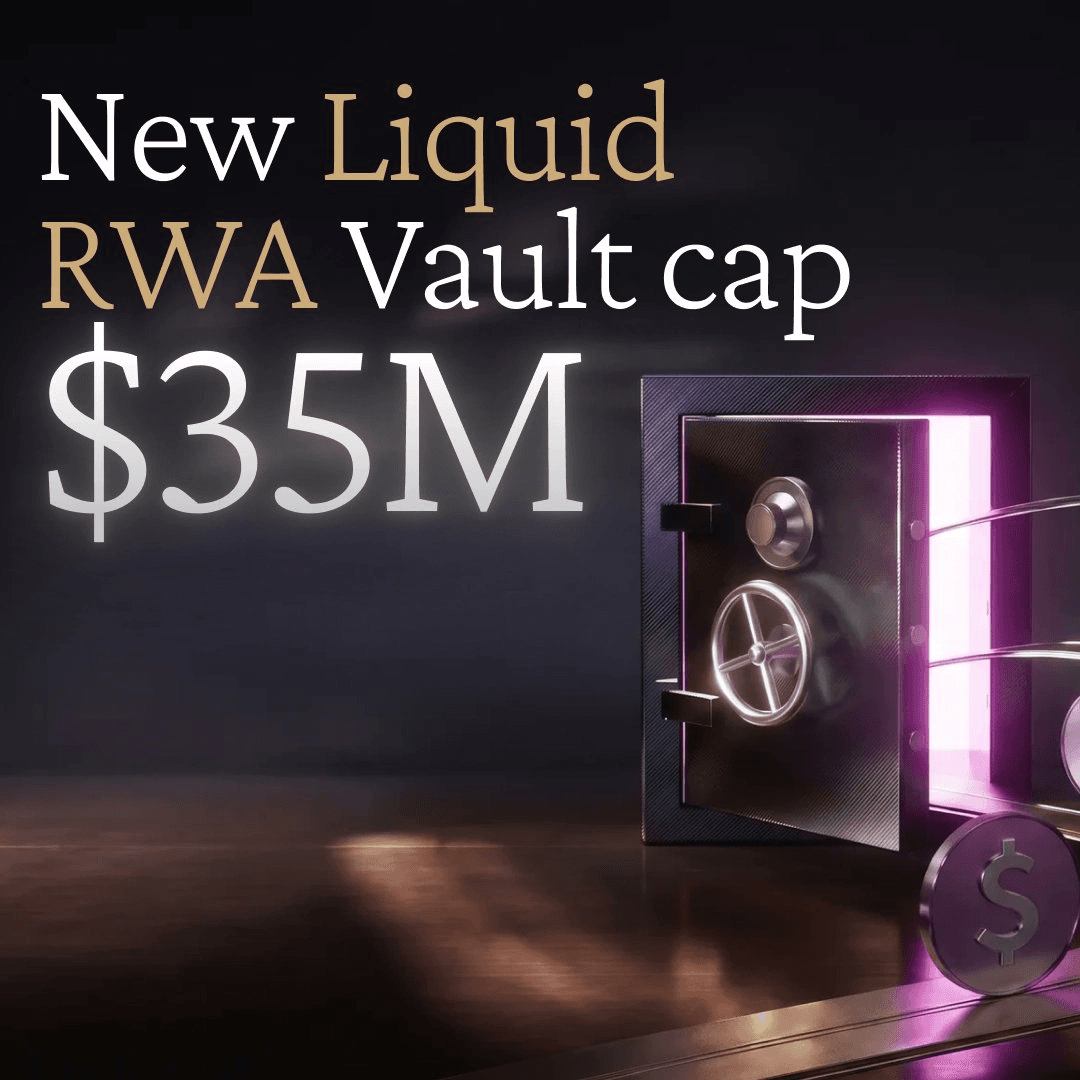
EtherFi has increased the capacity of its Liquid RWA (Real World Assets) vault by $10M, bringing the total cap to $35M. **Key Details:** - New capacity cap: $35M (up from $25M) - Partnership with [Plume Network](https://twitter.com/plumenetwork) - Offers institutional-grade fixed income and credit yields on stablecoins - Variable APY (not guaranteed) The vault, which launched in June 2026, allows users to deposit stablecoins and earn returns from real-world asset strategies. The capacity increase suggests strong demand for the product since its initial launch.
Major Ethereum Validator Secures Record 15,000 ETH Slashing Cover with Nexus Mutual

A major Ethereum validator has partnered with Nexus Mutual to secure coverage for up to **15,000 ETH** in potential validator slashing penalties - marking the **largest ETH slashing cover in crypto history**. **Key Details:** - The validator operates one of the largest validator sets on Ethereum - Nexus Mutual has covered over **$7 billion in onchain risk** since 2019 - Coverage protects against validator slashing penalties, which occur when validators fail to properly maintain network security This partnership represents a significant milestone in institutional-grade risk management for Ethereum staking operations. Slashing penalties can occur when validators go offline, validate incorrectly, or engage in malicious behavior. Nexus Mutual, a decentralized insurance alternative, has established itself as a leading provider of smart contract and protocol coverage in the crypto space.
weETH Receives First A+ Risk Rating in Liquid Restaking
**weETH has achieved a significant milestone** by earning the first independent A+ risk rating in liquid restaking from Credora Network. **Key developments:** - The rating doctrine has been integrated directly into the smart contracts through a recent security upgrade - This represents the highest risk rating available from Credora Network - The achievement underscores ether.fi's commitment to user fund safety and best-in-class security standards **What this means:** The A+ rating validates weETH's security infrastructure and risk management practices in the liquid restaking space. By compiling the rating doctrine into the contracts themselves, ether.fi has moved from theoretical security principles to practical, code-level implementation. Full details available at: [ether.fi blog](https://ether.fi/blog/safe-staking-from-doctrine-to-code)
EtherFi Launches Custom Affiliate Card Design Program
EtherFi has introduced a new feature allowing users to create custom-designed Cash cards from scratch. The program is now open for applications. **Key Details:** - Users can design their own personalized EtherFi Cash cards - Complete creative freedom in card design - Application process required to participate This builds on EtherFi's existing Affiliate Program, which offers users multiple ways to earn rewards with tracking tools for referrals and earnings.