DeFi Vaults: Beyond Simple Deposit-Withdraw Mechanics
DeFi Vaults: Beyond Simple Deposit-Withdraw Mechanics
🔍 Vault secrets revealed

DeFi vaults appear straightforward - deposit, earn rewards, withdraw. But the reality involves complex backend operations.
What actually happens:
- Tokenization processes
- Multi-protocol strategy execution
- Continuous risk management
- Strategic logic implementation
Key components include:
- Fee structures
- Oracle integrations
- Contract quality assurance
- Automated rebalancing
Vaults handle diverse strategies: farming, lending, staking, and delta-neutral positions. Some build on others, creating modular systems.
The automation depends entirely on code quality - making due diligence essential before depositing funds.
For detailed technical breakdown: KernelDAO Blog

Most people think vaults are simple: deposit → rewards → withdraw Reality is a full backend pipeline of tokenisation, multi-protocol strategy execution and constant risk management. A deeper look at the actual mechanics behind DeFi vaults 👇 blogs.kerneldao.com/blog/what-happ…
GENIUS Act Unlocks $300B+ Stablecoin Economy for Real-World Payments
The GENIUS Act has transformed stablecoins from a regulatory gray area into a legally recognized payment infrastructure in the US. **Key developments:** - Stablecoin supply has surpassed $300B, with growing adoption beyond crypto trading - Dollar-backed tokens now have clear legal framework for payments and settlement - The shift marks stablecoins' transition from speculative assets to practical financial rails **What changed:** Two years ago, building payment systems on stablecoins faced regulatory uncertainty. The GENIUS Act, signed into law in July 2025, established the first US framework specifically for payment stablecoins. This legal clarity has enabled stablecoins to move into mainstream commerce and settlement use cases, connecting crypto infrastructure with traditional economic activity. The legislation represents a milestone in bridging digital assets with everyday financial transactions.
Kelp Targets $2.5T Trade Finance Gap with Stablecoin Credit Bridge
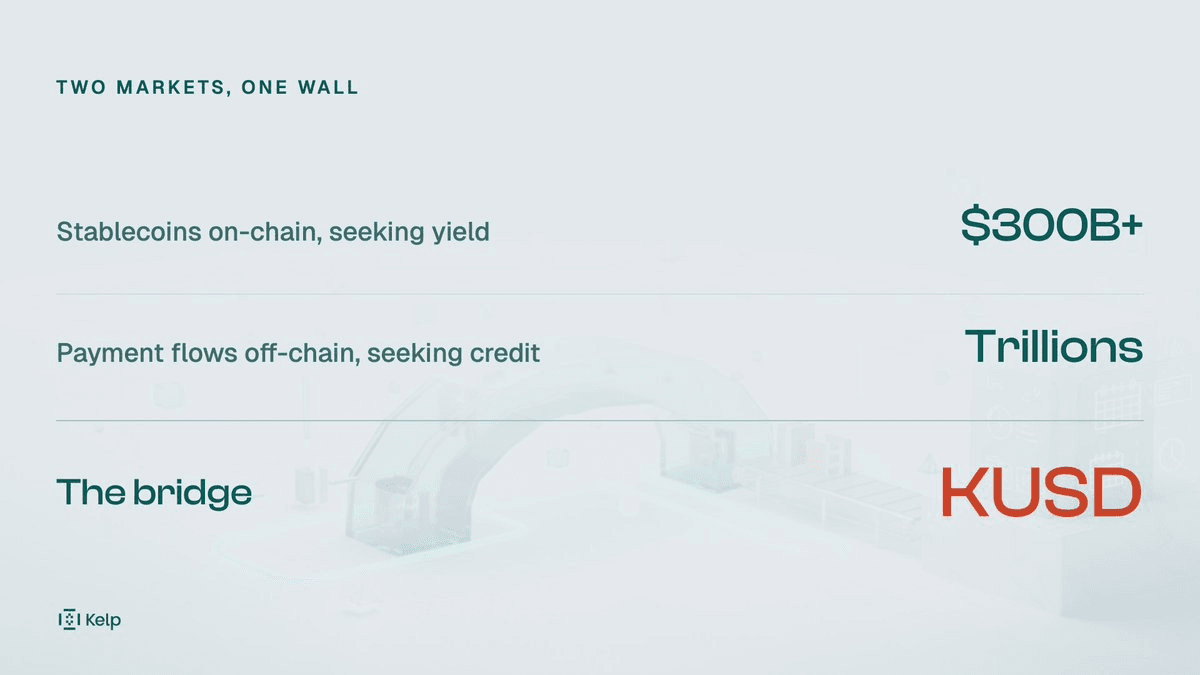
**The Problem:** - $300B+ in stablecoins sit on-chain seeking yield - $2.5 trillion trade finance gap exists off-chain (Asian Development Bank) - Traditional banks can't bridge these markets due to deal size, duration, and cross-border complexity **Current Friction:** - Suppliers wait 30-90 days for receivables to convert to cash - Payment service providers hold billions in idle liquidity - SMEs face rejection for working capital loans - Paper-heavy processes create weeks of settlement delays **The Solution:** Kelp's $KUSD aims to connect on-chain stablecoin liquidity with off-chain trade finance through programmable smart contracts, enabling: - Real-time settlement on blockchain rails - Transparent, verifiable cash flows - Scalable short-term credit for high-velocity trade The infrastructure targets existing payment flows rather than creating new markets, positioning itself as an "Internet of Credit" that transforms receivables into instant liquidity.
agETH Portfolio Hits 5.09% ETH Rewards with 73% in Leveraged Restaking
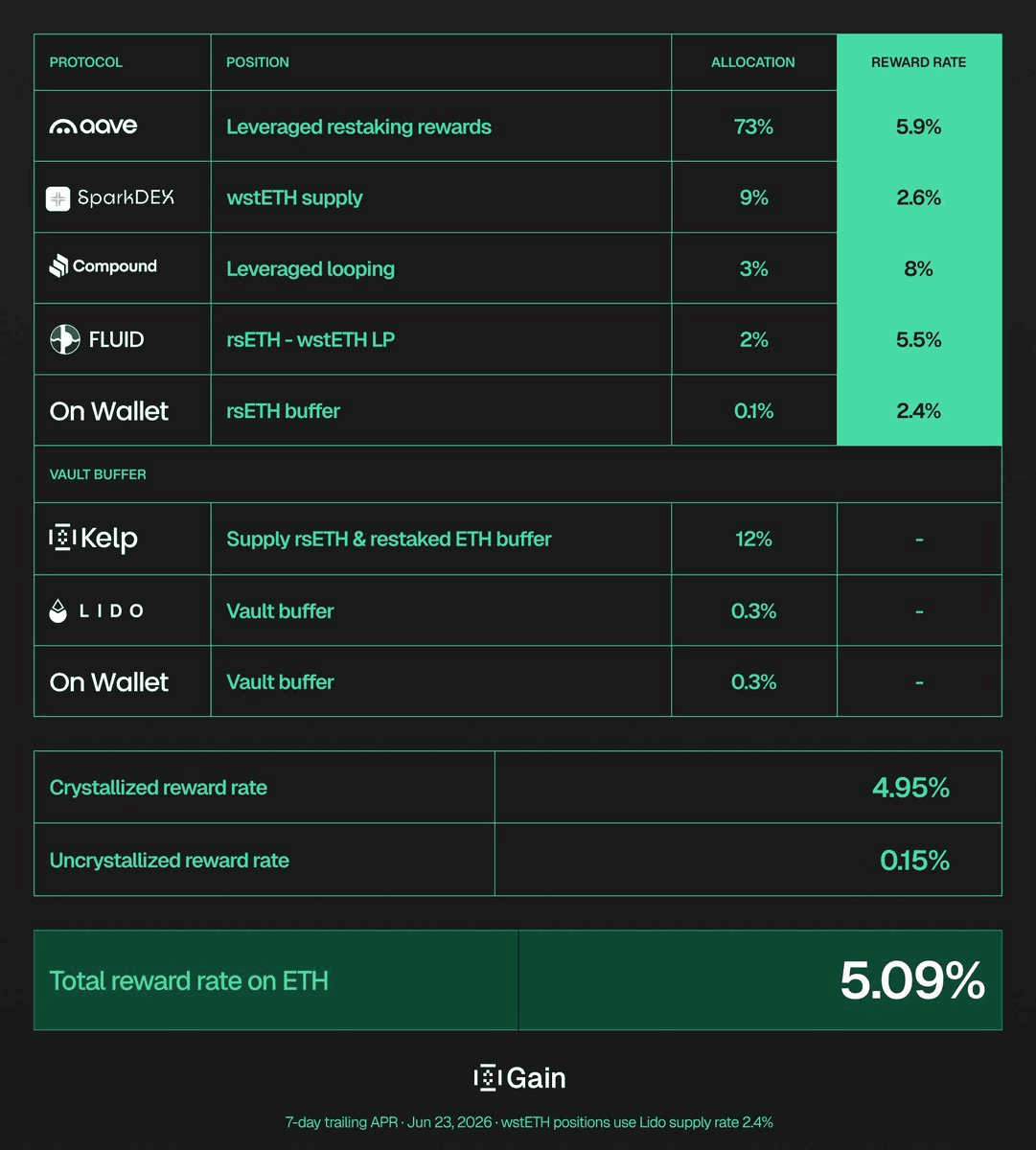
KelpDAO's agETH strategy delivered a **5.09% total reward rate on ETH** last week, with significant deployment across DeFi protocols. **Key Performance Metrics:** - Grow Compound generating **8% reward rate** - **73% of capital** deployed in leveraged restaking positions on Aave - Portfolio maintaining steady returns through diversified strategy The liquid restaking protocol continues to optimize yields through strategic allocation across multiple platforms, with the majority of assets concentrated in Aave's leveraged restaking opportunities.
KelpDAO Sunsets rsETH Bridging on 20 Networks
**rsETH bridging ended June 15 across 20 networks** KelpDAO has discontinued rsETH bridging on multiple chains including Optimism, Blast, zkSync, Berachain, Avalanche, and 15 others. Users who missed the deadline can still recover their assets. **Recovery process:** - Burn rsETH on the source chain - Pay 100 USDC flat fee on Ethereum mainnet - Email both transaction details to claims@kelpdao.xyz - Quarterly settlement returns rsETH to Ethereum **Key details:** - Recovery window open until June 15, 2027 - Movement network users follow separate process - All user backing remains safe Full recovery guide: [blogs.kerneldao.com/blog/recovering-rseth-from-sunset-networks](https://blogs.kerneldao.com/blog/recovering-rseth-from-sunset-networks)
KelpDAO Completes rsETH Recovery Plan with Final Token Transfer
KelpDAO has completed the operational phase of its rsETH recovery plan by transferring the final tranche of 20,373.72 rsETH to the rsETH OFT adapter. **Key Details:** - The final transfer marks the conclusion of the recovery operation - Transaction confirmed on Ethereum mainnet: [View on Etherscan](https://etherscan.io/tx/0x3be61d4336ea40ca2fa3aed20dc4ef672d4dfd029697a8b599661a6aff4767cb) - This follows the initial tranche transfer on May 14, which reopened rsETH bridging between mainnet and Layer 2 networks The completion of this plan restores full functionality to the rsETH token infrastructure across supported networks.