DeFi Rewards Sustainability: The Real Story Behind the Numbers
DeFi Rewards Sustainability: The Real Story Behind the Numbers
🎭 DeFi's dirty secret


A thread from KelpDAO co-founder @GAmitej challenges the fundamental assumption behind DeFi rewards programs.
The Core Issue:
- The problem with DeFi rewards wasn't inflated numbers
- The real issue was the false promise of sustainability
- Most reward programs were built on unsustainable foundations
Key Insights:
- Reveals the actual sources of DeFi rewards
- Explains why crypto-native reward systems typically fail
- Identifies one sustainable source that differs from common assumptions
The analysis provides a reality check for the DeFi ecosystem.

The biggest lie in DeFi rewards was never the number. It was the illusion that they were sustainable. This thread from our co-founder @GAmitej, breaks down where most rewards actually came from, and what sustainable really looks like.

There's a lie at the center of DeFi yield. Every serious builder knows it. Nobody talks about it.

sKUSD Stablecoin Offers 8-10% Yields from Trade Receivables
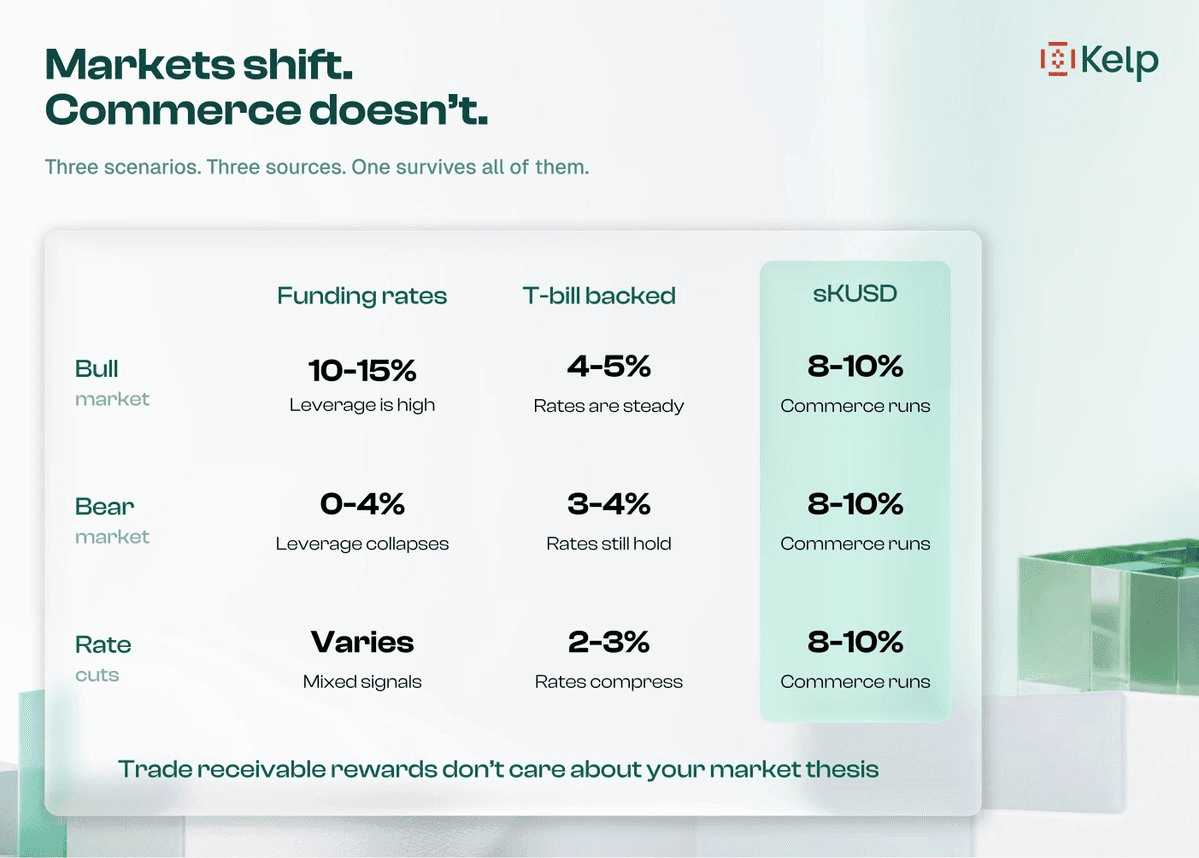
**KelpDAO's sKUSD stablecoin** provides 8-10% rewards backed by trade receivables and global commerce flows, offering an alternative to traditional stablecoin yield sources. **Traditional yield sources have limitations:** - Funding rates fluctuate with leverage levels - T-bill yields depend on Federal Reserve policy - Both compress during changing market conditions **sKUSD's approach differs** by deriving rewards from receivables, payments, and settlement flows tied to real economic activity rather than market cycles. This positions it between high-risk crypto yields that vanish during downturns and lower real-world yields typically capped at 4-5%. The protocol aims to maintain consistent returns regardless of broader market conditions by anchoring to ongoing global commerce.
Kelp Connects Onchain Capital to $2.5T Unfunded Trade Finance Gap
**Kelp is bridging DeFi liquidity with real-world trade finance needs.** Of the $10 trillion moving through global trade finance annually, $2.5 trillion remains unfunded. **How it works:** - sKUSD token earns returns from short-term receivables in trade and cross-border payments - Yields come from actual commerce settlement, not crypto market speculation - Targets $9-11 trillion locked in idle settlement buffers and receivables globally **The model:** While traditional stablecoins sit idle, KUSD generates returns backed by real payment flows and trade finance activity. Credit moves alongside settlement rather than weeks after, creating a practical bridge between DeFi capital and traditional finance infrastructure. Co-founder Amit detailed the approach at NextFin NYBW, positioning it as the "Internet of Credit" - programmable settlement rails powering working capital in payments and trade.
🚀 Mantle Aave Market Hits $1B in Under a Month
**Mantle's Aave v3 market crossed $1 billion in deposits in under 30 days**, with rsETH emerging as one of the fastest-growing assets driving this expansion. **Key Growth Drivers:** - 8M MNT incentives deployed over 4-6 months - rsETH looping strategies leveraging available WETH liquidity - Full reward stack: base restaking + MNT incentives + 15 bps Kelp subsidy **Strategic Context:** Mantle's integration with Bybit provides access to 70M+ users, creating a distribution advantage most L2s lack. The platform is actively pursuing real-world assets through a DeFi-first approach. **What's Next:** Kelp is building KUSD, a reward-bearing stablecoin backed by real-world payment and trade financing flows, targeting 8-10% yields. Launch expected in coming months. The growth represents genuine user acquisition rather than rented TVL, with the supply-borrow cycle already creating sustainable liquidity depth.
KelpDAO and Mantle Discuss rsETH Growth in Upcoming Live Session
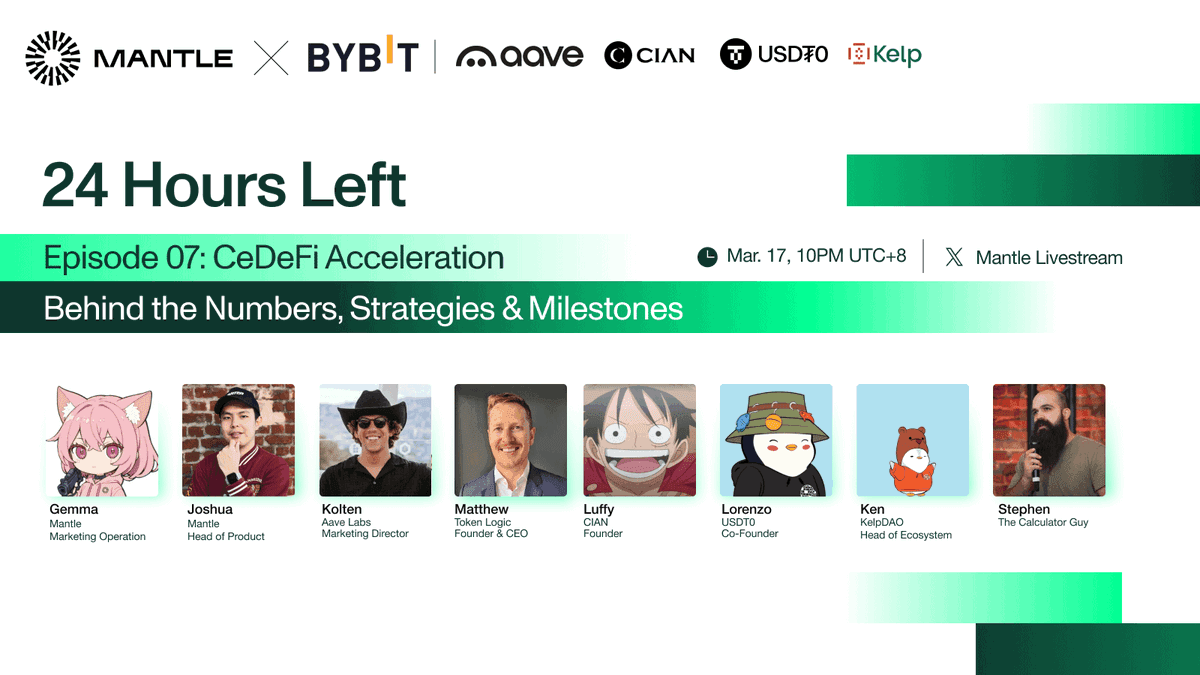
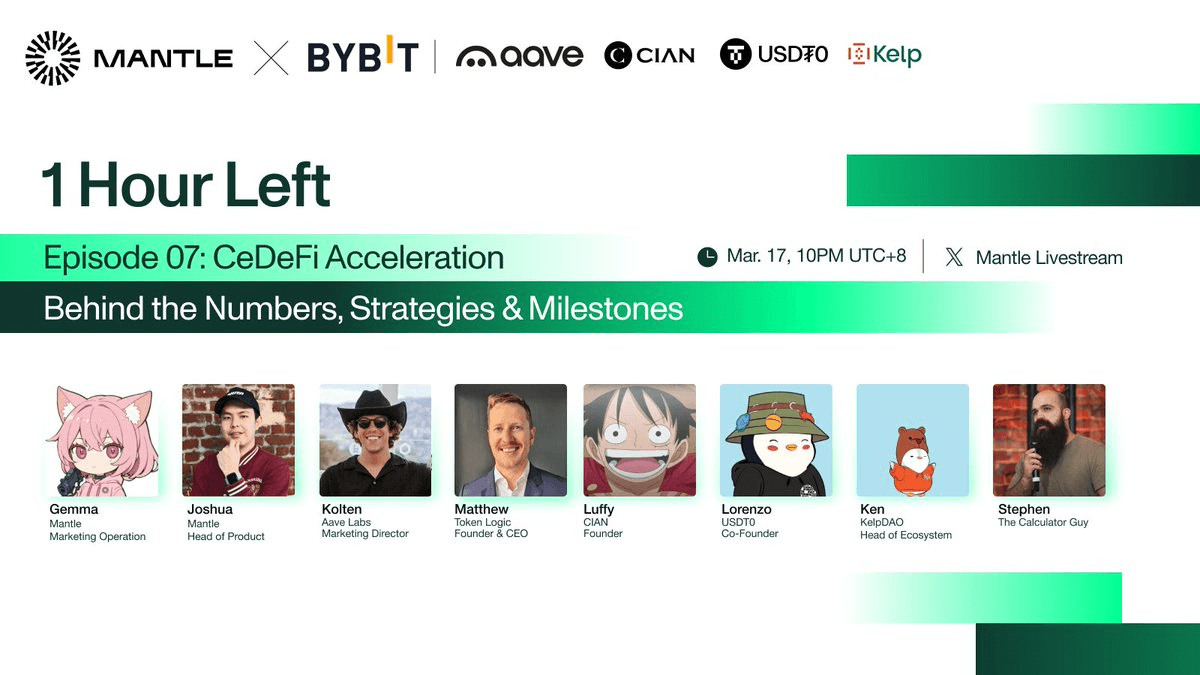
KelpDAO's head of ecosystem will join Mantle for a live discussion about rsETH's expansion on the Mantle network. **Key Details:** - Live session featuring KelpDAO and Mantle representatives - Focus on rsETH growth metrics and momentum on Mantle - Discussion will cover what's driving continued adoption The conversation aims to explore how rsETH, KelpDAO's liquid restaking token, has been performing on Mantle's layer-2 network and the factors contributing to its growth trajectory.