DeFi Platform Strengthens Security Following April 2026 Wake-Up Call
DeFi Platform Strengthens Security Following April 2026 Wake-Up Call
🔒 Security overhaul begins


A DeFi platform is implementing additional security measures following events in April 2026 that served as a wake-up call for the entire decentralized finance sector.
Key Points:
- Despite already having strong safety standards, the platform decided to enhance security protocols
- More details about the specific measures will be released in the coming weeks
- The announcement references a thread that provides initial information about the security improvements
The platform's response aligns with broader industry trends, including the Ethereum Foundation's 2026 commitment to DeFi principles focusing on robust security, self-custody, open standards, privacy infrastructure, and transparent risk communication.

April 2026 was a wake up call for all of DeFi. Although our safety standards were already strong, we decided to take additional measures to strengthen security. Over the upcoming weeks we will release more details of the measures taken, the thread below is a good start.

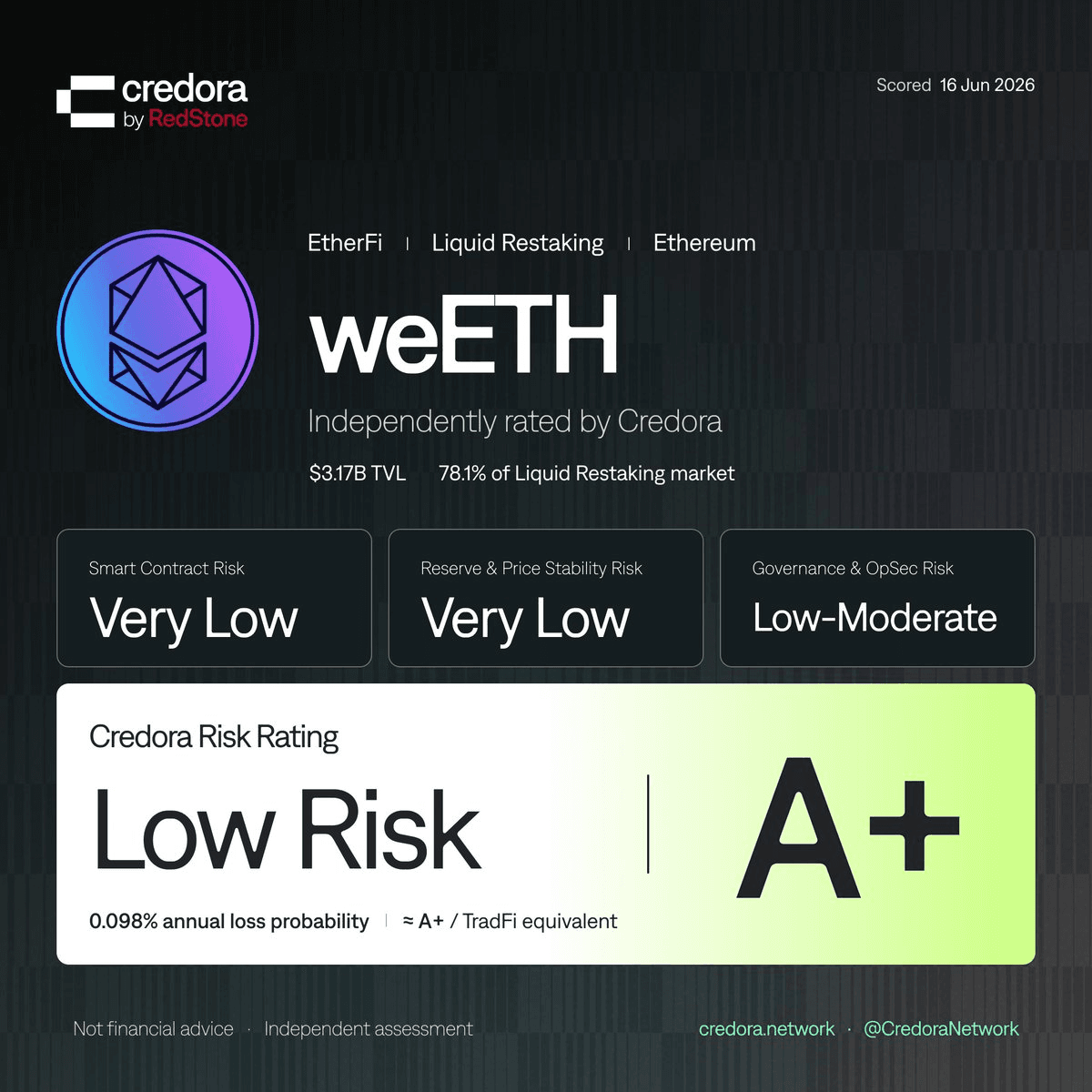
weETH from @ether_fi holds an A+ rating from Credora. 0.098% Probability of Default. That number comes from 100,000 simulations. Here’s what they test, and why the April 2026 incident didn’t move it 🧵

weETH Launches on Robinhood Chain Day One

**Robinhood Chain goes live with institutional-grade ETH staking** weETH is now available on Robinhood Chain from launch day, enabling users to stake and earn yield on their ETH holdings. **Key features:** - Institutional-grade yield opportunities for retail users - Day-one integration with Robinhood's crypto platform - Bitget Wallet support for Robinhood Chain's tokenized stock assets and dApps The launch marks Robinhood's expansion into Layer 2 infrastructure, bringing traditional finance accessibility to DeFi staking products.
Credora Network Enlists Top Security Firms for Protocol Audits
**Credora Network has commissioned independent risk assessments and audits** from leading security firms to strengthen protocol resilience. The initiative emphasizes **external scrutiny and adversarial review** as ongoing components of their security framework. This follows their established rigorous review process that examines: - External protocol code and existing audits - Liquidity conditions during market volatility - Governance structure vulnerabilities - Protocol dependencies and integrations The move reflects industry best practices of **continuous security assessment** rather than one-time audits.
Protocol Shifts to Conservative Strategy with 50% Non-Restaked Assets
A protocol has announced a significant shift toward conservative risk management in its asset allocation strategy. **Key Changes:** - Approximately 50% of assets now held in non-restaked positions - Zero allocations to slashable restaking protocols - Focus on risk-adjusted returns over maximum yield This approach contrasts with the common practice of stacking complex yield-generating protocols, which can amplify risk. The team emphasizes that protecting principal matters more than chasing higher rewards, especially given how quickly cascading failures can occur across interconnected DeFi systems.
🔒 Security Overhaul: Cross-Chain Infrastructure Hardened, Vulnerable Chains Deprecated
A comprehensive security upgrade has been implemented across cross-chain infrastructure. The team has deprecated chains that failed to meet updated security standards and strengthened the OFT (Omnichain Fungible Token) architecture. **Key improvements include:** - Hardened cross-chain infrastructure with stricter security requirements - Removal of chains not meeting new security benchmarks - Enhanced OFT architecture for improved resilience - New containment controls to limit incident spread This follows a previous protocol-wide security review of the weETH bridge, which proactively addressed latent risks before any exploit occurred.
EtherFi Prioritizes Security Infrastructure Over Feature Development

EtherFi has announced a strategic shift in its approach to protocol development, emphasizing security as its core product rather than an additional feature. **Key Points:** - The protocol recognizes that users are entrusting their assets when staking through the platform - Recent months have seen significant capital investment in security infrastructure - This approach reflects a broader industry conversation about moving beyond UI-level warnings to fundamental security improvements **Context:** The announcement comes as the crypto industry grapples with the limitations of surface-level security measures. While better user warnings have been implemented across platforms, projects like Safenet are exploring deeper transaction security solutions that operate beyond the user interface layer. EtherFi's commitment suggests a recognition that staking protocols require robust security foundations to maintain user trust and protect deposited assets.