Datapalooza: A Day Dedicated to Web3 Data Innovations
Datapalooza: A Day Dedicated to Web3 Data Innovations


The inaugural Datapalooza hosted by The Graph Foundation is happening at @EFDevconnect in Istanbul on Nov. 13th. The event will feature expert-led talks and workshops on various topics including R&D, tooling, dapps, analytics, and LLMs. Speakers include Adam Fuller, Vyas Krishnan, Danning Sui, Willian Mitsuda, Hope Yen, Ansgar Grunseid, Vitalik Buterin, and more. Workshops will cover topics such as combining subgraphs, developing substreams, running an indexer, and using Chainlink Functions. The event can be attended in person or livestreamed. Don't miss it!
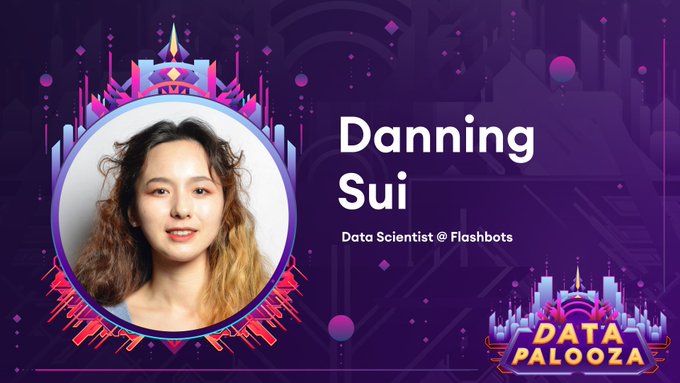
Datapalooza is next Monday! Explore the future of web3 data, dapps, analytics, & LLMs during a day of expert-led talks & workshops! 📣 New speaker update: @sui414 from Flashbots will present on Exploring Ethereum Mempool, Orderflow & MEV!
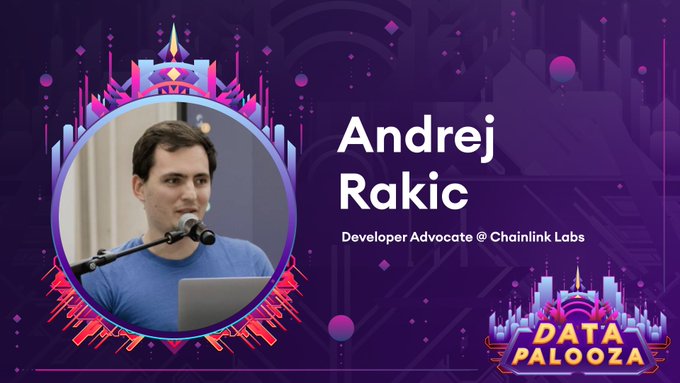
Datapalooza is only 13 days away! 📣 New speaker update: @andrej_dev from @chainlink! Andrej will give a workshop on using Chainlink Functions to implement a DeFi strategy by connecting The Graph & Uniswap Router! Stay tuned for info on additional speakers & presentations.

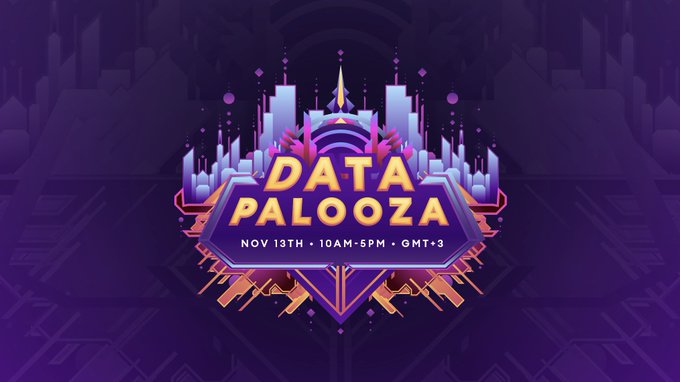
📢 The Graph Foundation is hosting the inaugural Datapalooza, a day focused on web3 data innovations, at @EFDevconnect in Istanbul on Nov. 13th! The event will cover R&D and tooling in The Graph ecosystem and across web3, focusing on use cases for dapps, analytics, tooling, LLMs
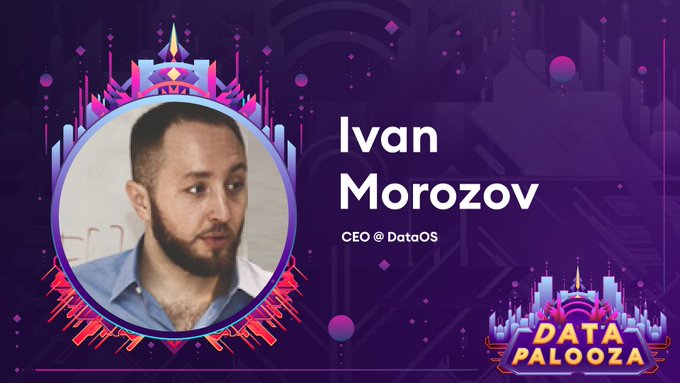
📣 New speaker update: @Allquantor07 from DataOS will present: AI is ready - Web 2.0 is not: AI-Generated Apps on top of Open Data Lakes! Datapalooza is Monday! Join a day of talks & workshops by builders & web3 data experts during @EFDevconnect. More announcements coming!
🇹🇷 Are you attending Datapalooza? Be sure to join Graph ecosystem Dev Rels, Business Teams, Dev Success, & other ecosystem members to talk about data services on The Graph! Register for Sunrise Office Hours! There will be an exclusive POAP for those that meet with ecosystem
Datapalooza is almost here! The Graph Foundation is hosting the inaugural Datapalooza at @EFDevconnect in Istanbul on Nov. 13th! This will be a day dedicated to web3 data innovations, discussing R&D, tooling, dapps, analytics, & more! Here’s the event agenda ⬇️ Can’t join in
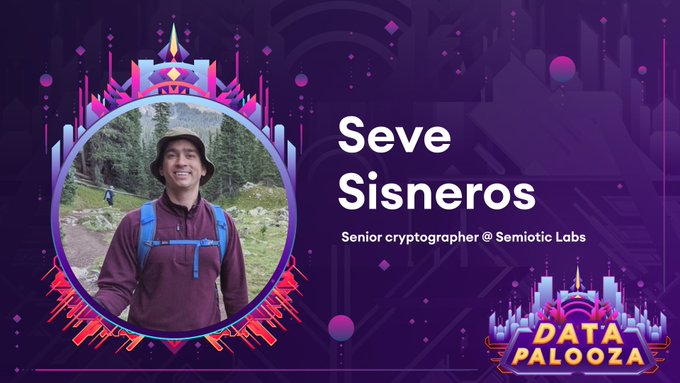
Datapalooza is only 12 days away! 📣 New speaker update: @SeveSisneros from @semioticlabs! Seve will present on preserving historical data after EIP-4444, a proposal to reduce storage & bandwidth requirements for Ethereum nodes, making syncing easier & faster. Stay tuned for
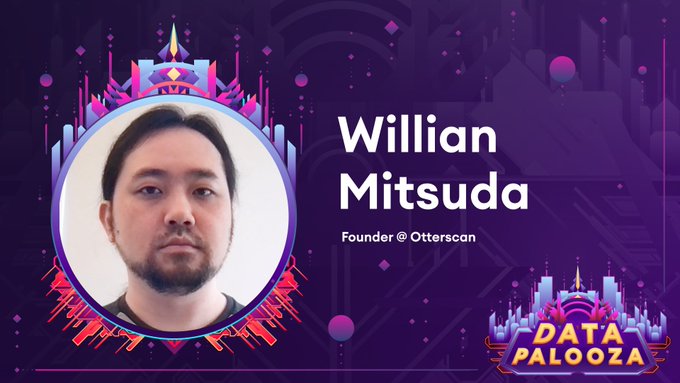
📣 New speaker update: @wmitsuda from @otterscan! The Graph’s inaugural Datapalooza is almost here! This will be a day of expert-led talks & workshops on R&D, tooling for dapps, data analytics, & LLMs! Join in-person in Turkey or watch via livestream - more details coming soon!
Connect Claude to 15,000+ Web3 APIs in 5 Minutes with Subgraph MCP
The Graph's Subgraph MCP integration lets you connect Claude to over 15,000 open APIs covering major web3 protocols in about 5 minutes. **What you can do:** - Query real-time smart contract data in natural language - Access ENS records, liquidity pool data, and token mappings - Pull data from dozens of blockchain networks - Build AI agents with live onchain activity tracking **Key features:** - Works with Claude, Cursor, and Cline - No complex API calls needed - just ask questions naturally - Access to The Graph's extensive library of indexed Subgraphs The setup process is straightforward and documented in the official guide. [Get started with the setup guide](https://thegraph.com/docs/en/subgraphs/tooling/subgraph-mcp/claude/)
Substreams Skills enables AI-assisted blockchain data pipelines in hours
**Substreams Skills** now allows developers to build production-ready blockchain data pipelines by simply prompting an AI assistant. **Key capabilities:** - Deploy live, low-latency data streams from Ethereum, Base, BSC, or Robinhood contracts - Complete setup possible within a few hours - AI generates production-ready code across multiple environments **Updated framework covers:** - Development workflows - EVM and Solana chains - SQL integration - Data sinks and deployment - Testing and Portal API - Package reuse recommendations The tool emphasizes leveraging existing packages rather than building from scratch, streamlining the development process for blockchain data infrastructure. [View on GitHub](http://github.com/streamingfast/substreams-skills)
StreamingFast launches Hosted Sinks for simplified blockchain data pipelines
StreamingFast has released **Substreams Hosted Sinks**, a service that eliminates the need for developers to manage blockchain data infrastructure. The tool works in three steps: - Bring a Substreams package - Select a database - Click deploy StreamingFast handles the pipeline execution and delivers queryable data directly to your database. The service includes: - Low EVM latencies - Fast sync times - Automatic reorg handling - Full data ownership Developers can get started at [thegraph.market](https://thegraph.market). The team is seeking community input on which data streams to prioritize next.
AI Assistants Can Now Convert Subgraphs to Substreams Automatically
Converting Subgraphs to Substreams no longer requires manual Rust coding. The process is now automated through twelve Substreams Skills available for AI coding assistants. **Key capabilities include:** - Automated Subgraph-to-Substreams conversion - Chain-specific decoding for multiple blockchains - SQL sink configuration and deployment - Built-in testing frameworks The open-source toolset integrates with popular development environments including Claude Code, Cursor, VS Code, and Windsurf. [View on GitHub](http://github.com/streamingfast/substreams-skills)
The Graph Maps Four Trust Models for Blockchain Data Verification
The Graph has identified four distinct trust models used in blockchain data extraction, but only one truly delivers on verifiable claims. The four models are: - **Baseline pipelines** - Standard data processing - **1-of-N** - Single source verification - **Consensus** - Agreement-based validation - **Verifiable extraction** - Cryptographically rigorous proof Only verifiable extraction meets the strict definition of "verifiable" in a technical sense. The distinction matters because providers often use the term loosely in marketing materials. When evaluating blockchain data services, understanding which trust model a provider actually implements is critical for assessing data integrity.