🎯 Crypto Holders Targeted in Wave of Physical Attacks Linked to On-Chain Data
🎯 Crypto Holders Targeted in Wave of Physical Attacks Linked to On-Chain Data
🎯 They Know What You Hold

Physical attacks on cryptocurrency holders are escalating sharply. 2025 saw roughly one incident per week; 2026 is accelerating further.
Last week, armed men targeted a crypto executive's home in France—the latest in a pattern of researched, targeted attacks. Jameson Lopp maintains a public database tracking every known physical attack on crypto holders, and the trend is clear.
The common thread: attackers identify victims by combining on-chain wealth data with information from data breaches or social media.
- On-chain transparency reveals holdings
- Data breaches expose identities and addresses
- Social media provides additional targeting intel
These aren't random crimes. Attackers build detailed target profiles using publicly available blockchain data combined with leaked personal information. The combination of transparent ledgers and centralized data storage creates a roadmap for criminals.
The France incident follows a broader pattern of crypto-related violence, including over 20 kidnappings in France during 2025-2026, many linked to data breaches from exchanges and tax software.
Lopp's database documents the growing threat.

3/ @lopp maintains a public database of every known physical attack on crypto holders. The trend line is not subtle. 2025 saw roughly one incident per week. 2026 is accelerating. The common thread? Attackers knew what the victim held because the blockchain told them.
🔒 Privacy Adoption Hits 14% on Solflare
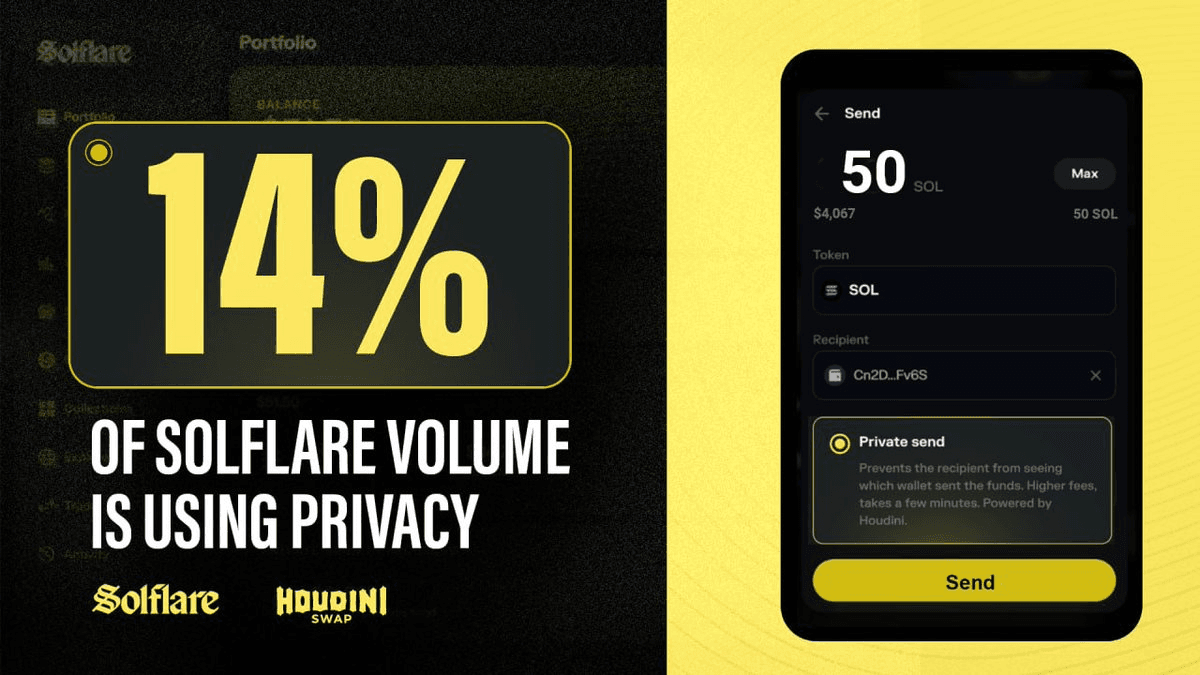
**Privacy usage reaches meaningful adoption on Solana** Solflare reports that 14% of its transaction volume now uses privacy features - meaning roughly 1 in 7 users actively choose private transactions. This marks a significant milestone for privacy adoption in Solana DeFi, where: - Over $1B in private SOL volume has been processed - 700k+ private transactions completed - Privacy tools now support swaps, sending, payments, and wallet funding The growth follows recent integrations by platforms like Solflare, Infinex, and Bungee Exchange, which embedded privacy toggles directly into their user flows - requiring no behavior change from users. **Why it matters:** Privacy is shifting from niche feature to standard option as compliant tools make it accessible without friction.
Privacy Protocol Balances Compliance with Transaction Anonymity Through Split Routing
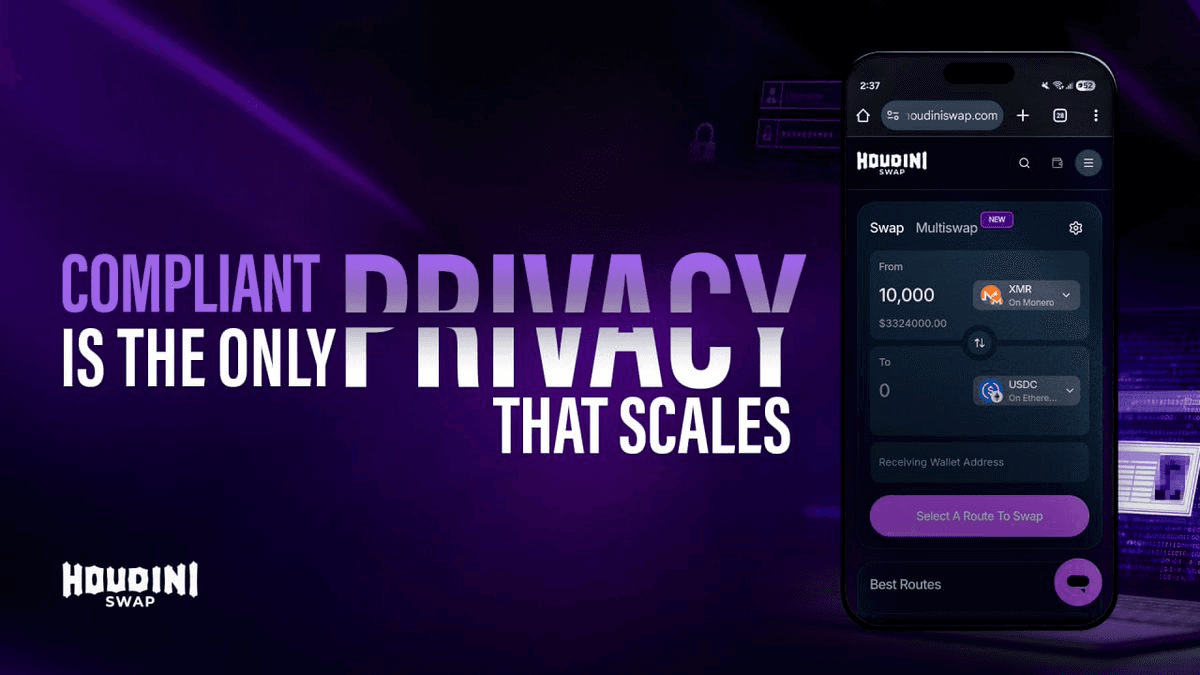
A privacy-focused protocol has developed a compliance framework that maintains transaction anonymity while adhering to regulatory requirements. **Key Features:** - AML/ATF filtering with vetted exchange partners - Transaction caps at $100k per swap - Split routing architecture where each exchange sees only half of each transaction - Dual compliance: meets regulatory standards on both sides while maintaining untraceability The approach reflects a broader industry shift toward building privacy solutions that work within regulatory frameworks rather than against them. This follows recent US Treasury acknowledgment that financial privacy serves legitimate needs, while suggesting mixer-based privacy solutions may not support mainstream crypto adoption. The system demonstrates how privacy and compliance can coexist through architectural design rather than regulatory avoidance.
Houdini Swap Reaches $1B in Private Solana Transactions
Houdini Swap has processed over $1 billion in private Solana volume across 750,000+ transactions. The privacy tool is now integrated directly into Solflare wallet's send flow, making private transactions accessible without extra steps. **Key metrics:** - $1B+ in private SOL volume - 750k+ private transactions - Native integration in Solflare wallet The service provides compliant privacy infrastructure for Solana users, including private swaps, sending, payments, and wallet funding. Houdini Swap positions itself as the primary privacy solution currently operating on Solana. Solflare became the first major Solana wallet to ship native private sending, marking a shift in how privacy features are delivered to users - built into core wallet functionality rather than requiring separate tools or workflows.
Privacy Infrastructure Must Work in Bear Markets, Not Just Bull Runs
After nearly four years of development, **privacy infrastructure needs to function in all market conditions**, not just during price rallies. The key insight: if privacy only matters during euphoric markets, it was never genuine privacy—just marketing. **Core argument:** - Real privacy work happens when no one is paying attention - Funds must move privately regardless of market sentiment - Public-by-default finance creates unavoidable exposure risks **The broader context:** - Privacy failures in crypto are mounting - Mass adoption of payment systems requires privacy as a foundation - Privacy isn't about hiding—it's about controlling what information you share and when The message emphasizes that **compliant privacy solutions** need to work across every blockchain and use case, positioning privacy as essential infrastructure rather than an optional feature during good times.
Houdini Swap Launches Private Wallet Funding Across 120+ Chains
Houdini Swap has introduced private wallet funding infrastructure across more than 120 blockchains. The service addresses a common privacy issue: when users fund new wallets, the funding transaction typically links the new wallet to their previous on-chain activity. The platform allows users to create fresh wallets without revealing connections to their existing holdings or transaction history. Users can maintain their current wallet interfaces rather than switching to new privacy-focused chains or applications. This builds on Houdini's existing privacy features, which include: - Cross-chain private swaps - Houdini Pay for anonymous payments - Private bridging between networks The service has processed over $2 billion in volume. Recent integrations include Stellar network support for XLM and USDC, and partnerships with trading platforms like Bloom Trading.