Concentrated Liquidity's Hidden Cost: Idle Capital and Rebalancing Friction
Concentrated Liquidity's Hidden Cost: Idle Capital and Rebalancing Friction
💸 When efficiency becomes expensive

The concentrated liquidity promise hit a wall in practice.
When positions drift out of range, they stop earning fees entirely. Capital sits idle until liquidity providers manually rebalance—a process that requires:
- Gas fees for each adjustment
- Active timing decisions
- Restarting positions from scratch
The result? Around 50% of concentrated liquidity LPs lost money despite the theoretical capital efficiency gains.
The core issue isn't the technology—it's the operational overhead. Markets move constantly, ranges expire, and rebalancing costs compound over time. What looked efficient on paper became a maintenance burden in reality.
Concentrated liquidity delivered on its technical promise but created a new problem: the gap between capital efficiency and practical profitability.

When a position drifts out of range, it stops earning fees. Capital sits idle until someone rebalances. That means gas fees, timing decisions, and starting over. The efficiency stayed on paper.
Half of Concentrated Liquidity Providers Lost Money Despite Capital Efficiency Gains
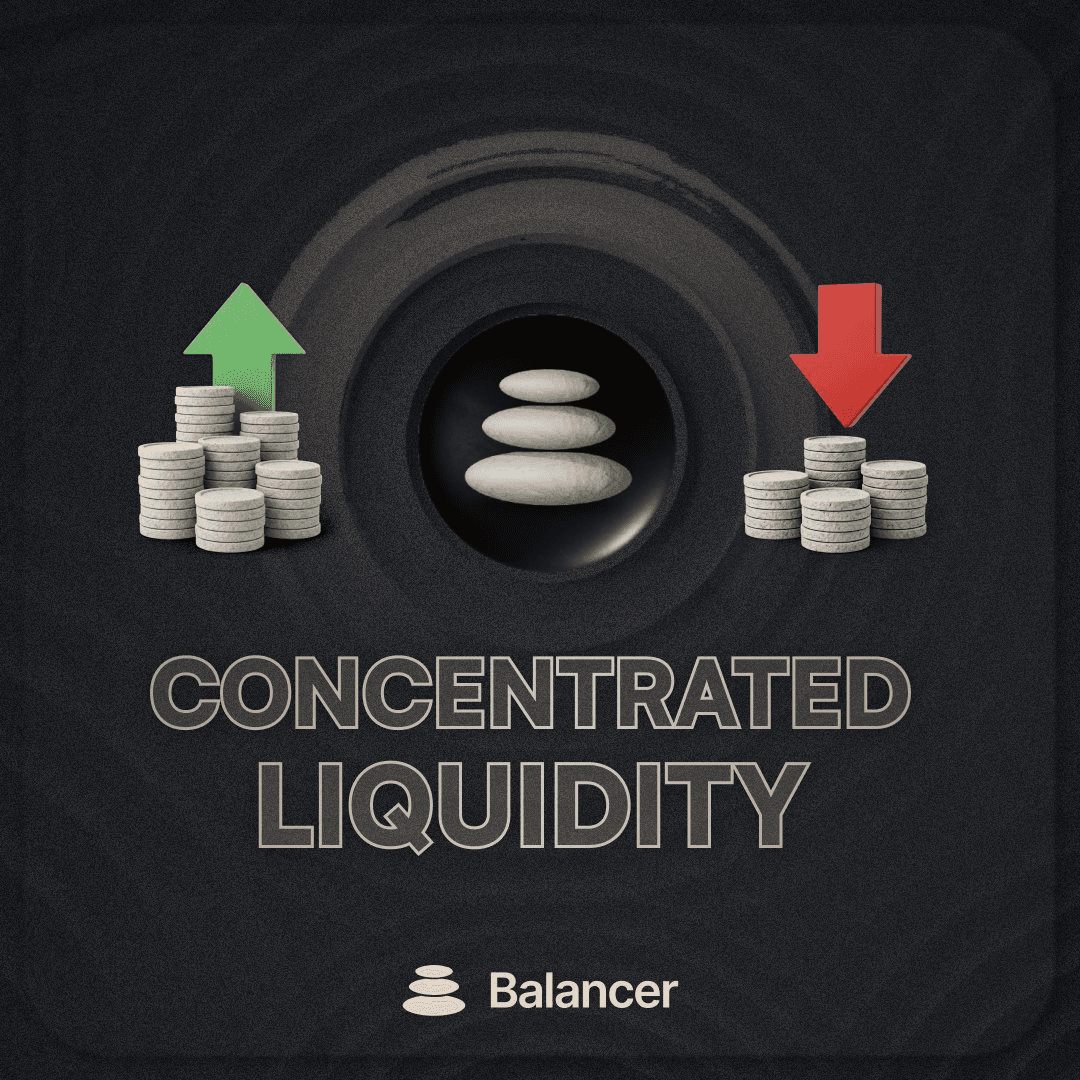
**The concentrated liquidity paradox**: While CL technology delivered a breakthrough in capital efficiency, approximately **50% of liquidity providers ended up losing money**. **The core issue**: Markets are constantly moving, causing LP ranges to expire and requiring frequent rebalancing. These rebalancing costs compound over time, eroding profits. **How CL works**: - LPs allocate capital to specific price ranges instead of the entire spectrum - Capital efficiency improves as liquidity concentrates where trading happens - Traders benefit from reduced slippage in active ranges **The hidden cost**: The very feature that makes CL efficient—targeted ranges—becomes a liability when markets shift, forcing LPs into a cycle of costly position adjustments.
Balancer Approves $500K USDC Airdrop for veBAL Holders
Balancer's veBAL compensation airdrop proposal (BIP-920) is now live on the governance forum. **Key Details:** - Full $500K USDC compensation distributed in a single airdrop - Proportional distribution to all veBAL holders at snapshot - No waiting period or claiming process required - Automatic distribution to eligible holders This represents a change from the earlier BIP-919 plan, which proposed distributing the compensation over 6 months. The new proposal streamlines the process with immediate, one-time distribution. Forum discussion: [BIP-920 veBAL Compensation Airdrop](https://forum.balancer.fi/t/bip-920-vebal-compensation-airdrop/7025)
Balancer V3 Launches Three-Token Stablecoin Pool on Monad
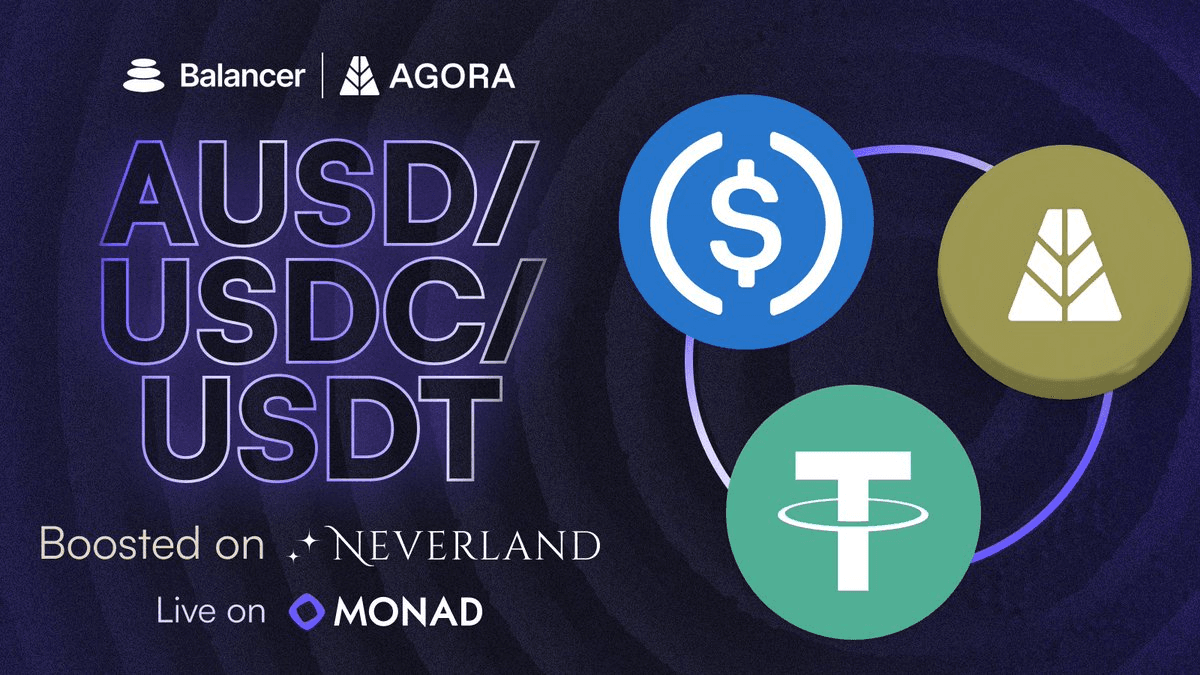
Balancer V3 has deployed a three-token stablecoin pool on Monad, combining AUSD, USDC, and USDT0 in a single liquidity pool. **Key Features:** - First three-stablecoin pool enabled by Balancer V3 technology - Provides deep liquidity for AUSD stablecoin - Combines swap fees with lending yield for liquidity providers - Operates as both a stable and boosted pool The pool is now live and accessible at [balancer.fi](https://balancer.fi/pools/monad/v3/0x2daa146dfb7eaef0038f9f15b2ec1e4de003f72b). This deployment showcases V3's capability to handle multi-token stable pools, offering traders tighter spreads and liquidity providers additional yield opportunities beyond traditional two-token pairs.
Monad Enables Scalable Multi-Token Pools with Sub-Second Finality
**Monad's infrastructure breakthrough enables complex DeFi operations at scale.** The platform delivers: - **Sub-second finality** for near-instant transaction confirmation - **Parallel execution** allowing multiple operations simultaneously - **Cost-efficient multi-token pools** that remain practical at scale This technical foundation removes the latency and cost barriers that previously made complex pool operations inefficient on other chains. The infrastructure is purpose-built to support ambitious DeFi protocols requiring high throughput and low costs. Monad's approach addresses a core challenge in decentralized finance: maintaining performance as complexity increases.