CLARITY Act Separates Token Fundraising from Secondary Trading
CLARITY Act Separates Token Fundraising from Secondary Trading
🔓 The SEC's decade-long stance

The CLARITY Act introduces a fundamental shift in how token securities status is determined in the U.S.
Key Change:
- For ten years, the SEC maintained that if a token was sold as a security during its initial fundraise, it remained a security in all subsequent trades
- The new legislation draws a clear distinction between primary issuance and secondary market transactions
What This Means:
- Tokens sold in initial fundraises may still be classified as securities
- The same tokens could potentially trade freely on secondary markets without securities classification
- This separation could unlock liquidity and reduce compliance burdens for exchanges and traders
Open Questions:
- Implementation details remain unclear
- The bill is still stalled in the Senate over various regulatory disputes
- Balance between SEC and CFTC oversight continues to be debated
The legislation represents a potential turning point for crypto secondary markets, though its passage and final form remain uncertain.

For a decade, the SEC argued a token's securities status follows it from the original fundraise into every later trade. The CLARITY Act draws a line between the two. Is this the clarity secondary markets have been waiting for? blog.bitfinex.com/education/how-…
Bitcoin ETFs See Longest Inflow Streak in 21 Weeks as $68k Resistance Looms
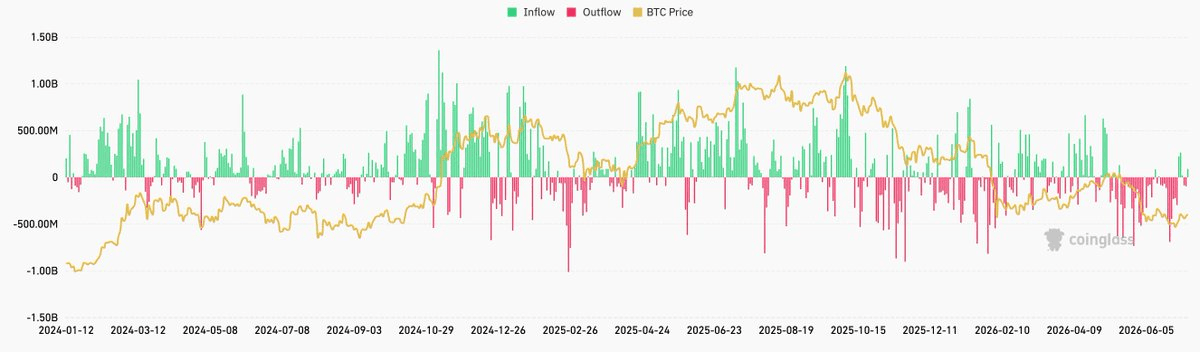
**Bitcoin ETF Performance** - $BTC ETFs recorded seven consecutive sessions of net inflows, marking the longest streak in 21 weeks - ETF flows serve as the primary demand driver, showing correlation with 30-day returns since their launch **Market Dynamics** - Bitcoin is approaching the critical $68k resistance level - Breaking above this threshold requires sustained inflow momentum - Current inflows at 53 basis points per $100M aren't independently driving price action **Broader Context** Macro factors, particularly geopolitical tensions involving Iran, are exerting more influence on price movements than ETF data alone. The market needs continued institutional interest to push through key resistance levels.
Bitcoin Put/Call Ratio Hits 2026 Low as Traders Drop Downside Protection
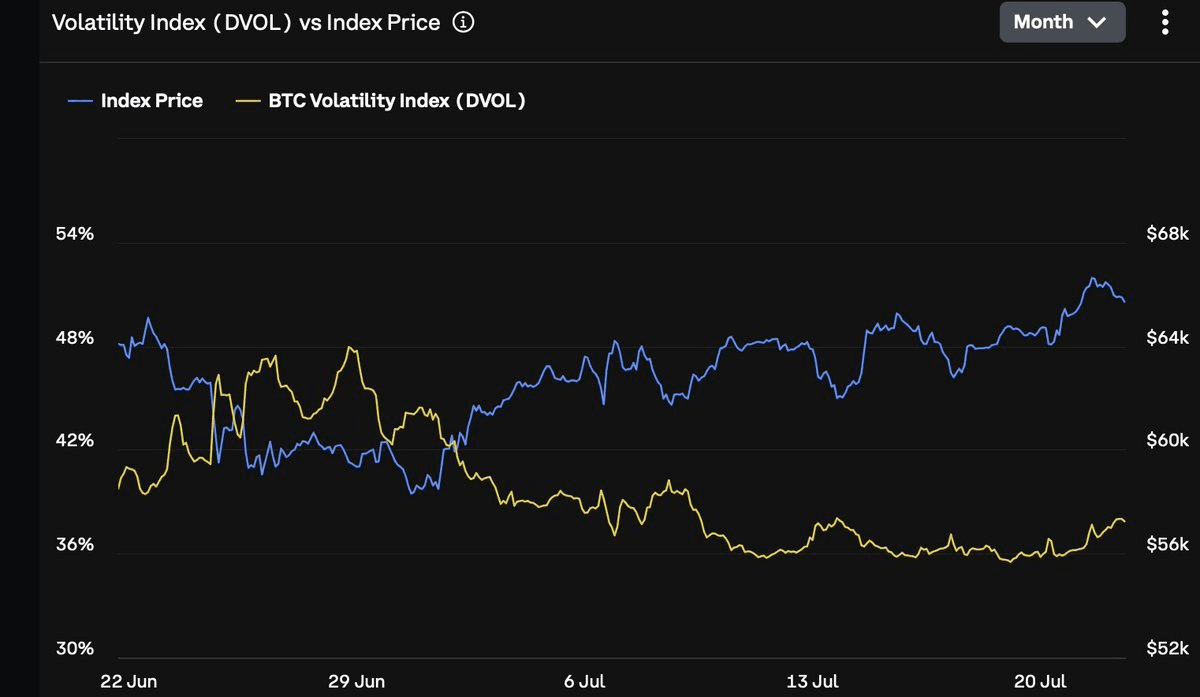
Bitcoin's put/call open interest ratio has fallen to 0.56, marking the lowest level of 2026. This metric suggests traders are reducing their downside protection positions. **Key observations:** - Implied volatility remains below 40% despite FOMC meeting scheduled for next week - Traders showing less concern about tail risk events - Market sentiment appears to be improving based on options positioning The declining put/call ratio, combined with subdued volatility expectations, indicates a shift in trader sentiment. With the Federal Reserve meeting approaching, the lack of hedging activity suggests market participants are not anticipating significant downside moves.
Bitcoin Long-Term Holders Stop Selling as Market Pressure Eases
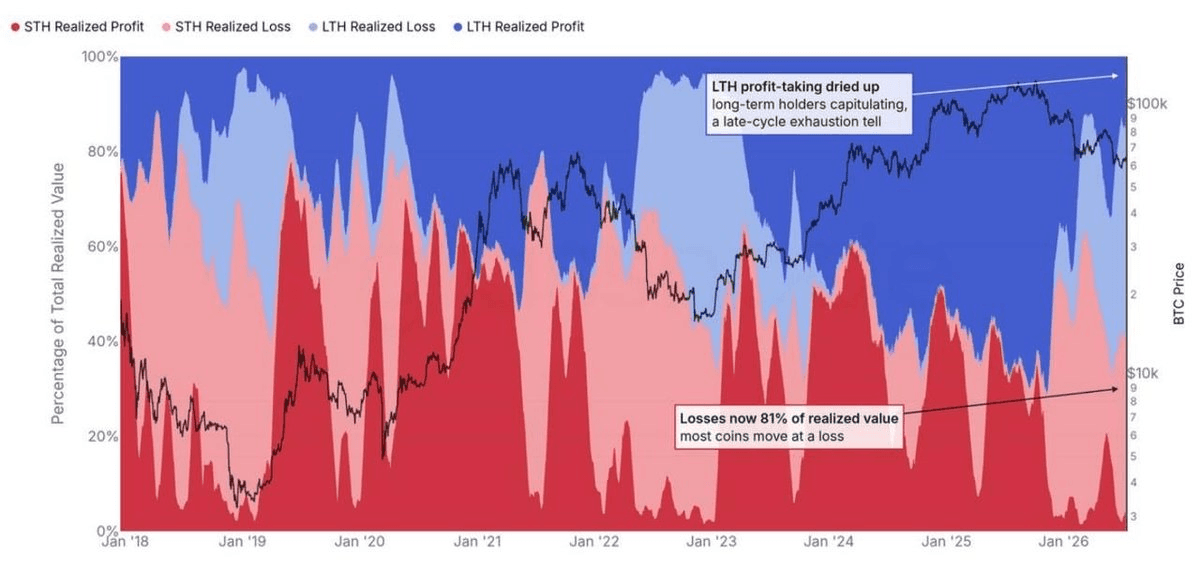
**Long-term bitcoin holders have nearly stopped taking profits**, marking a significant shift in market dynamics. - Sell-side pressure has eased for the first time since September 2025 - Holders stepping back while supply remains in loss territory - This pattern has historically indicated seller exhaustion during late-stage bear markets The reduced selling activity from long-term holders suggests a potential turning point in market sentiment. When experienced holders stop realizing losses, it often signals they believe current prices represent a bottom. This behavior contrasts sharply with earlier in 2025, when these same holders were actively taking profits and capping price rallies.
Bitcoin Supply in Loss Drops Below 50% After Hitting Cycle Bottom Signal
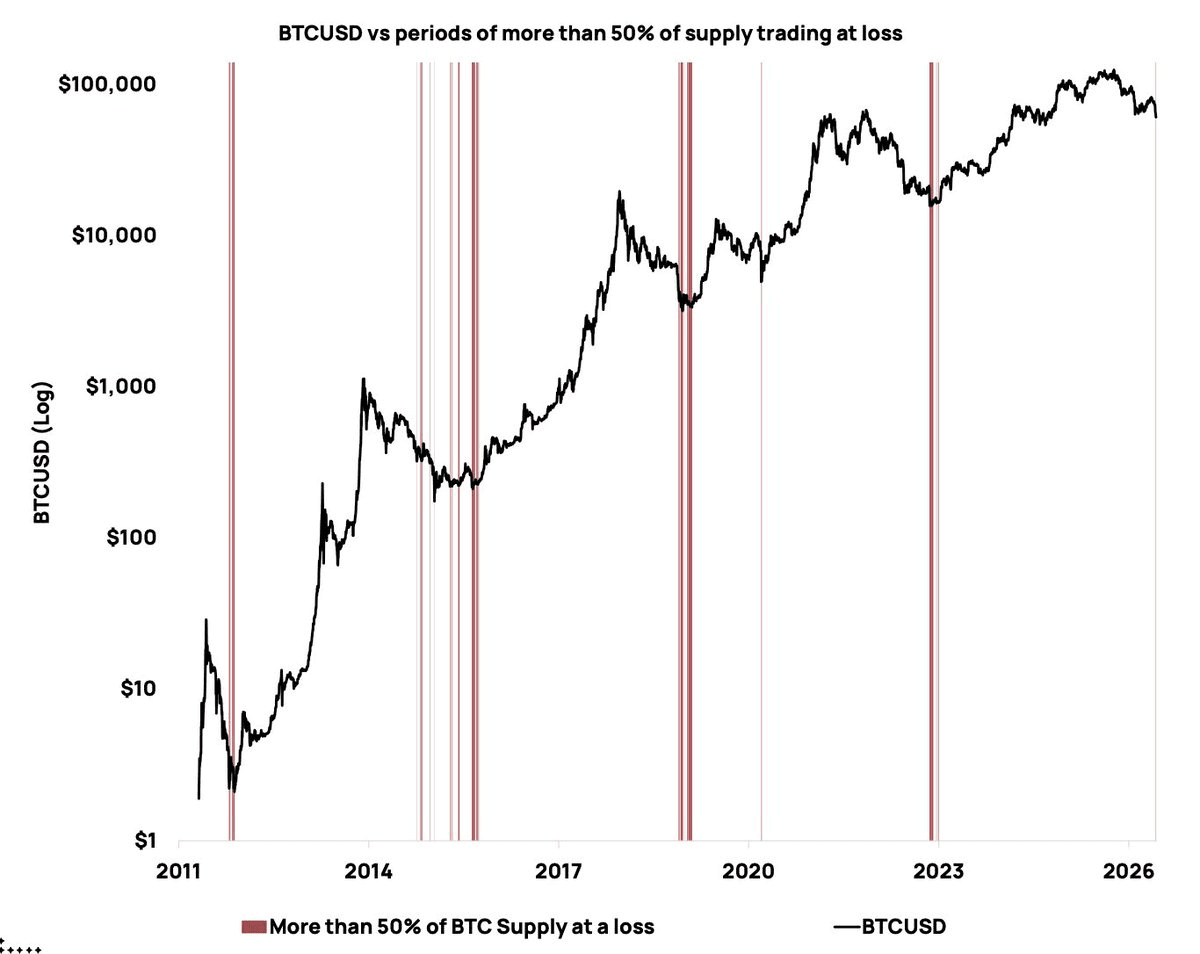
**Key Market Signal Flashes Then Retreats** Bitcoin's supply in loss briefly crossed the 50% threshold on June 30—a historically significant indicator that has marked cycle bottoms since 2011. The metric has since fallen back below 50%. **Historical Performance** - Median 1-year forward returns following this signal: **74%** - Previous occurrence: 2022 - Supply in loss peaked at 10.5M coins in early June, now at 9.3M **What This Means** The crossing of this threshold represents a moment when half of all Bitcoin holders are underwater on their positions. Historically, this has coincided with market bottoms and preceded substantial recoveries. The key question now: will the supply in loss continue declining, or will it return to recent highs? The direction of this metric could signal whether the market has truly found its bottom.
T. Rowe Price Launches Multi-Token ETF with 41% Bitcoin Allocation
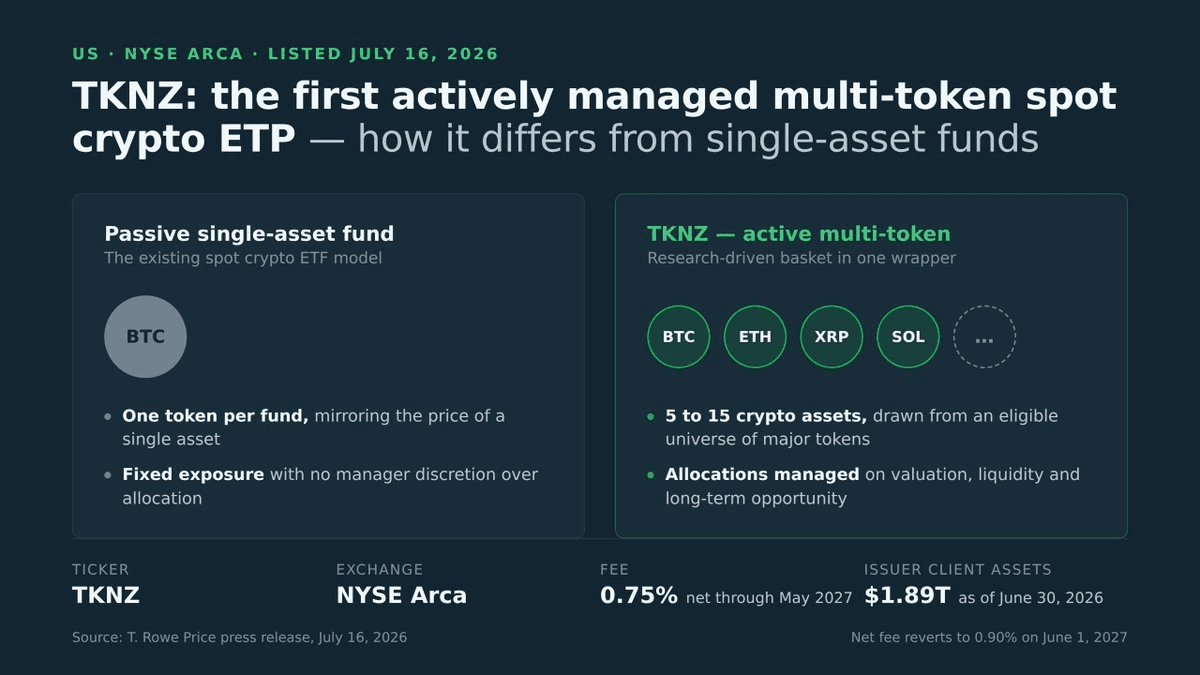
T. Rowe Price, a $1.89 trillion asset manager, has launched TKNZ, an actively managed multi-token ETF that reveals institutional thinking on crypto portfolio construction. **Initial Allocation Breakdown:** - Bitcoin: 41% - Ethereum: 18% - BNB: 11% - Smaller positions in XRP, Solana, and Hyperliquid The fund's structure allows active rotation among up to 15 approved tokens, giving the manager flexibility to adjust holdings based on market conditions. This approach differs from single-asset crypto ETFs by offering diversified exposure across multiple digital assets.